
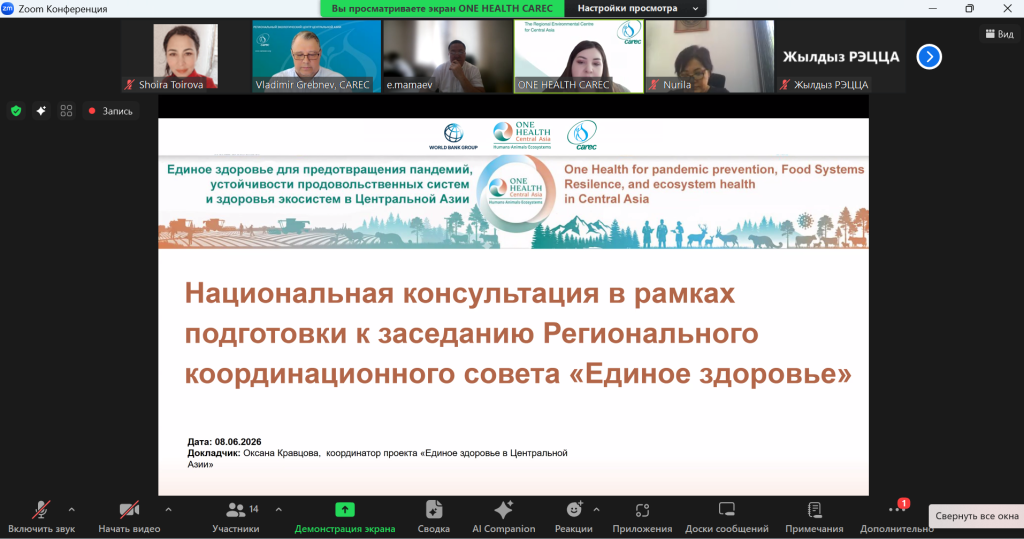
A cycle of key national consultations, organized by the Secretariat of the "One Health in Central Asia" program of the Regional Environmental Centre for Central Asia (CAREC), has concluded in the countries of Central Asia. The working meetings, held online from June 8 to 12, 2026, aimed at finalizing the agreement on a package of strategic and regulatory documents in preparation for the Third Meeting of the Regional Coordinating One Health Council (ROHCC), scheduled for June 25, 2026.
The consultation program engaged plenipotentiary representatives of relevant ministries, agencies, and international experts from Kazakhstan, Kyrgyzstan, Tajikistan, Turkmenistan, and Uzbekistan. The primary objective of this round was to forge a consolidated position among the region's states on pandemic prevention, ensuring the sustainability of food systems, and safeguarding ecosystem health.
The Secretariat's Strategic Document Package
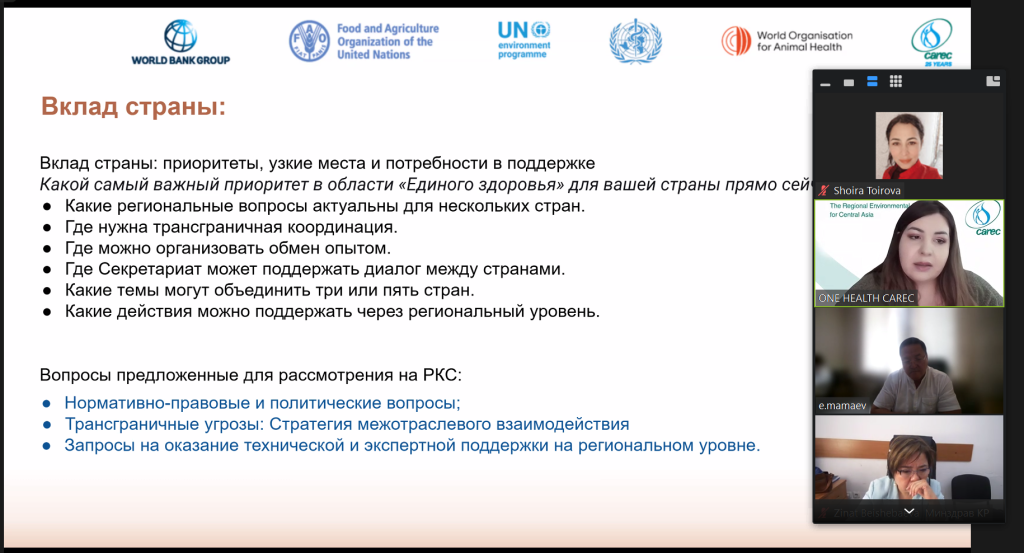
During the expert sessions, organized with the support of the World Bank, the Secretariat presented a comprehensive set of foundational regulations and plans for the parties' consideration:
-
Regulations on the Regional Coordinating One Health Council (ROHCC): A core organizational regulation establishing the Council's status as the highest inter-state coordinating and advisory mechanism. The document defines internal operating rules, including quorum requirements, rotational chairmanship, and procedures for formalizing decisions.
-
The Secretariat's Regional Action Plan for the Implementation of the "One Health" Approach: A flexible, framework-based working tool for the Secretariat, grounded in the international principle of complementarity. The plan does not replace national programs or budgets but is designed to enhance transboundary cooperation, joint activities, and coordination on priority issues, and is subject to annual review.
-
List of Priority Threats: The Secretariat proposed an approach to compiling the list based on officially established national priorities, thereby avoiding redundant administrative procedures. Brucellosis was highlighted as one of the transboundary risks discussed during the preliminary survey of specialists. The final list will be compiled strictly on the basis of data provided by authorized agencies.
-
Regional Information Platform: The concept, structure, and tentative timeline for the pilot launch of a unified resource combining an information portal and a training component were presented. Terms of reference are currently being developed in collaboration with partners.
-
Communications Plan for the Second Half of 2026: An internal working tool for the systematic dissemination of information on country achievements to government agencies, policymakers, donors, and the media.
-
Calendar of Events and Newsletter: Tools introduced to expand information exchange via the CAREC website. Countries were invited to submit materials for inclusion in the program's first quarterly newsletter in Russian and English.
-
Transboundary Simulation Exercises: Approaches, legal foundations, and scenarios for practical interaction were presented. At the current stage, joint exercises involving Kyrgyzstan and Tajikistan are under consideration, with individual components open to participation by other interested countries.
Outcomes and Decisions of the National Consultations
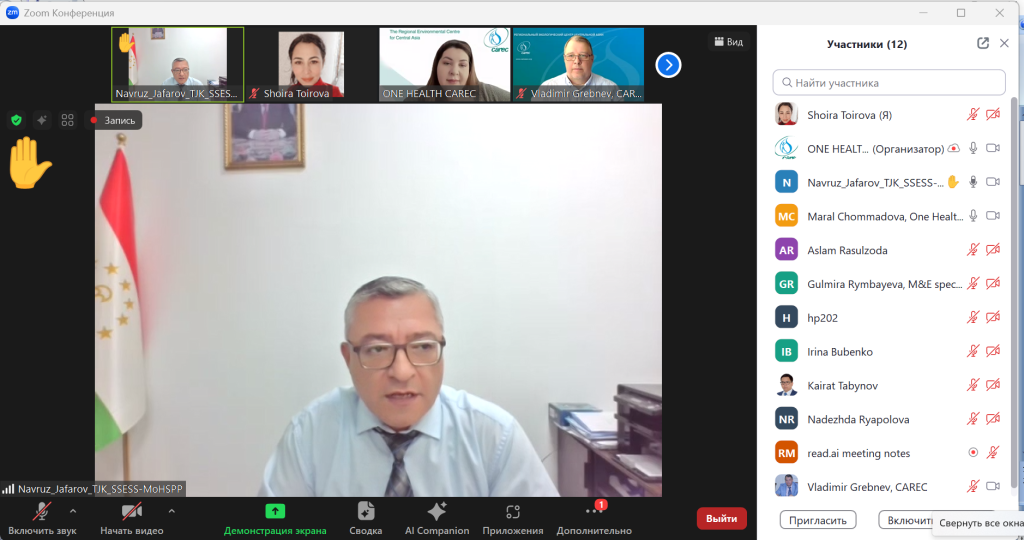
Based on the working materials of the online sessions and the Secretariat's presentations, experts highlighted several key areas for discussion at the ROHCC meeting on June 25, including:
-
Legal, Regulatory, and Policy Issues: Assessment of current regional priorities affecting the interests of multiple Central Asian states.
-
Transboundary Threats: Development and approval of a Strategy for Cross-Border Intersectoral Cooperation.
-
Requests for Regional Support: Provision of technical and expert assistance by the Secretariat and the creation of platforms for mutual learning.
-
Financial Sustainability: Drafting a joint regional project for subsequent funding application to the Pandemic Fund.
Next Steps and the Supranational Perspective
Following the multilateral sessions, the Secretariat established an operational interaction algorithm for the coming weeks. Member states are recommended to review the presented working draft of the Consolidated Analytical Report on Strategies for Implementing the "One Health" Approach in Central Asian Countries (Draft Review of Regional Policy and Regulatory Framework) and submit their additions, expert comments, and amendments to the Secretariat by June 20, 2026.
The upcoming Third Meeting of the Regional Coordinating Council, to be held online on June 25, 2026, will mark an important milestone for the program. The official endorsement of the consolidated package of documents will establish a unified legal and methodological framework for cooperation, signaling the transition of the supranational approach to biosecurity and ecosystem health in Central Asia from the design stage to coordinated practical action on the ground.
Shoira Toirova, PR Specialist for the "One Health" Program