

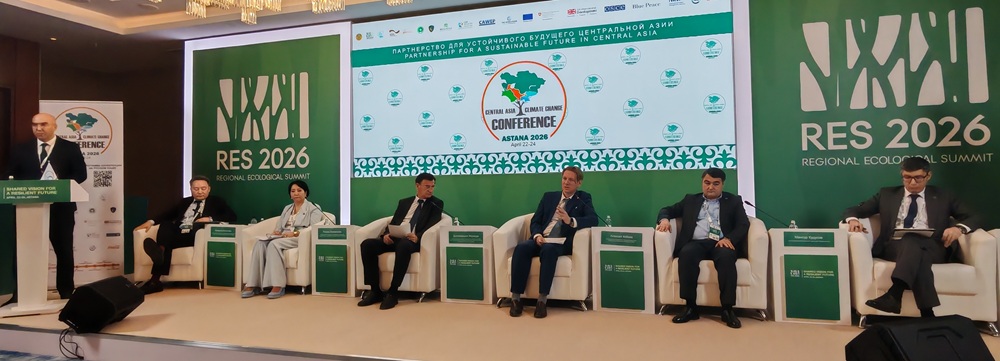
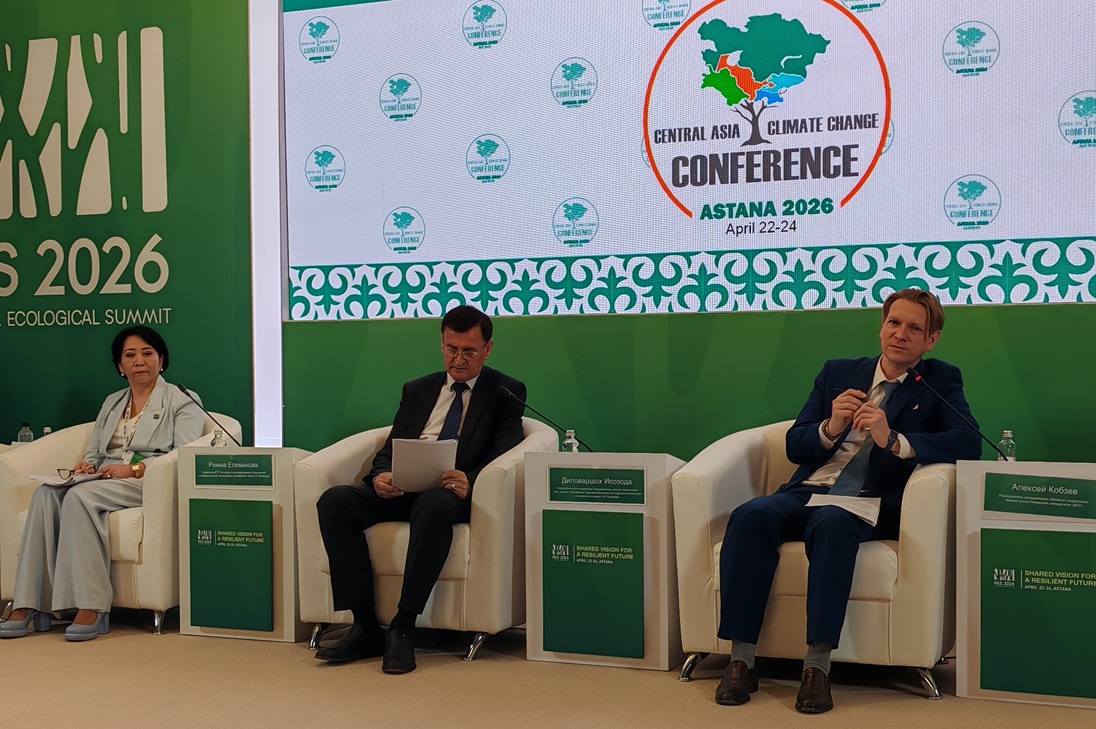
Research networks play an important role in advancing renewable energy by helping adapt technologies to local climatic conditions, pooling resources to address skills shortages, and providing access to shared scientific infrastructure. This was stated by Dilovarshoh Tarik Isozoda, Rector of the Energy Institute of Tajikistan, Doctor of Technical Sciences, at CACCC-2026 in Astana.
Central Asia is facing increasing water-energy risks due to climate change, fluctuations in hydropower generation, and rising electricity demand, which, according to the World Bank, could triple by 2050; meanwhile, regional electricity trade remains low at around 3% of demand (compared to 20–25% in the late 1980s and less than 3% by 2010), while demand is projected to increase from 270 to 370 TWh by 2030.
At the same time, according to international organizations, stronger coordination could generate significant economic benefits; however, key challenges remain, including investment shortages, infrastructure depreciation of up to 70%, and high dependence of some countries on hydropower (over 80% in Kyrgyzstan and Tajikistan), which requires deeper coordination and joint planning. In this context, the priority is the development of mechanisms for joint planning, investment, and institutional cooperation, as well as strengthening the research base in order to transform regional interdependence into a source of sustainable economic growth.
In this regard, the issue of human resource development in the energy sector of Central Asia is particularly relevant, where, according to experts, the most vulnerable link remains the gap between vocational and technical training and the adaptation of specialists to real labor market needs. Despite a solid foundation in higher education, there remains a gap between graduates’ theoretical knowledge and the practical skills required to work with modern solar and wind energy facilities.
Experts note that the greatest impact within the next 12 months could be achieved through the introduction of short-term, practice-oriented retraining programs developed jointly with the private sector and international partners. This includes launching certified upskilling courses for practicing specialists, using shared laboratory infrastructure and data exchange within an emerging regional research network, as well as accelerating the integration of industry-focused modules into educational programs. Such an approach would help quickly reduce the skills gap without waiting for new graduates to enter the labor market.
The Executive Director of the Regional Environmental Centre for Central Asia (CAREC), Batyr Mammedov, noted that this is not only a matter of technology, infrastructure, and investment. First and foremost, it is a matter of people, knowledge, competencies, and the ability of countries in the region to jointly train a new generation of specialists, develop applied science, and build sustainable partnerships between government, academia, and the private sector.
On behalf of CAREC, Batyr Mammedov expressed sincere gratitude to partners: the OSCE, GIZ, the EURECA program, universities, professional communities, associations, and all experts who contributed to the organization and substantive content of the session.
As noted, the development of renewable energy in Central Asia requires regional cooperation, investment in human capital, and support for science and education.
Dr. Bakhtiyor Pulatov, Professor and Rector of the Central Asian University for Environmental and Climate Change Studies (Green University), Republic of Uzbekistan, emphasized that the accelerated development of renewable energy in Central Asia depends not only on investment, technology, and regulatory frameworks, but also on people: engineers, designers, grid specialists, lecturers, researchers, technicians, and project managers. He noted the importance of aligning labor market needs with educational programs, strengthening applied research, and building sustainable regional cooperation between universities, governments, and the private sector.
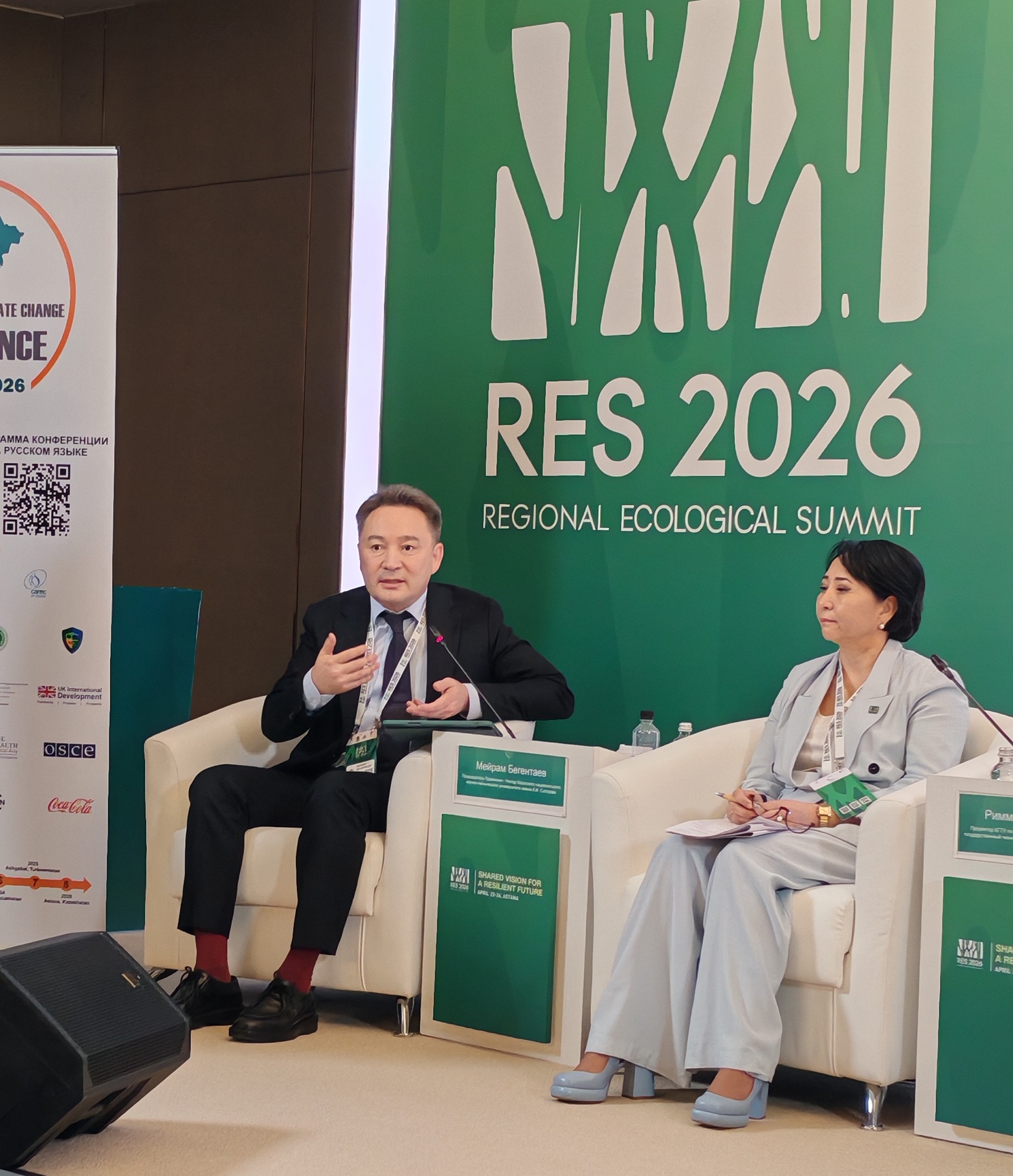
Recall, on April 23, Session 3.1. “Workforce Development and Research Cooperation to Advance Renewable Energy in Central Asia” was held within the framework of CACCC-2026.
During the session, a signing ceremony of a multilateral memorandum was conducted between leading universities of the region and the Regional Environmental Centre for Central Asia. This agreement will help define priorities for applied research, launch academic mobility programs, and establish a platform for dialogue between science, government, and the private sector.
----------
CACCC-2026 is hosted by CAREC as part of the Resilient Landscapes in Central Asia (RESILAND CA+) Program of the World Bank, in cooperation with the Central Asia Water and Energy Program (CAWEP), the World Bank, and Deutsche Gesellschaft für Internationale Zusammenarbeit (GIZ) GmbH, with additional valuable support from other programs and partners.
CACCC-2026 Organizational Contacts:
Dilovarsho Dustzoda, Advisor to the CAREC Executive Director – ddustzoda@carececo.org
Azamat Kauazov, CAREC Programme Manager on Climate Change and Sustainable Energy – cacip@carececo.org
Vladimir Grebnev, CAREC Regional Climate Change Specialist – cc_specialist@carececo.org