
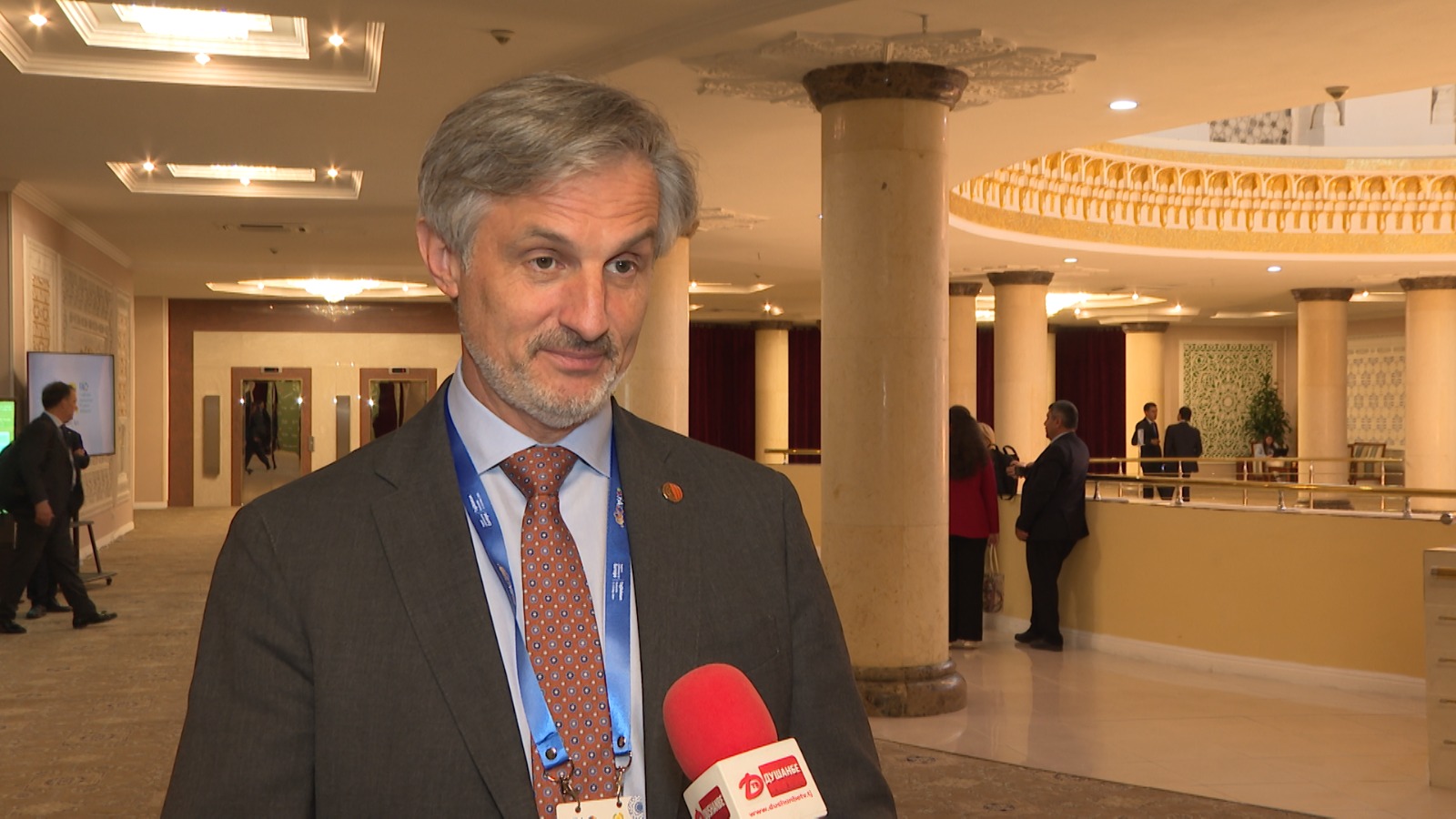
How can we ensure food safety and make agriculture resilient to climate change and transboundary threats? Dr. Budimir Plavšić, Regional Representative for the World Organisation for Animal Health (WOAH) in Europe, provides his expert insights on the matter. In this interview, we discuss why the “One Health” concept is becoming a key tool for strengthening security today, not only in Central Asia but also on a global scale.
Animal Health as the Foundation of Security
— Dr. Plavšić, the World Organisation for Animal Health consistently emphasizes the link between animal health and food quality. How does this chain work in practice?
— Animal health and welfare are the cornerstone of food production of animal origin. When animal populations are healthy and kept to high standards, we obtain safe, high-quality products. This directly impacts farmers' incomes, particularly in rural areas, and, most importantly, ensures food security for us, our children, and future generations.
Fact Sheet: According to international experts, over 60% of emerging infectious diseases recorded worldwide are of animal origin (zoonoses). For Central Asian countries, where livestock farming is the backbone of the economy, effective herd health control is not only about protecting public health but also a critical prerequisite for successful agricultural exports.
An Integrated Approach: “One Health”
— The “One Health” concept is now taking center stage on the international agenda. What does it mean for governance and public administration?
— “One Health” is an integrated approach that views the health of humans, animals, plants, and the environment as interconnected. It recognizes that risks—whether climate change, animal diseases, or human infections—know no administrative boundaries. They spread regardless of flags or customs posts.
Therefore, our strategy relies on a “whole-of-society approach.” Government bodies must work in unison with industry, civil society, and international partners. This is the only way we can effectively manage risks, shifting from a tactic of “treating consequences” to a strategy of “preventing threats.”
Central Asia: From Standards to Regional Partnership
— How do you assess the progress of Central Asian countries in this area?
— I see a significant increase in capacity and a strong commitment to international standards, for example, in Tajikistan. We are witnessing a high level of political will—ranging from the country’s leadership participating in key discussions to the implementation of rigorous technical protocols. This is an excellent example of how a country not only improves product quality for the domestic market but also opens doors to demanding international markets, where consumers expect products of the highest standard.
— What is the main challenge that the region has yet to overcome?
— The main challenge is realizing that development cannot happen in isolation. The risks we face are global and complex. Therefore, the joint efforts of WOAH, FAO, WHO, UNEP, and other partners with each country in the region are not just a formality. They represent an investment in well-being that benefits not just a single nation, but the entire region. We must remember: no one is safe until everyone is safe.
What is the “One Health” approach? It is a collaborative model based on the recognition that human health is inextricably linked to animal health and the environment. In Central Asia, this approach is being implemented with the support of the World Bank, in partnership with WOAH, FAO, WHO, and UNEP, to strengthen the resilience of agri-food systems to a changing climate.
Shoira Toirova PR Consultant for the One Health Program