

November 6, 2026
The Regional Environmental Centre for Central Asia (CAREC), together with its project partner Carbon Limits, held a training on methane Leak Detection and Repair (LDAR) under the project "Capacity Building for Methane Emission Reduction in Central Asia" (CA CBMER), supported by the Global Methane Hub (GMH).
The capacity-building training brought together representatives of national oil companies (NOCs), government institutions and other relevant stakeholders from Central Asia. It aimed to strengthen participants' understanding of methane leak detection and repair, helping oil and gas companies identify and reduce methane emissions while supporting their voluntary commitments under initiatives such as the Oil and Gas Methane Partnership 2.0 (OGMP 2.0) and the Oil and Gas Decarbonization Charter (OGDC). For government representatives, the training provided an opportunity to deepen their understanding of methane monitoring, reporting and verification (MRV) and approaches to implementing effective methane regulations.
The training follows the Regional Methane Conference held in Ashgabat, Turkmenistan on 29–30 October, 2026 which highlighted the significant challenges Central Asia and the Caspian region face in cutting methane emissions. Finding and fixing leaks is one of the most effective and practical tools available, and the session aimed to build both knowledge and hands-on skills: identifying leaks, estimating their scale and choosing effective repair measures.
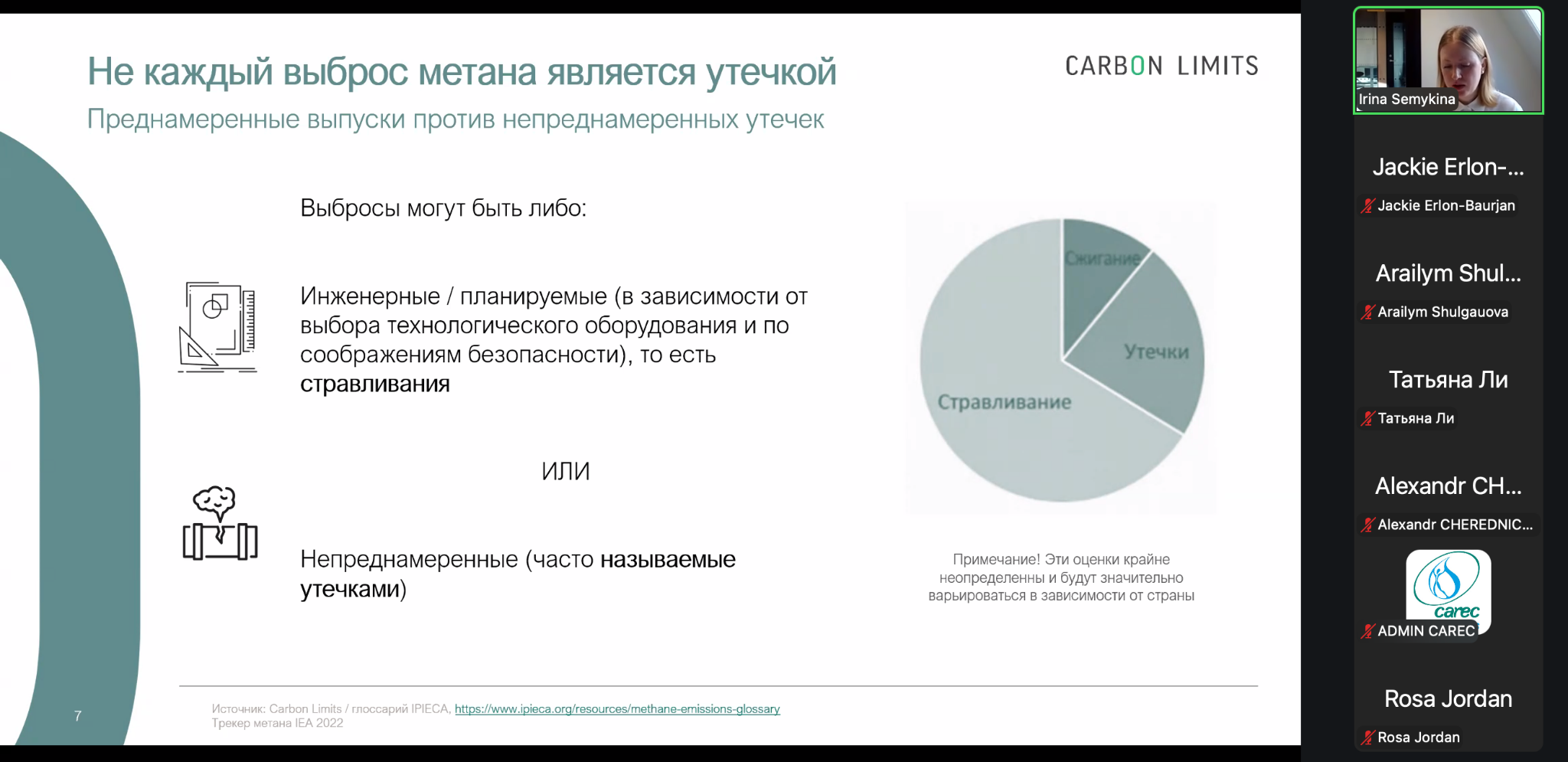
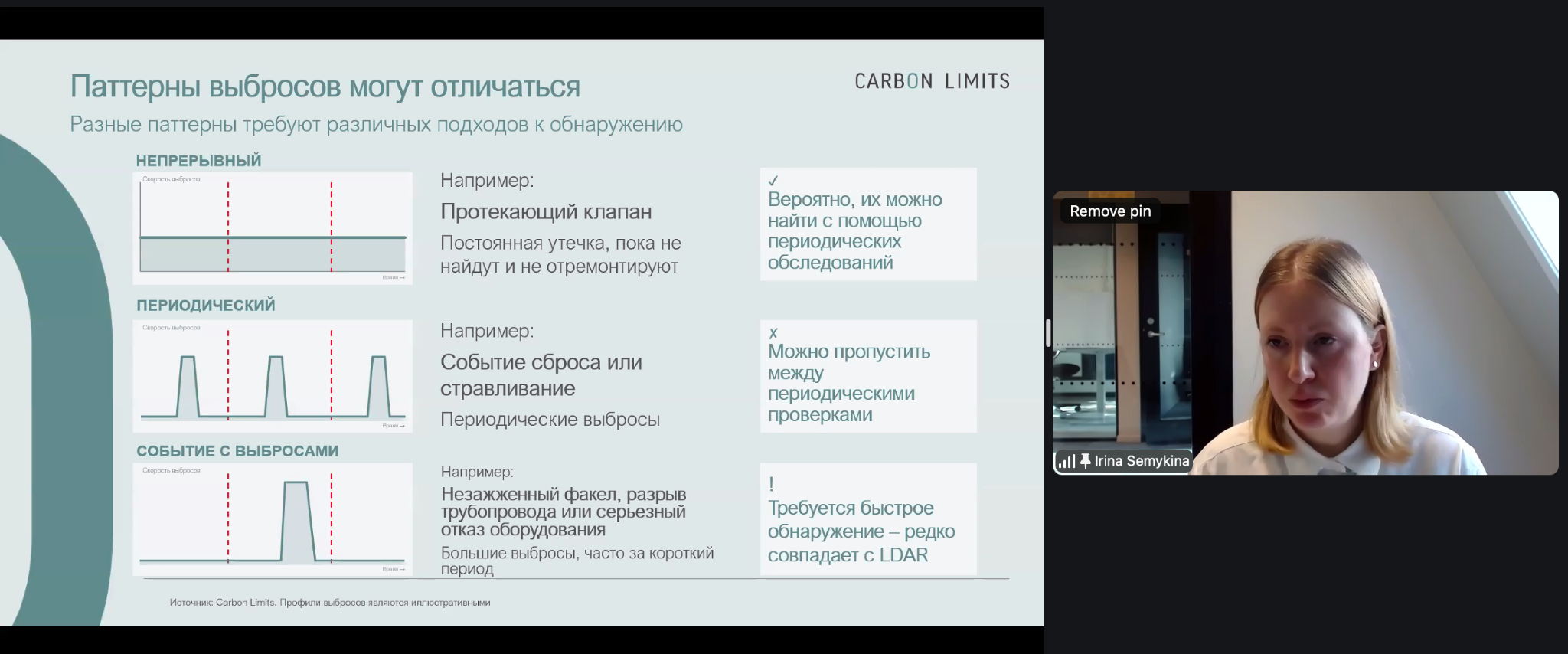
Carbon Limits Senior Consultant Irina Semykina opened with the basics: not every methane emission is a leak. Planned releases such as vents differ from unintentional fugitive leaks, which typically come from worn valves, flanges, open-ended lines, pressure relief valves and thief hatches. Emission patterns also differ. Continuous leaks are likely to be caught by periodic surveys, while intermittent releases and high-emitting events can fall between inspections, and participants then walked through the LDAR programme cycle: plan, detect, measure, tag, repair, verify and review.
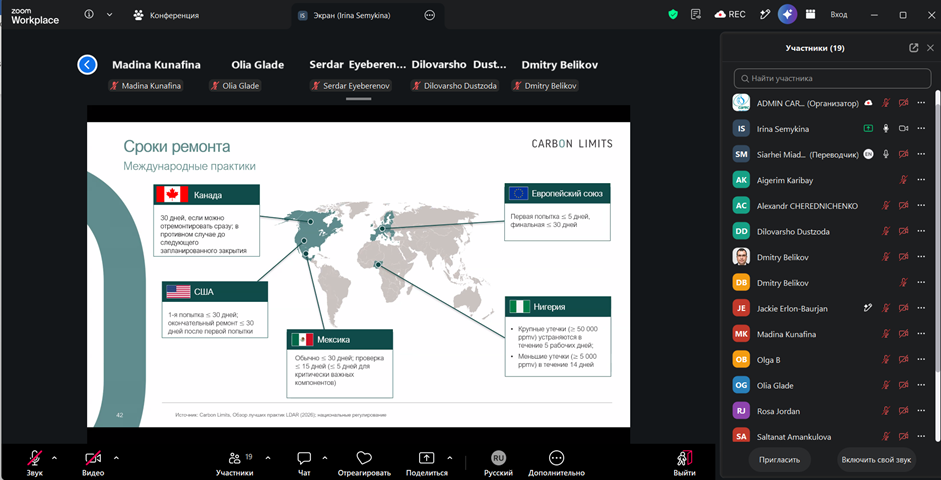
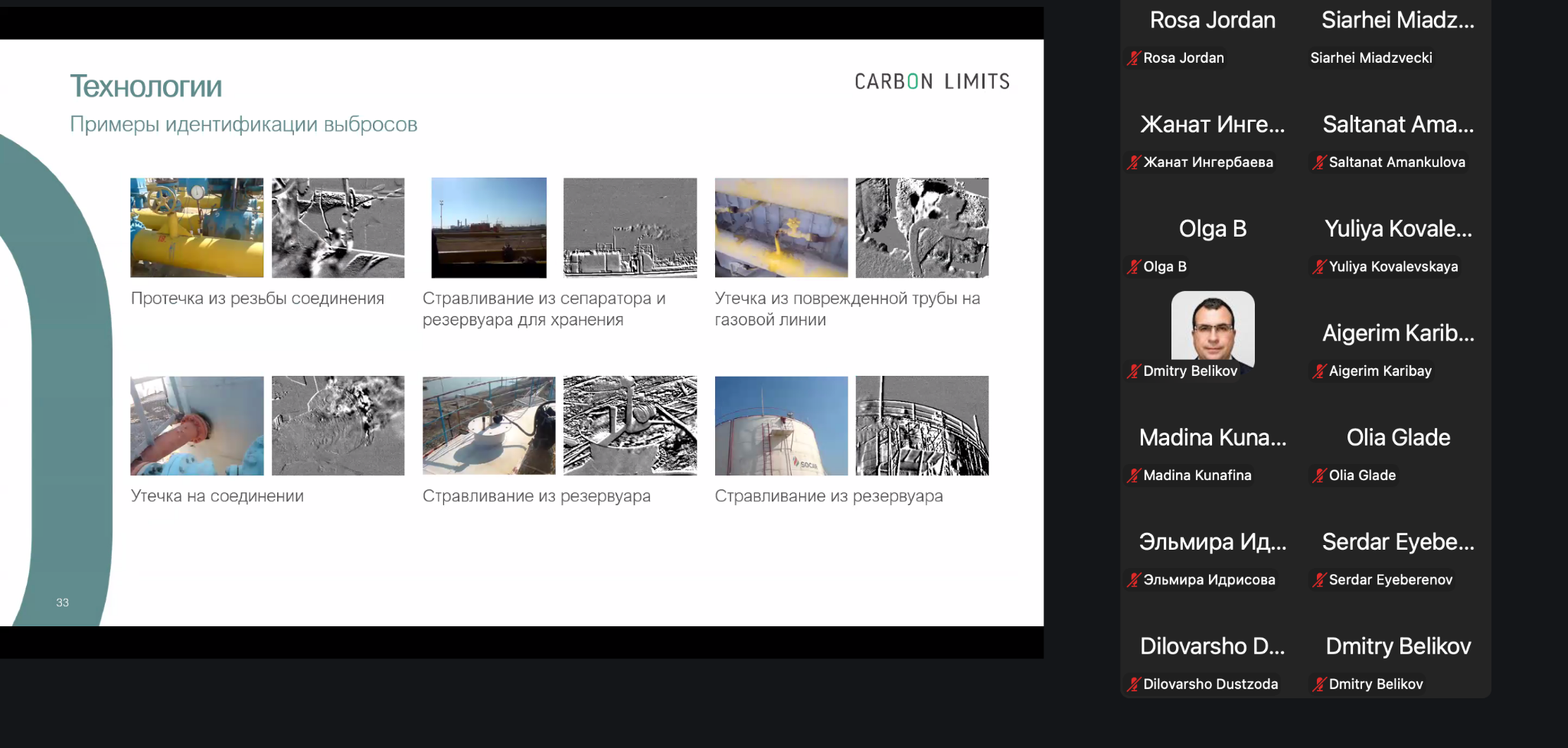
Particular attention was given to programme design, survey frequency, modern leak detection technologies, leak detection and repair (LDAR), and verification of repair results. Practical recommendations tailored to the specific context of Central Asian countries were also presented.
Organising such training activities is one of the practical ways in which CAREC contributes to achieving a key objective of the CA CBMER project: strengthening the capacity of specialists and relevant stakeholders in methane emissions reduction. These activities help enhance professional knowledge and develop practical skills needed to implement effective approaches to methane leak detection and repair across the region.
About the project
The project “Capacity Building for Methane Emission Reduction in Central Asia” (CA CBMER) is implemented by the Regional Environmental Centre for Central Asia (CAREC) through ReCATH, with financial support from the Global Methane Hub (GMH). It supports Kazakhstan, Kyrgyzstan, Tajikistan, Turkmenistan, and Uzbekistan in strengthening capacities for methane emissions assessment, monitoring, and reduction in the oil and gas sector, with Azerbaijan and Mongolia participating as observer countries.
Carbon Limits is an international consulting company specializing in greenhouse gas emissions reduction and climate change mitigation. The company works across a wide range of areas, from the development of analytical studies and climate policy support to capacity building. Particular emphasis is placed on practical solutions that help translate technical mitigation opportunities into concrete projects with measurable climate benefits. Carbon Limits has a portfolio of more than 400 projects across over 80 countries worldwide.
Additional information:
Dilovarsho Dustzoda – Project Manager [ddustzoda@carececo.org](ddustzoda@carececo.org)
Arailym Shulgauova – Project Specialist [ashulgauova@carececo.org](ashulgauova@carececo.org)
#ReCATH #CA_CBMER #CACBMER #Methane #CAREC #ClimateAction #RegionalCooperation #MRV #carbonlimits