

Antalya, Turkey – 13 November 2026 – On the sidelines of the 31st Conference of the Parties to the United Nations Framework Convention on Climate Change (COP31), the Regional Environmental Centre for Central Asia (CAREC) organized a high-level side event entitled “Regional Cooperation for Resilient Landscapes in Central Asia” at the Uzbekistan Pavilion. Representatives of Kazakhstan, the Kyrgyz Republic, Tajikistan, Turkmenistan and Uzbekistan, together with the World Bank and CAREC, discussed ways to advance joint approaches to landscape restoration, biodiversity conservation and the reduction of transboundary environmental risks.
The RESILAND CA+ Programme was central to the discussions, bringing together national efforts to restore landscapes and promote regional cooperation. During the event, Tajikistan and Uzbekistan signed two Joint Declarations of Intent: the Joint Declaration of Intent on Nature-Based Solutions for Sustainable Landscape Management and Ecosystem Resilience, and the Joint Declaration of Intent on Establishing a Regional Forest Fire Warning System.
The signing marked a practical outcome of efforts to establish a coordinated regional framework for cooperation among the five Central Asian countries. This work is being carried out with World Bank support and coordinated by CAREC under the regional component of RESILAND CA+.
Shared Environmental Challenges Require Coordinated Regional Approaches
Central Asian countries face interconnected environmental and climate challenges, including land degradation, droughts, forest fires, biodiversity loss and water scarcity. As these processes affect transboundary ecosystems, addressing them requires coordinated approaches to natural resource management, information sharing and joint action.
Opening the event, Aziz Abdukhakimov, Chairman of the National Committee on Ecology and Climate Change of the Republic of Uzbekistan and Adviser to the President of the Republic of Uzbekistan on Environmental Issues, emphasized that ecosystem resilience in the region depends on close cooperation among countries.
“These challenges do not recognize national borders and require coordinated regional solutions,” he noted.
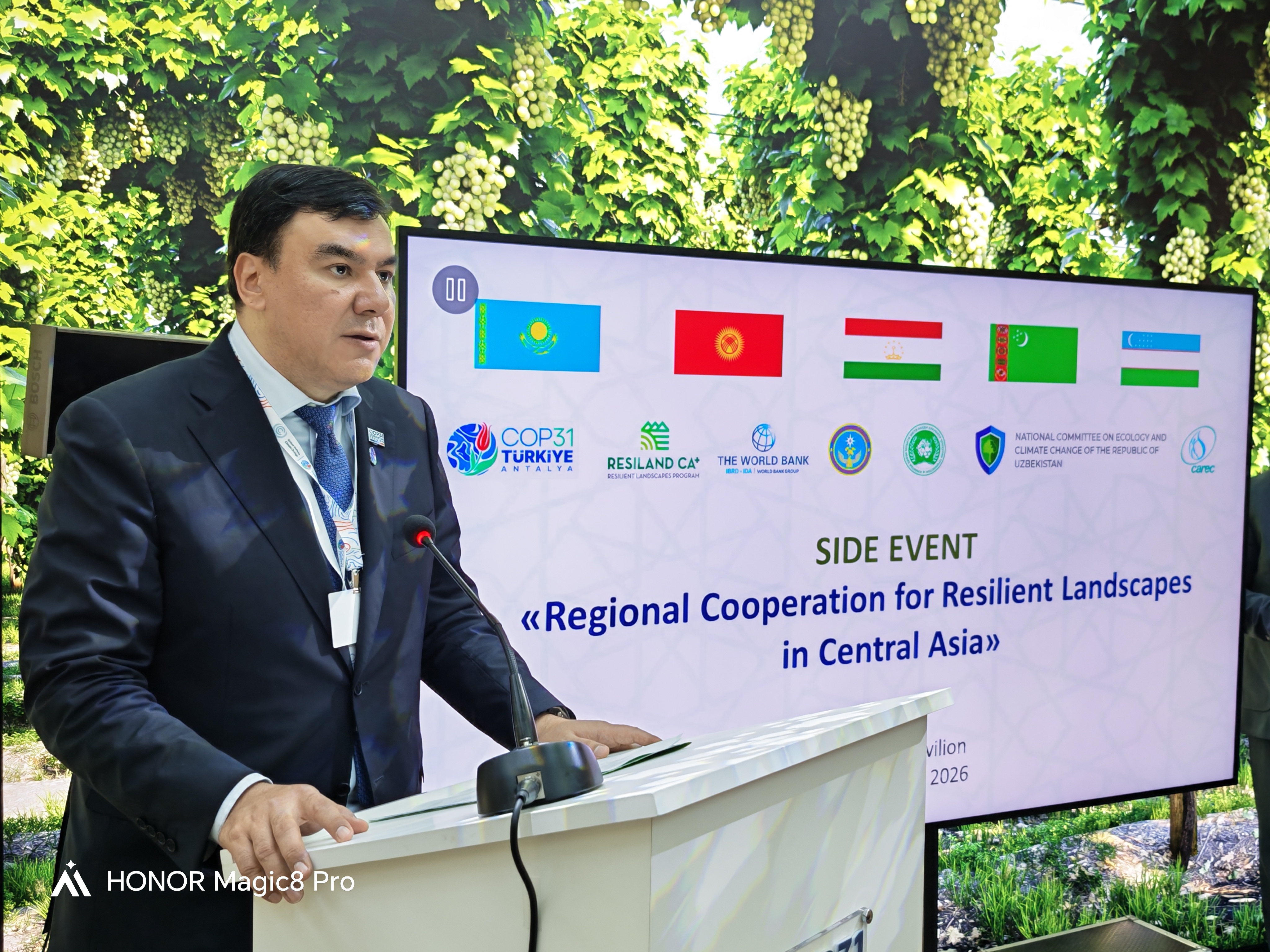
Aziz Abdukhakimov also highlighted the importance of RESILAND CA+ in bringing national efforts together under a shared regional agenda. He expressed his appreciation to the World Bank for supporting the programme and to CAREC for coordinating joint efforts.
The transboundary nature of environmental challenges was also highlighted by Dowran Yagmyrov, Head of the Environment Protection Department, Ministry of Environmental Protection of Turkmenistan. He noted that, for Turkmenistan, where desert and arid ecosystems cover a significant part of the territory, preventing land degradation, restoring pastures and promoting sustainable natural resource management are particularly important.
“Turkmenistan recognizes that the environmental challenges facing Central Asia are transboundary in nature and require coordinated efforts by all countries in the region,” he emphasized.

He also highlighted the importance of cooperation with the World Bank and CAREC under RESILAND CA+. In particular, the completion of the baseline landscape assessment for Turkmenistan provides a foundation for further preparation of investment decisions aimed at restoring degraded lands and strengthening climate resilience.
RESILAND CA+: Linking National Investments with Regional Cooperation
The RESILAND CA+ Programme is based on a two-tier approach that combines national projects with regional cooperation. At the national level, it focuses on practical investments in landscape restoration, improved natural resource management, reduced exposure to natural and climate-related risks, and enhanced resilience of local communities.
The regional component complements these efforts by promoting the harmonization of landscape management instruments, the exchange of data and knowledge, the prevention of transboundary natural hazards, biodiversity conservation and the development of joint initiatives.
This approach makes it possible to view landscape restoration not only as an individual country-level priority but also as a shared area for regional cooperation. Its objective is to create conditions for synergies among national projects, align priorities and advance joint solutions.
CAREC coordinates the regional component of RESILAND CA+, facilitating cooperation among relevant government authorities in the five Central Asian countries. The Centre supports the development of agreed regional approaches, knowledge exchange and the preparation of joint initiatives, linking national efforts with the broader regional agenda.
Speaking at the event, Alibek Kuantyrov, Minister of Ecology and Natural Resources of the Republic of Kazakhstan, noted that the five Central Asian countries are working together to establish a regional framework for biodiversity conservation.
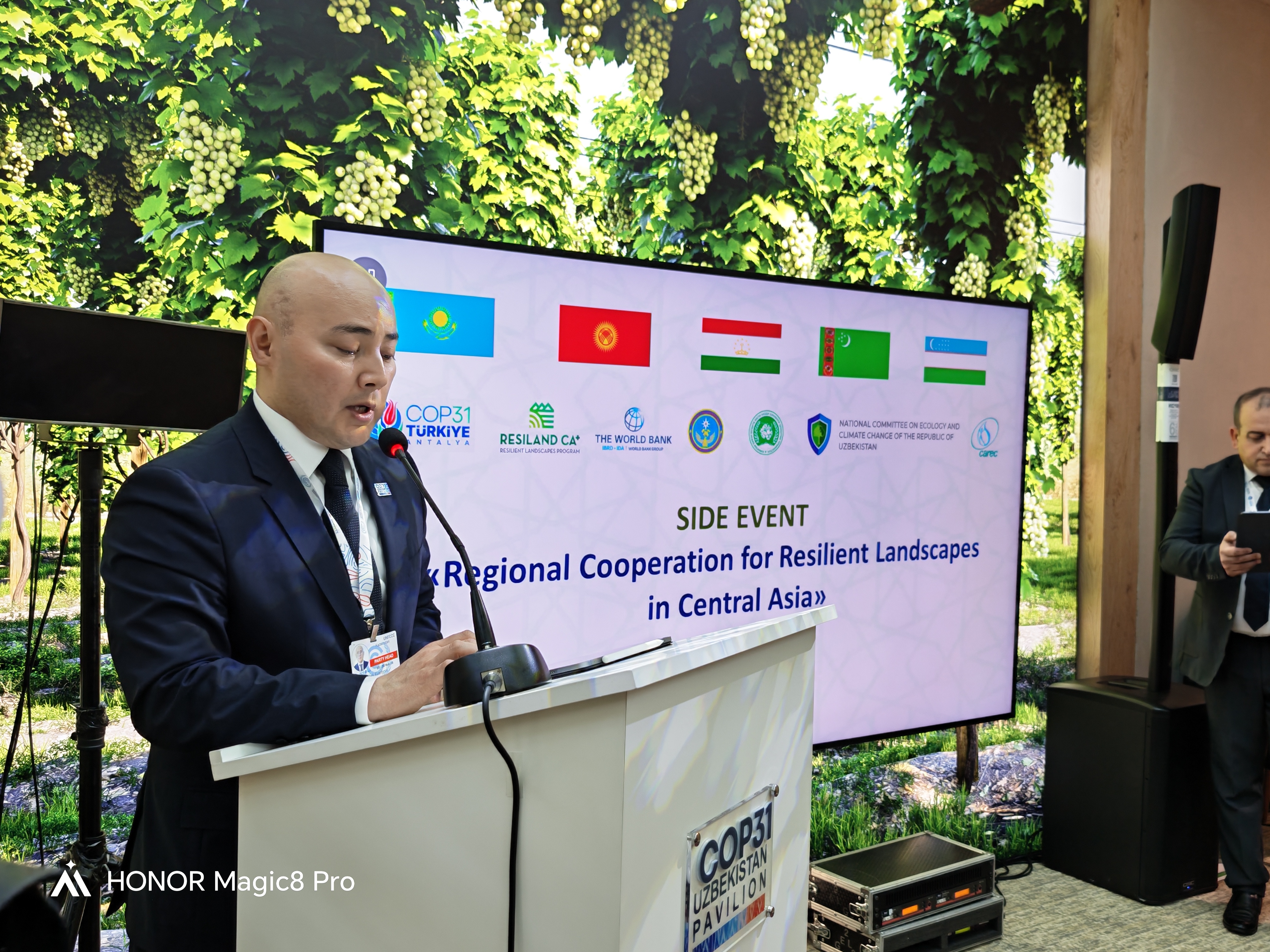
“Building on the Regional Declaration signed at the Regional Environmental Summit, the five Central Asian countries are jointly developing the Regional Framework Programme for the Conservation and Sustainable Use of Biodiversity in Central Asia for 2026–2035. RESILAND CA+ can serve as one of the mechanisms for implementing these commitments,” Alibek Kuantyrov said.
Holger Kray, Regional Practice Director for Planet in the Europe and Central Asia Region (ECA) at the World Bank, highlighted the importance of RESILAND CA+ as a platform for strengthening regional cooperation on sustainable landscape management. The programme brings together national projects in Uzbekistan, Tajikistan and the Kyrgyz Republic and creates opportunities to exchange experience, align technical approaches and develop joint initiatives.
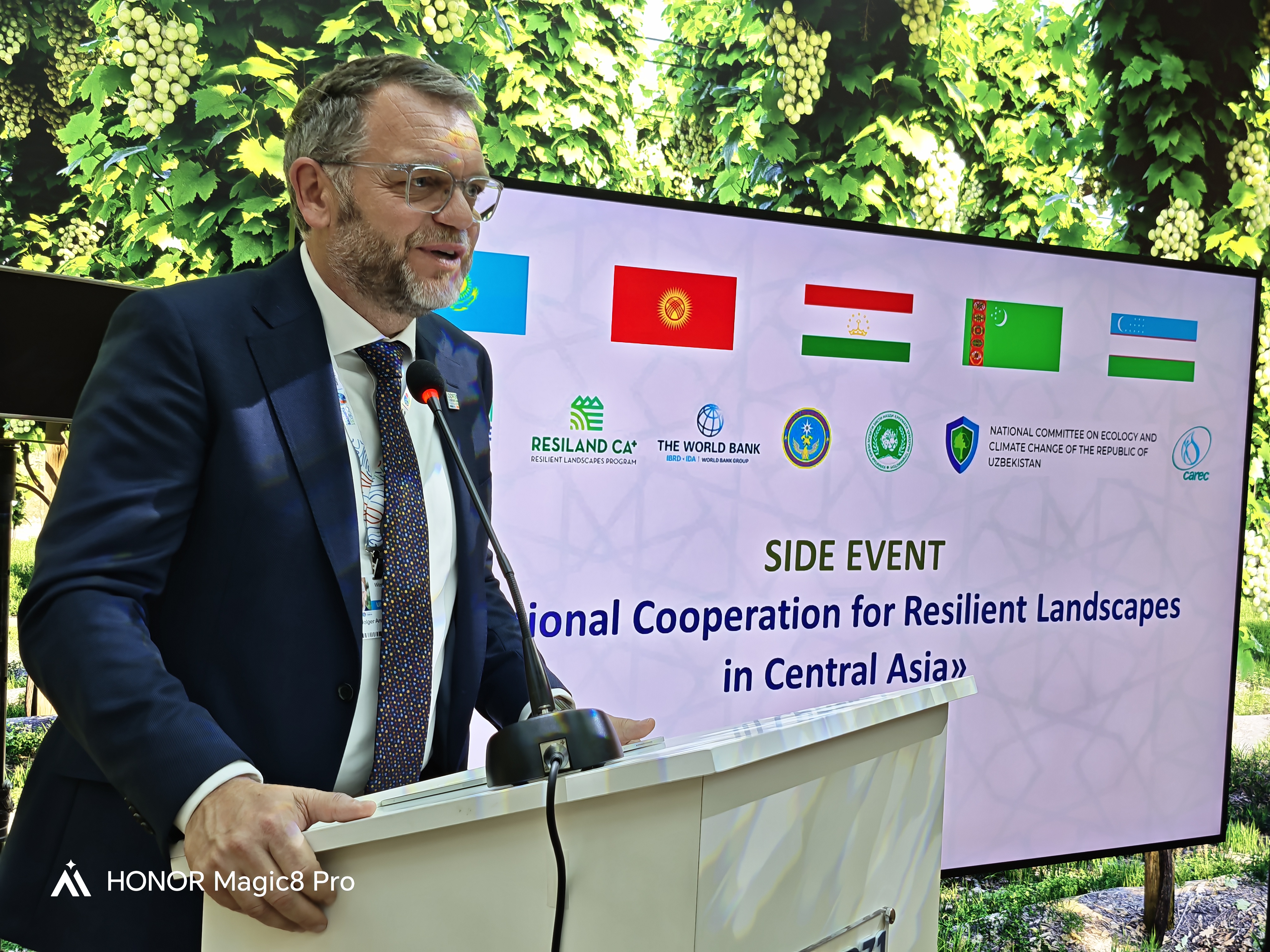
Particular attention was given to the practical value of cooperation in areas such as the application of nature-based solutions, environmental data sharing and the development of early warning systems. The World Bank reaffirmed its readiness to continue supporting Central Asian countries in advancing regional cooperation and implementing initiatives aimed at landscape restoration and strengthening landscape resilience.
Six Regional Documents Establish a Foundation for Cooperation
One of the key outcomes of regional efforts has been the development of a package of six documents covering the main areas of cooperation on sustainable landscape management and the conservation of natural ecosystems.
The package includes:
· Joint Declaration of Intent on Nature-Based Solutions for Sustainable Landscape Management and Ecosystem Resilience;
· Joint Declaration of Intent on Establishing a Regional Forest Fire Warning System;
· A memorandum on strengthening cooperation in biodiversity conservation and the exchange of relevant information;
· A memorandum on protecting natural areas from fires, invasive species and other threats;
· A memorandum on promoting transboundary environmental cooperation;
· A memorandum on promoting sustainable nature-based tourism.
The package was developed with the active participation of relevant government authorities across Central Asia and with CAREC's support.
During the event, Tajikistan and Uzbekistan signed the two Joint Declarations of Intent concerning nature-based solutions and the regional forest fire warning system. Kazakhstan, the Kyrgyz Republic and Turkmenistan are continuing their respective domestic procedures for reviewing and approving the regional documents in accordance with established procedures.
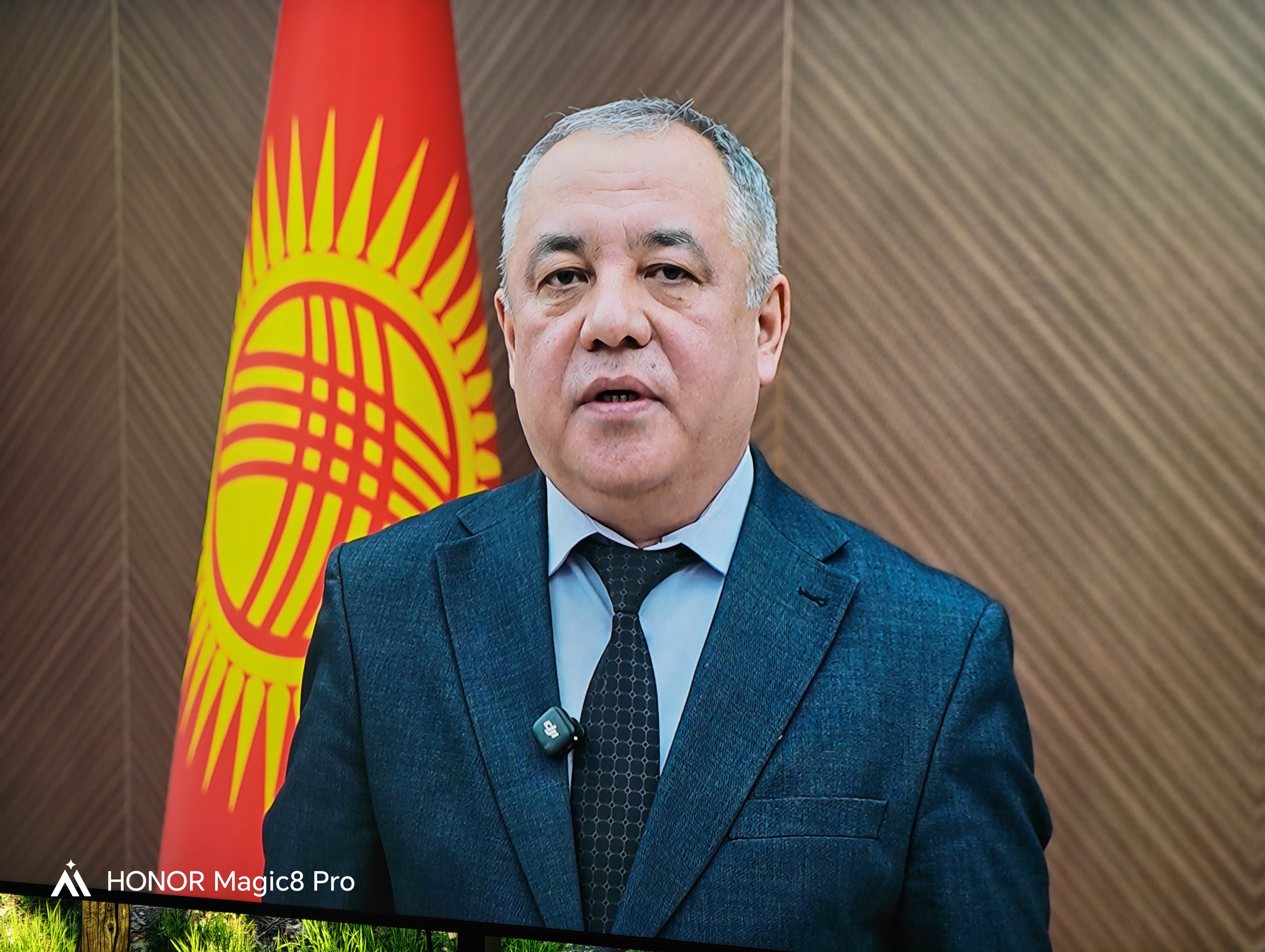
Akylbek Mazaripov, First Deputy Minister of Emergency Situations of the Kyrgyz Republic, emphasized the importance of regional cooperation in his remarks.
“We welcome the signing of the first joint declarations by Tajikistan and Uzbekistan, which represents an important step towards strengthening regional cooperation,” he said.
Speaking at the event, Batyr Mammedov, Executive Director of CAREC, emphasized that the preparation of the regional package was the result of joint efforts by the five countries and an important milestone in advancing regional cooperation.
“For CAREC, it is essential that the agreements reached are followed by practical action,” he noted.
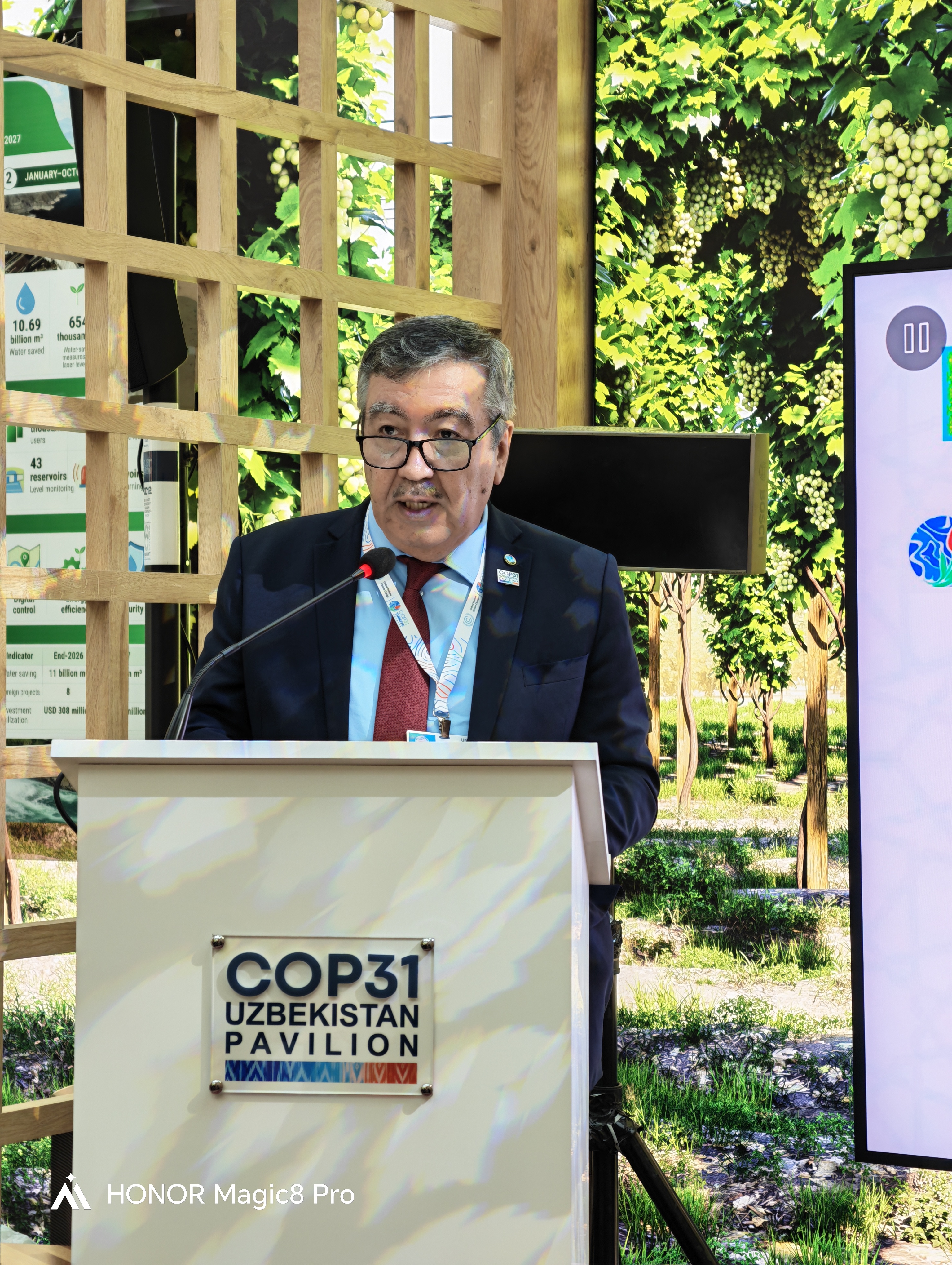
Batyr Mammedov added that, under the regional component of RESILAND CA+, the Centre would continue to support countries in strengthening cooperation, exchanging experience and developing joint initiatives.
CAREC's Role: Coordinating the Regional Agenda and Developing Cooperation Mechanisms
The Regional Environmental Centre for Central Asia plays an important role in facilitating interaction between national RESILAND projects and the broader regional agenda. Its work is aimed at ensuring that the priorities agreed upon by the countries are underpinned by the institutional, information and analytical foundations needed for their further implementation.
Under the regional component of RESILAND CA+, CAREC's activities cover three interconnected areas.
The first is the development of information and analytical infrastructure. This includes establishing a regional database, catalogue and knowledge portal to systematize information and facilitate the exchange of results and experience.
The second is the development of coordinated approaches to reducing natural hazards. The instruments envisaged include a regional roadmap, an investment plan and guidelines for applying nature-based solutions.
The third is strengthening institutional cooperation and professional capacity through conferences, workshops and knowledge exchange among countries.
An important instrument in this work will be the RESILAND CA+ regional information platform, which will provide opportunities to exchange knowledge and showcase results in landscape restoration and sustainable natural resource management.
Thus, CAREC's contribution extends beyond facilitating the preparation of regional documents. It also involves developing the mechanisms needed to advance them: coordinating cooperation among countries, facilitating information and experience sharing, developing harmonized approaches and preparing joint initiatives.
At the same time, agreeing on regional priorities is only one stage of the process. Their practical implementation will require identifying specific joint activities, establishing cooperation mechanisms, conducting studies and assessments, preparing terms of reference and specialized agreements, and mobilizing technical and investment support.
Next Steps: Turning Regional Agreements into Practical Results
Summing up the meeting, Dilovarsho Dustzoda, Advisor to the Executive Director of CAREC, emphasized that the signing of the declarations marks the beginning of a new stage in regional cooperation.
“Our shared task is to translate the agreements reached into concrete projects, strengthen the exchange of experience, and mobilize the necessary investment and climate finance,” he noted.
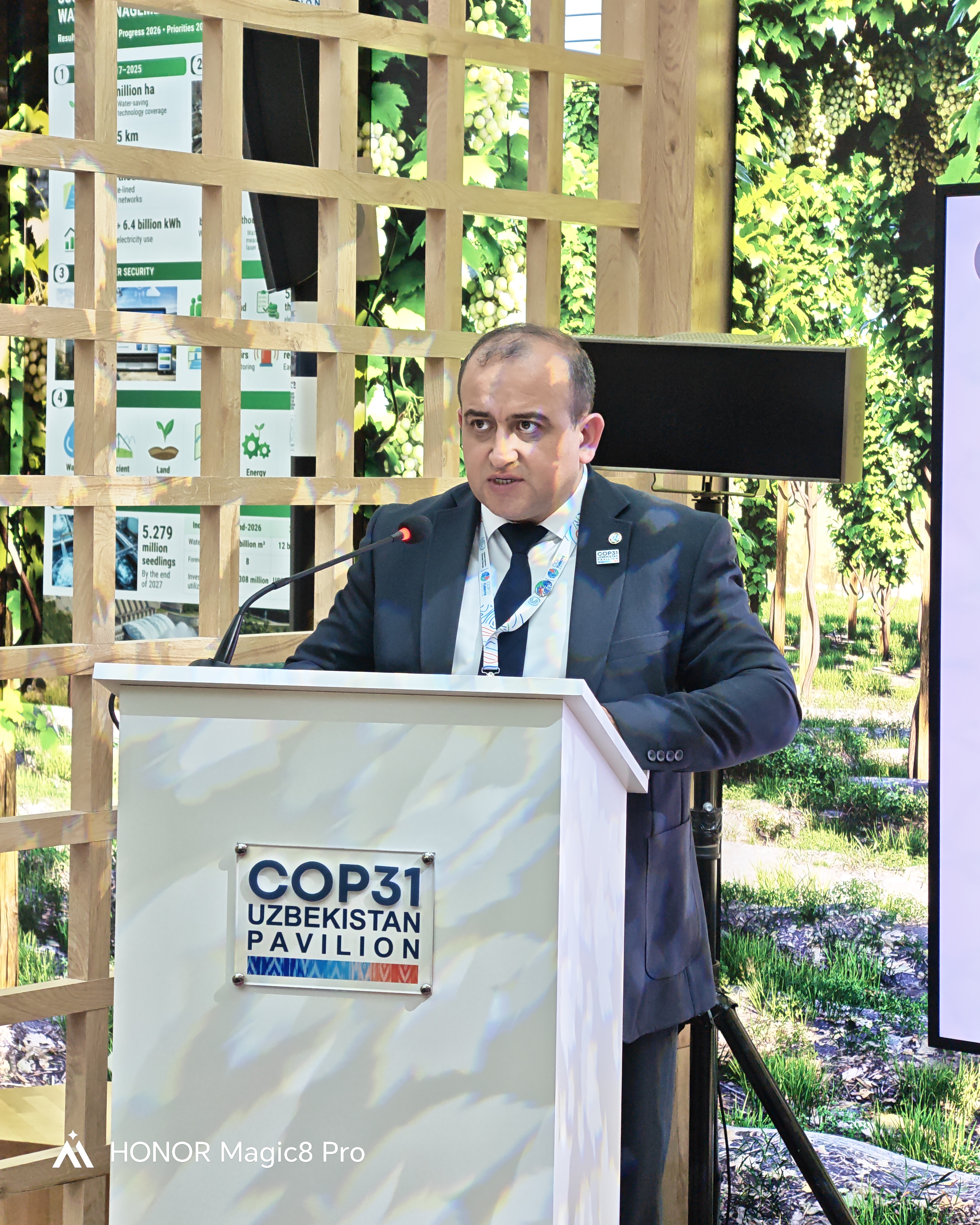
Further work under RESILAND CA+ will focus on advancing the entire package of regional documents, developing coordination and knowledge-sharing mechanisms, and preparing joint initiatives involving Central Asian countries and development partners.
For CAREC, the priority remains to ensure continuity in this work by supporting the harmonization of regional approaches, strengthening cooperation among government authorities in the five countries, developing information and analytical infrastructure, and helping translate shared priorities into concrete joint activities.
The COP31 event marked another milestone in advancing regional cooperation under RESILAND CA+. The signing of the first two declarations demonstrated the potential to move from discussions towards the institutional formalization of agreements and the practical preparation of joint projects. Continued coordination among the countries, with World Bank support and CAREC's facilitation, will be important for advancing the regional agenda on landscape restoration, biodiversity conservation and strengthening the resilience of Central Asia's ecosystems.
----------------------------------------------
About the RESILAND CA+ Program
The Central Asia Resilient Landscapes Restoration Program (RESILAND CA+) is financed by the World Bank with support from the the Global Partnership for Sustainable and Resilient Landscapes (PROGREEN) and the Korea‑World Bank Partnership Facility (KWPF).
The Regional Environmental Centre for Central Asia (CAREC) implements the regional component of the RESILAND projects in the Kyrgyz Republic, Tajikistan, and Uzbekistan.
For additional information:
Dilovarsho Dustzoda
Deputy Team Leader of the Project Implementation Group for “Sustainable Landscape Restoration in the Republic of Tajikistan: Regional Component”, CAREC
ddustzoda@carececo.org
Azamat Kauazov
Deputy Team Leader of Uzbekistan Resilient Landscape Restoration Project: Regional Component, CAREC
cacip@carececo.org
Lyudmila Kiktenko
Deputy Team Leader, “The Kyrgyz Republic Resilient Landscape Restoration Project: Regional Component”Project, CAREC
lkiktenko@carececo.org