

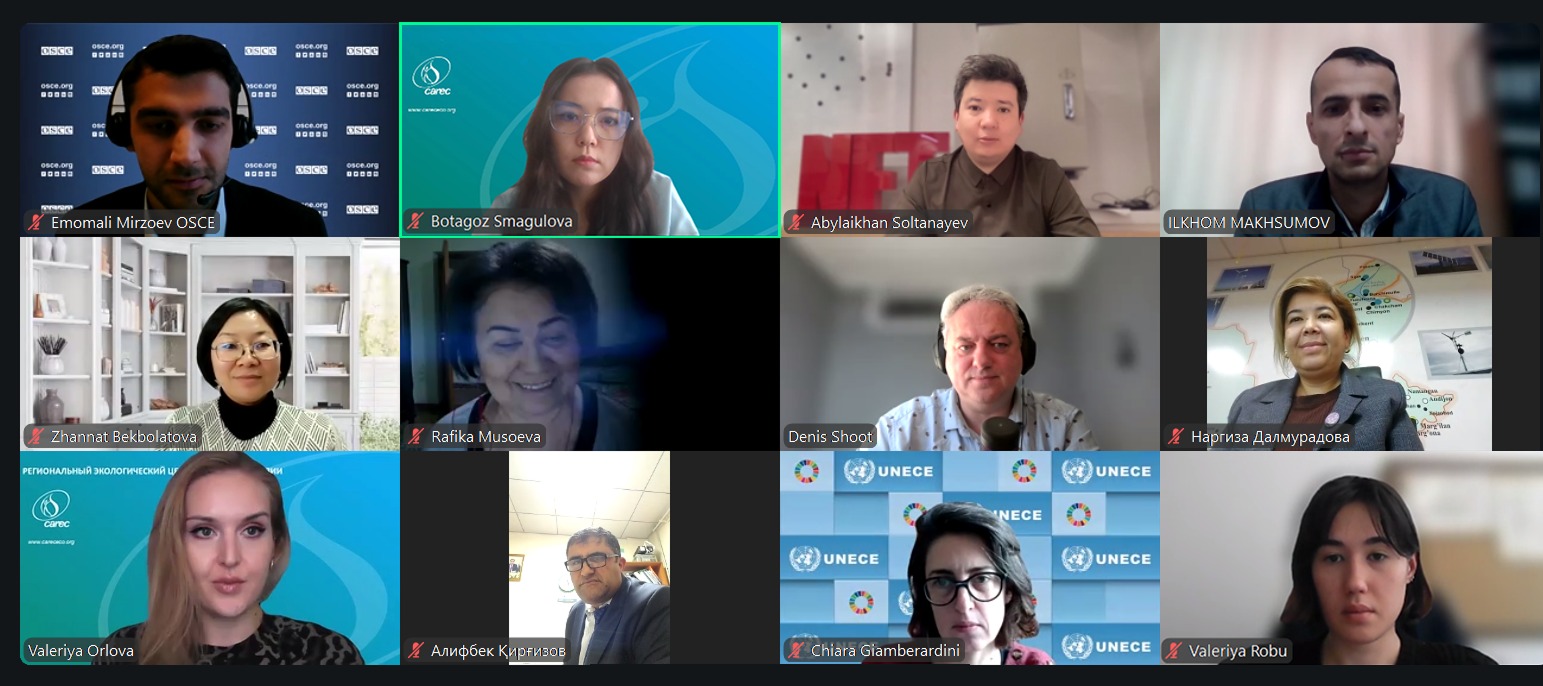
On 17 December 2025, members of the Regional Task Force on Education for a Just and Inclusive Energy Transition in Central Asia (RTEET) endorsed the launch of the content development phase of the new regional course on “Integration of Variable Renewable Energy into Central Asian Power Systems”.
The course will be jointly developed by experts from across the region and piloted in technical universities in 2026. It aims to address the shortage of qualified specialists and improve the alignment between educational programmes and labour market needs in the renewable energy sector.
Opening the meeting, Emomali Mirzoev, Project Officer on Energy Security at the Organization for Security and Co-operation in Europe (OSCE) Secretariat, emphasised the relevance of the initiative:
“The clean energy transition in Central Asia could create up to 100,000 new jobs by 2050. Preparing a new generation of engineers with the necessary skills is essential for achieving national and regional energy goals.”
Valeriya Orlova, Education for Sustainable Development Program Manager at the Regional Environmental Centre for Central Asia (CAREC), presented the proposed structure of the course, which includes six modules, practical case studies, digital tools, and a gender-sensitive approach:
“For the first time, national experts from five Central Asian countries are jointly designing training materials grounded in real system challenges,” Orlova highlighted. “This cooperation lays the foundation for new regional educational standards.”
Project experts outlined the academic concept of the course, emphasising that it will equip students not only with theoretical knowledge, but also with practical tools and modelling skills relevant to modern power system challenges. The course will introduce students to digitalisation, forecasting tools, grid stability issues, sector coupling solutions, and international best practices, while remaining grounded in the specific operating conditions of Central Asian energy systems.
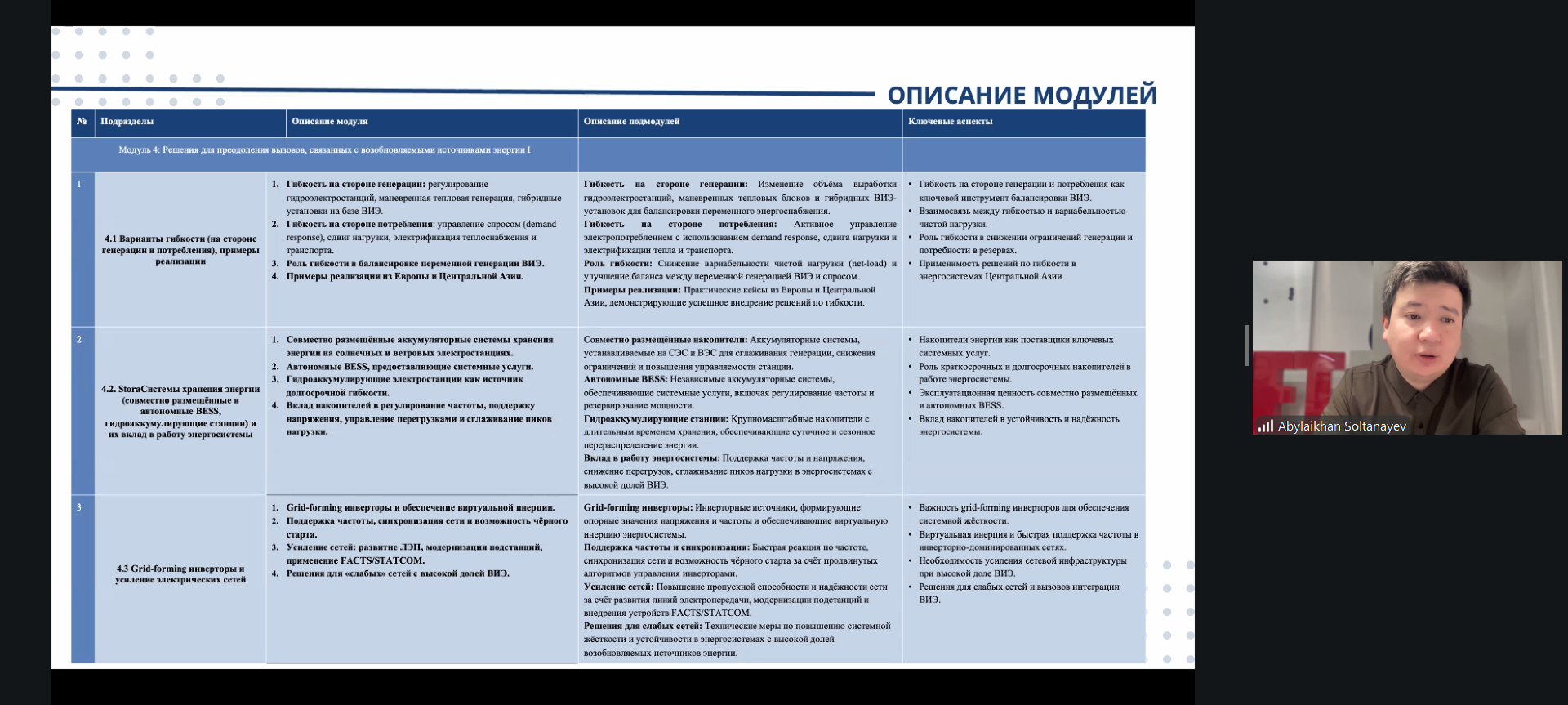
Experts also highlighted the value of developing shared terminology, harmonised module structure, and a coordinated regional approach involving universities from different countries. They stressed that the curriculum should reflect real engineering tasks related to weak grids, seasonal variability, transmission bottlenecks, and increasing shares of variable renewable energy.
Participants discussed implementation timelines and agreed that the course materials, including case studies, practical exercises, and country-specific components, are expected by March 2026.
The RTEET meeting was organized in partnership with CAREC, as part of the OSCE project “Promoting Women’s Economic Empowerment in the Energy Sector in Central Asia”.
Contacts:
● Emomali Mirzoev, Project Officer, OSCE, Emomali.Mirzoev@osce.org
● Valeriya Orlova, Education for Sustainable Development Program Manager, Project Manager and Officer, CAREC, vorlova@carececo.org
#RTEET #OSCE #CAREC #GreenEnergy