
Speaking at a session dedicated to the implementation of the “One Health” approach in Central Asia, held within the framework of the Regional
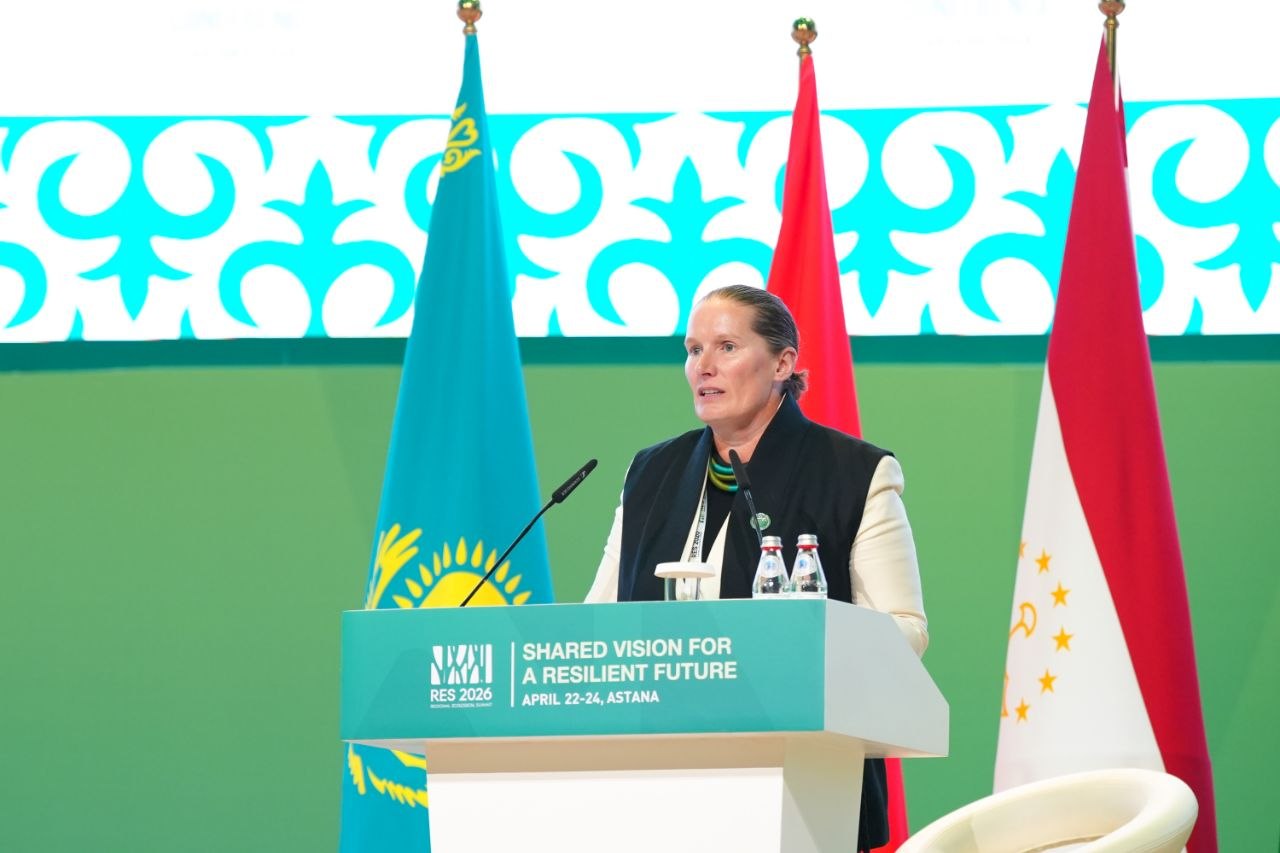
Environmental Sub-regional Summit (RES-2026) in Astana on April 22–24 this year, Valerie Hickey, Sustainable Development Director for the World Bank Group, noted the need to reset global efforts to protect human and animal health. The key points of her speech are provided in the material below.
A New Perspective on Partnership and Investment
According to Valerie Hickey, the success of the “One Health” concept — an integrated approach linking human, animal, and environmental health — is impossible without coordinated international cooperation.
“In the context of implementing the ‘One Health’ approach, partnership is of paramount importance — between countries, between governments, and between the public and private sectors. It is important to remember that every farmer is, in essence, a private entrepreneur. In this regard, it is essential to ensure the involvement of both the private and public sectors in efforts to protect human and animal health.”
The Environment: A Root Cause, Not an Afterthought
In her speech, Valerie Hickey placed the primary emphasis on the critical role of the environment, which is often overlooked in discussions on medical and veterinary issues related to human and animal health.
“We can talk at length about livestock health and the challenges faced by farmers. However, we often forget how these aspects connect to the environment — yet that is precisely where new diseases transmitting from animals to humans emerge. In this regard, the environment is not something to be thought of last. It is a foundational component of all pandemic prevention efforts. If we focus exclusively on healthcare and agriculture, we will simply continue to treat the symptoms rather than the disease itself, which is environmental degradation and climate change.”
Valerie Hickey described the climate crisis as a “threat multiplier.” Neither climate change nor rapid biodiversity loss causes pandemics directly, but they act as powerful catalysts of risk, she noted.
Valerie Hickey cited the experiences of Botswana and Nepal, where successes in wildlife conservation paradoxically led to a critical convergence of the habitats of wildlife and livestock. Consequently, contact between humans and wildlife inevitably entails risks of zoonotic infection spillover. This convergence requires immediate preventive measures aimed at protecting human and animal health.
Tanzania’s Experience: World Bank Support for the Implementation of the “One Health” Approach
Valerie Hickey noted with regret that the lessons of the COVID-19 pandemic, during which promises were made to rethink our relationship with wildlife, have not been learned. As soon as the acute phase of the crisis subsided, real action by a number of countries took a back seat, and they shifted their attention to managing national debts that had accumulated during the pandemic.
Against this background, Tanzania demonstrates an exceptional example of a systemic approach. To implement the national “One Health” program, the World Bank Group allocated $15 million in funding to the country's government. These funds are directed towards the implementation of the following measures:
· Regulations and Incentives for Specific Drivers: The authorities are taking measures to develop regulatory standards for wildlife resource management, actions to regulate livestock health, as well as screening protocols for human diseases.
· Institutional Strengthening: The Government of Tanzania has taken steps to build the capacity of state environmental and agricultural agencies, and to enhance coordination with relevant international organizations.
· Digital Infrastructure Development: The authorities are investing in IT systems that enable the assessment of contact risks between wildlife and livestock, the analysis of livestock movement routes, the tracking of animal products entering the food chain, and the detection and analysis of specific disease outbreaks.
These measures have helped Tanzania achieve certain successes in preventing the spread of diseases among humans and animals. The experience of the country's government, with appropriate adaptations, can be applied in other parts of the world.
As Valerie Hickey concluded, World Bank support for the implementation of the “One Health” program in several countries represents a pragmatic investment strategy aimed at economic development, agricultural stability, and safeguarding global markets, including those in Central Asia, from pandemic risks. At the same time, such investments can contribute to the creation of new jobs in various sectors, including healthcare, food production, and logistics.
Shoira Toirova PR Consultant for the “One Health” Program