

On May 31, 2025, the International High-Level Conference on Glacier Preservation concluded in Dushanbe. Countries of Central Asia, with active support from international organizations, developed priority action areas to protect glaciers – the region’s key water sources.
During the pre-conference event, Forum 5: Ministerial Dialogue on Climate Resilience, Glacier Preservation, and Water Cooperation – a set of key priority areas was endorsed:
- Developing sustainable financing mechanisms and partnerships for climate adaptation and enhanced water cooperation.
- Deepening transboundary and interdisciplinary cooperation based on scientific data and institutional accountability.
- Strengthening science-policy synergy through joint research and learning.
- Expanding women’s participation in water management and climate policy.
- Actively engaging youth in addressing the region’s water and climate challenges.
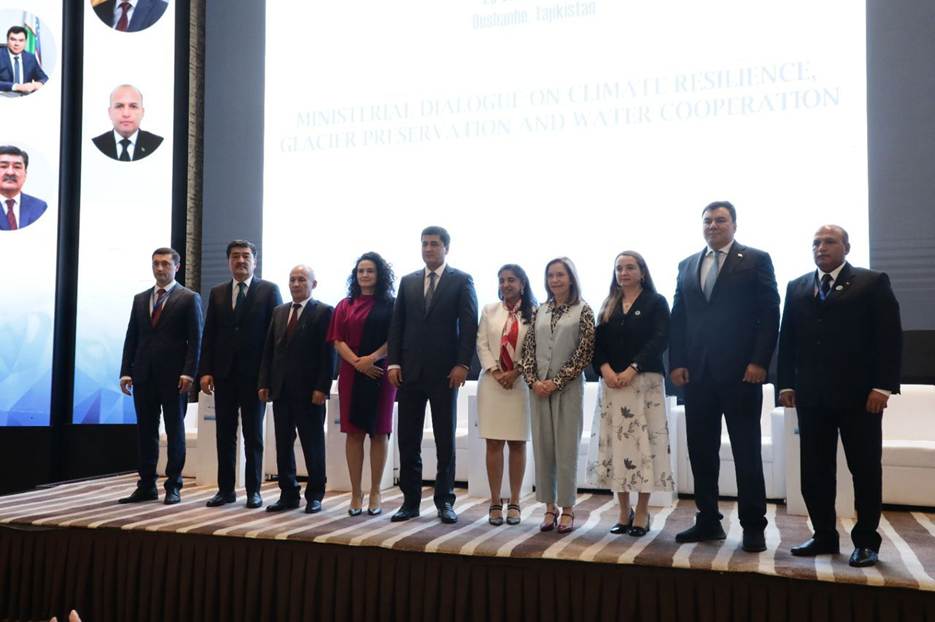
The Forum united environment ministers from Kazakhstan, Kyrgyzstan, Tajikistan, Turkmenistan, and Uzbekistan; representatives from the World Meteorological Organization (WMO), International Union for Conservation of Nature (IUCN), Green Climate Fund (GCF), Asian Development Bank (ADB); the scientific community, private sector, financial institutions, as well as women's and youth organizations. It was co-organized with the Committee for Environmental Protection under the Government of the Republic of Tajikistan and the CAREC Country Office in Tajikistan.
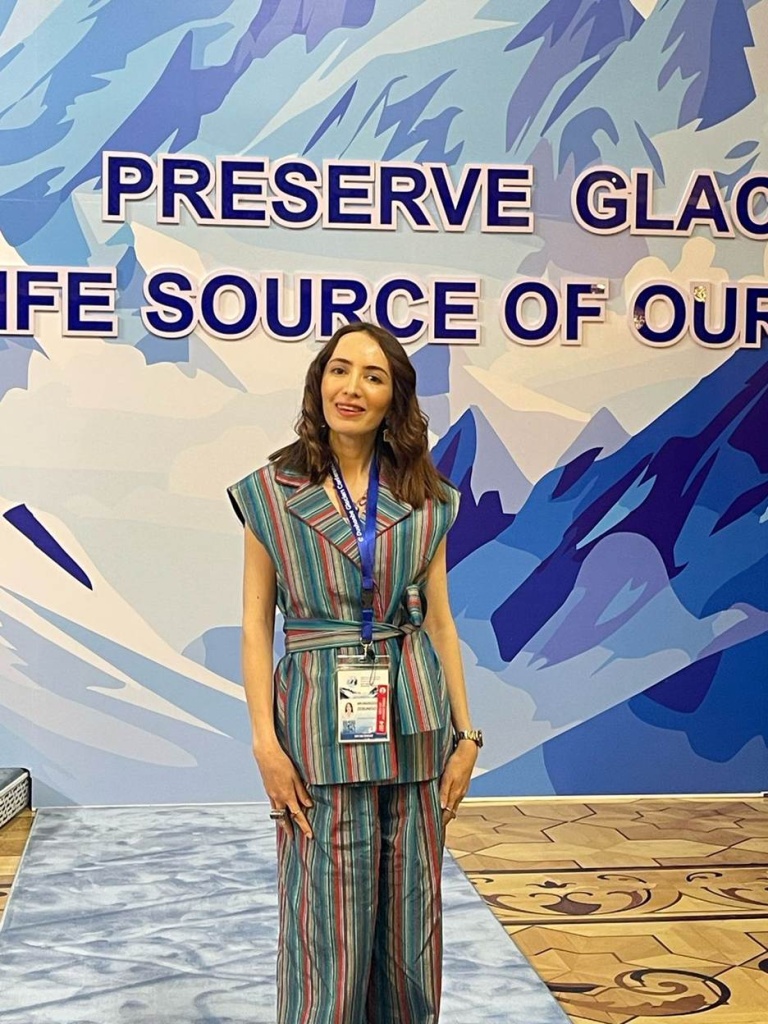
Ministers focused particularly on the threats posed by the rapid melting of the Tien Shan and Pamir glaciers: increased floods and landslides, potential droughts, risks to food security, and economic stability. Key challenges identified include: data scarcity, the need for regional coordination, underfunding of adaptation measures in mountain areas, and institutional barriers in water resources management," noted Zebuniso Muminzoda, Member of the Conference Secretariat and Focal Point for Thematic Sessions and Side Events, Director of the CAREC Country Office in Tajikistan.
Ms. Celeste Saulo, Secretary-General of the World Meteorological Organization (WMO), emphasized the need for data sharing and establishing effective early warning systems. Ms. Grethel Aguilar, Director General of the International Union for Conservation of Nature (IUCN), highlighted scaling up nature-based solutions. Ms. Mafalda Duarte, Executive Director of the Green Climate Fund (GCF), confirmed the Fund's readiness to support regional initiatives.
Ms. Yasmin Siddiqui, Director of the Environment, Natural Resources, and Agriculture Division for the Central and West Asia Department at the Asian Development Bank (ADB), confirmed ADB’s commitments and outlined key financial mechanisms:
“ADB is unlocking $100 billion in new lending capacity through institutional reforms, strategic deployment of concessional financing and policy-based loans, and private capital mobilization to deliver transformative climate adaptation, food security, and resilience at scale across Asia and the Pacific.
ADB also spearheads transformative initiatives such as the $3.5 billion Glacier to Farms program, which strategically blends concessional finance and grants to deliver end-to-end climate adaptation across critical river basins.”
Concluding the Forum, Mr. Bahodur Sheralizoda, Chairman of the Committee for Environmental Protection under the Government of Tajikistan, called for moving from dialogue to concrete, funded projects aimed at sustainable water resource management and glacier protection.
Ministerial Dialogue on Climate Resilience, Glacier Preservation, and Water Cooperation – A Platform for Regional Unity and Solutions
The Forum served as a unique high-level platform. Its primary goal is to advance glacier preservation through transboundary, cross-sectoral, and intergenerational cooperation in the water sector.
Why is this critically important? Central Asia, whose Tien Shan and Pamir mountain systems are vital water reservoirs, is heavily dependent on glaciers, snow, and permafrost. Rapid and uncontrolled glacier melt is already leading to more frequent destructive floods and landslides. In the future, it threatens catastrophic droughts, undermining the livelihoods of millions and the stability of the entire region's economies. The Forum highlighted the urgent need for immediate, coordinated action integrating glacier preservation into climate adaptation strategies.
Structure and Key Outcomes of the Forum:
- Ministerial Dialogue Session: The session was moderated by Dr. Stefan Uhlenbrook, Director of Hydrology, Water and Cryosphere at the World Meteorological Organization (WMO). He stressed the importance of integrating science-based solutions with regional policy frameworks to address the complex water–climate nexus. Key challenges identified:
- Acute need for regional cooperation on shared river basins amid water stress.
- Critical data scarcity and the need for harmonized glacier monitoring networks.
- Funding shortfall for adaptation measures, especially in mountain areas.
- Legal and institutional fragmentation hindering integrated water and climate management.
- Networking and Partnerships Session: Focused on uniting governments, science, business, financial institutions, and civil society (especially women and youth) for joint nature conservation action.
Five Pillars for the Future: Key Messages from the Forum
The Dialogue within the Forum, facilitated by the CAREC Country Office Director and partners, crystallized into key calls to action:
- Sustainable Partnerships and Financing: The key to glacier preservation lies in concerted efforts on climate resilience (adaptation + mitigation) and strengthening water cooperation. Scaling up stable financing is required.
- Transboundary Harmony: Glacier melt impacts interconnected water, energy, food, and ecosystems. Harmonized cooperation based on principles is needed:
- Science-based services.
- Interdisciplinary and inclusive approaches (transparency).
- Institutional accountability at all levels (local to regional).
- Academic-Policy Synergy: Strengthening cooperation through joint learning, interdisciplinary research, and science-policy dialogue – the foundation for sustainable water management in Central Asia.
- Inclusive Leadership (with focus on women): Empowering women in the water sector through inclusive policies, targeted funding, and enhancing their visibility – a strategic imperative for achieving broad socio-economic benefits.
- Investing in Youth: Engaging and equipping youth with practical skills, mentorship, and leadership opportunities – crucial for building a generation capable of tackling water and climate challenges.
Closing the Forum, Mr. Bahodur Sheralizoda, Chairman of the Committee for Environmental Protection under the Government of the Republic of Tajikistan, confirmed Tajikistan's commitment to a collective regional vision and called on partners to translate commitments into concrete, funded initiatives.
Additional Information:
Zebuniso Muminzoda - Member of the Conference Secretariat and Focal Point for Thematic Sessions and Side Events, Director of the CAREC Country Office in Tajikistan, tajikistan@carececo.org