
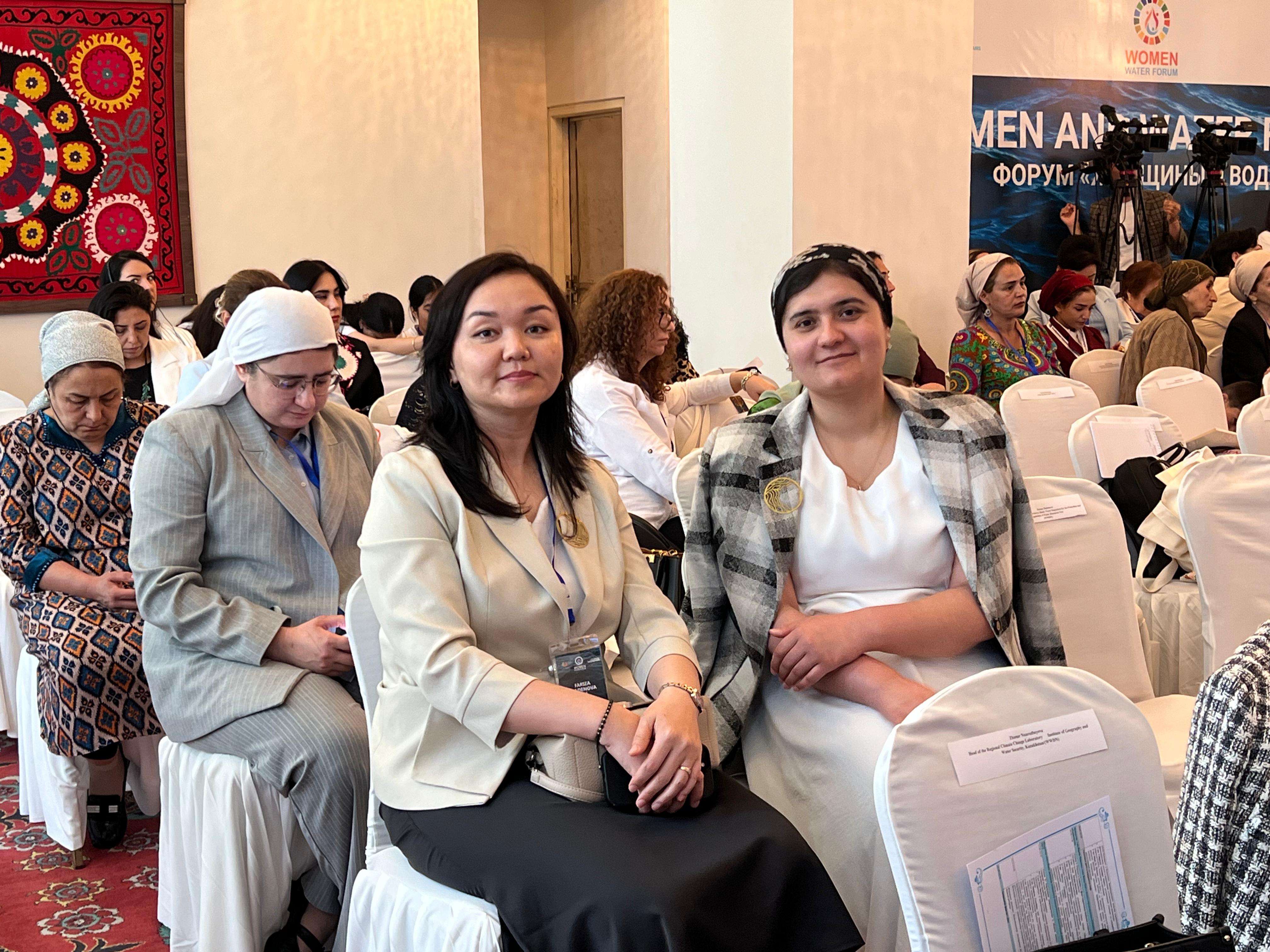
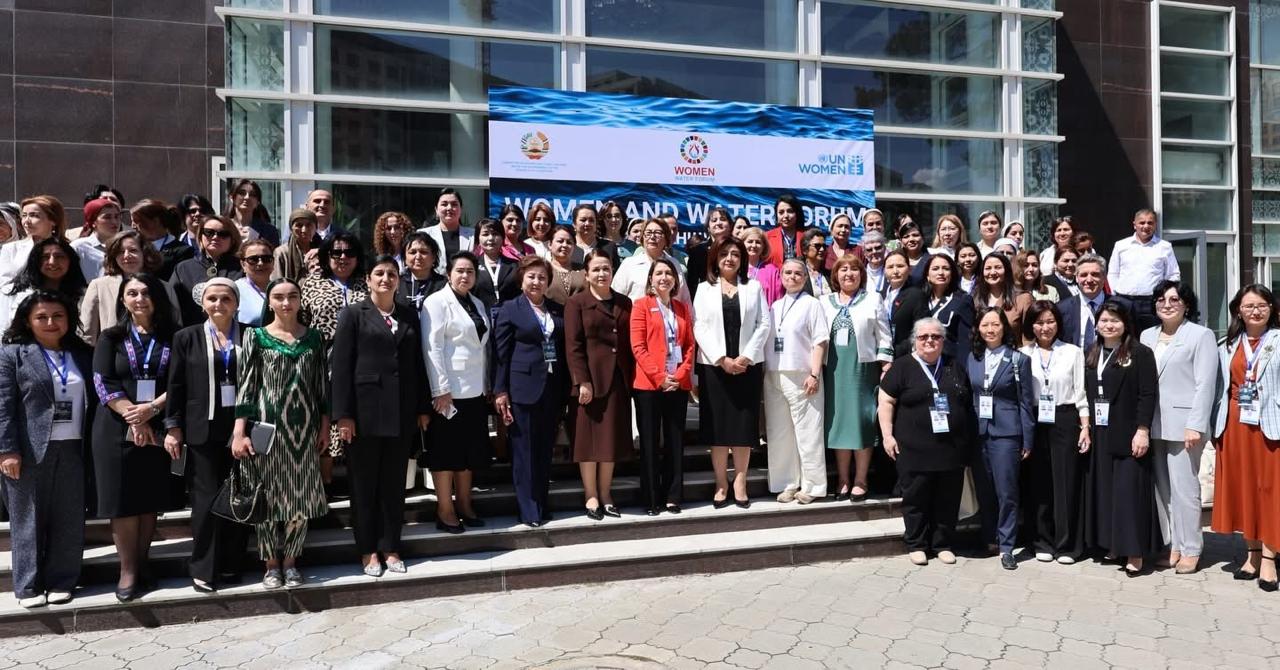
DUSHANBE, May 25, 2026 — Ahead of the 4th High-Level International Conference on the International Decade for Action “Water for Sustainable Development” (2018–2028), the International Forum “Women and Water 2026” was held. The event was dedicated to promoting gender-sensitive approaches to management, financing, and cooperation in the field of water resources.
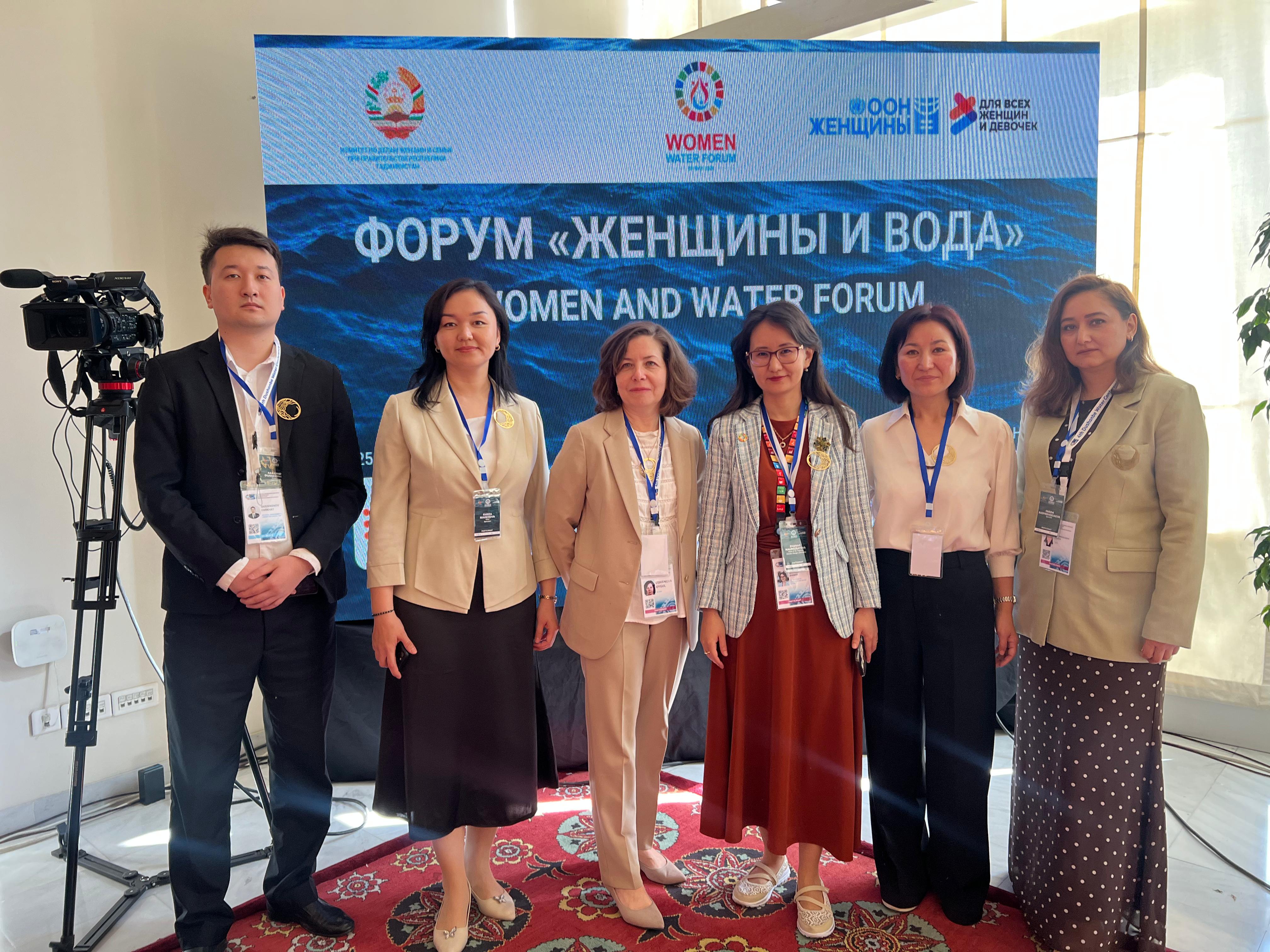
The Forum was organized by the Committee on Women’s and Family Affairs under the Government of the Republic of Tajikistan and UN Women in Tajikistan, with co-financing from development projects, including Blue Peace Central Asia.
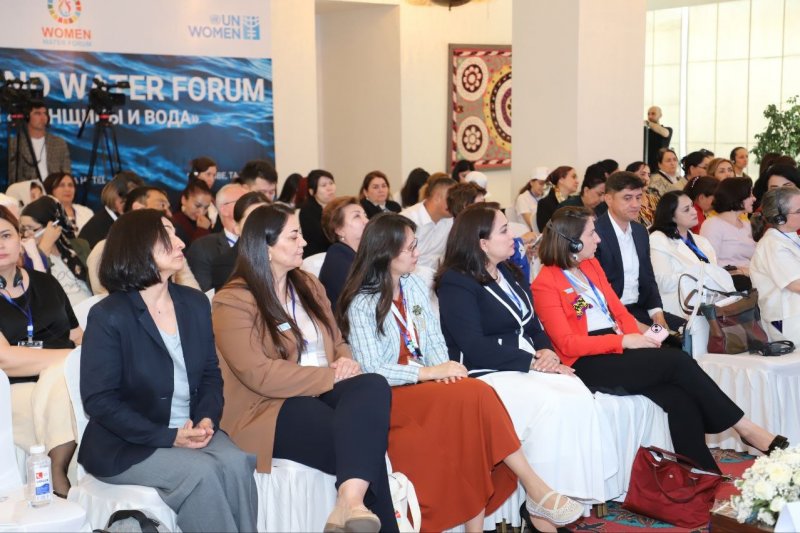
Photocredits: National Information Agency of Tajikistan "Khovar"
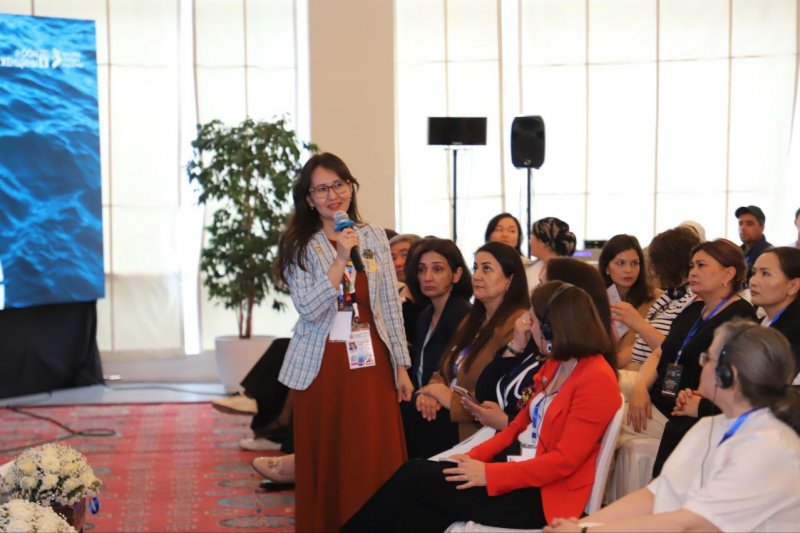
Photocredits: National Information Agency of Tajikistan "Khovar"
The Forum’s agenda was divided into three thematic sessions covering current regional areas of cooperation, which were examined through the lens of gender equality:
- Finance and Innovation: ensuring equal access to climate finance, the adoption of digital technologies, and the use of artificial intelligence (AI) in the water sector.
- Water Resource Management: reducing the gender gap in Central Asia’s water sector—from local initiatives to global policy—and strengthening the role of women as key “stewards” of water resources.
- Cooperation and Glacier Conservation: strengthening transboundary water cooperation, social ties at the local community level, and scientific collaboration in the field of glacier conservation.
During the panel session, Oygul Usmanova—a representative of the “Women in Water Management in Central Asia” network—delivered a presentation, sharing the findings of the interregional study “Gender Gap Assessment in the Water Sector of Central Asia and the South Caucasus: Capacity Development and Participation in Decision-Making Processes,” conducted by members of the Women’s Networks of Central Asia and the South Caucasus with the support of the Blue Peace Central Asia project. The study’s findings revealed similarities in the barriers and challenges—ranging from cultural to political—that women face at all levels of water resource management.
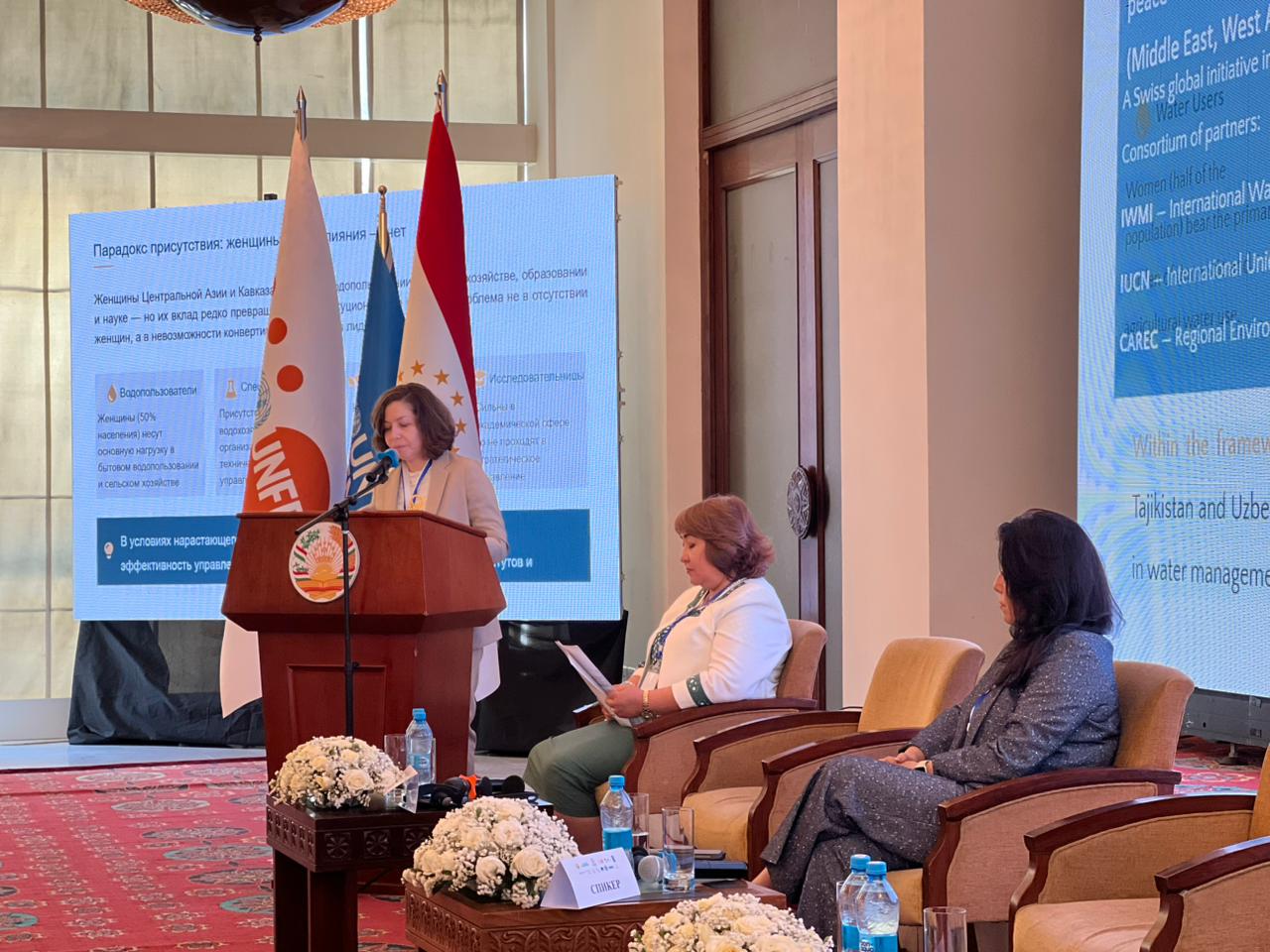
In her remarks, Ms. Usmanova highlighted the existence of the so-called “paradox of presence without influence.”
Despite the fact that women make up about half of the region’s population, play a key role in agriculture, management, and water use at the local level, and are widely represented in the academic community, their participation rarely translates into actual leadership positions and influence over strategic decision-making in the water sector.
Among the study’s main findings, the following trends were noted:
● The gap between policy and practice. Although gender equality issues are enshrined in the legislation of most countries in the region, the mechanisms for their practical implementation remain insufficiently effective.
● Loss of human capital. At every stage of professional development—from specialized education to employment and career advancement—there is a significant reduction in the number of women due to a lack of systemic support and career opportunities.
● Underrepresentation in leadership positions. While the share of women in certain segments of the water sector reaches 30–50%, their presence in leadership positions typically does not exceed 10–20%.
● Persistent structural barriers. Women’s career advancement is hindered by entrenched social stereotypes, a disproportionately high burden of household responsibilities, and the absence of gender-sensitive approaches to the allocation of funding and access to land and water resources.
To address the existing gender imbalance, the following recommendations have been proposed:
● Developing a continuous support chain of “Education – Practice – Leadership,” which provides support for young female professionals through training, internships, guaranteed employment, and further career advancement.
● Institutionalizing a gender approach by incorporating gender indicators into key performance indicators for government agencies and organizations, talent pools, and budget planning processes.
● Strengthening the legal framework, including the development of mechanisms to ensure women’s equal access to water and land resources, as well as legal recognition of the status of women farmers.
● Strengthening the role of women in water diplomacy by expanding their participation in regional dialogue, intergovernmental negotiations, and decision-making processes on transboundary water cooperation.
Forum participants agreed that without addressing the gender gap in personnel and management policies, achieving water security in the region amid the climate crisis will be impossible.
Background
The Blue Peace Central Asia initiative (2025–2029) aims to support sustainable water resources management and promote water diplomacy in the region’s transboundary basins.
The project includes three main areas: hydro-diplomacy, implementation of projects for basin and investment planning on small transboundary rivers, and capacity building for young professionals and women.
Blue Peace promotes a multi-level and multi-stakeholder approach to water governance in Central Asia. Special attention is given to equitable distribution and efficient management of water resources in close connection with the region’s socio-economic development and stability.
The project is implemented by a consortium of International Water Management Institute and International Union for Conservation of Nature in partnership with Regional Environmental Centre for Central Asia.
Additional Information:
Irina Yugay — Acting Program Manager, CAREC Water Initiatives Support Program i.yugay@carececo.org