
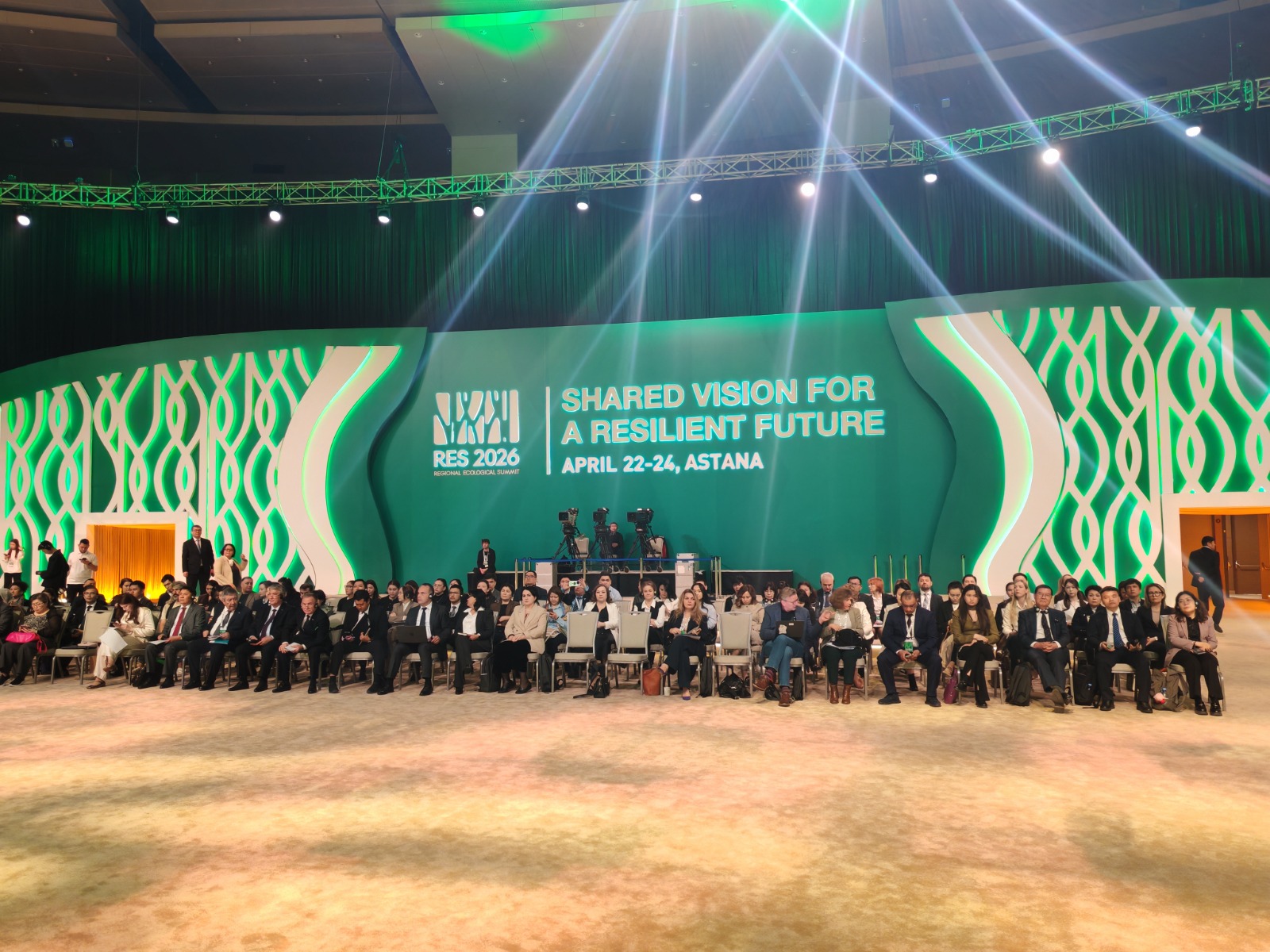
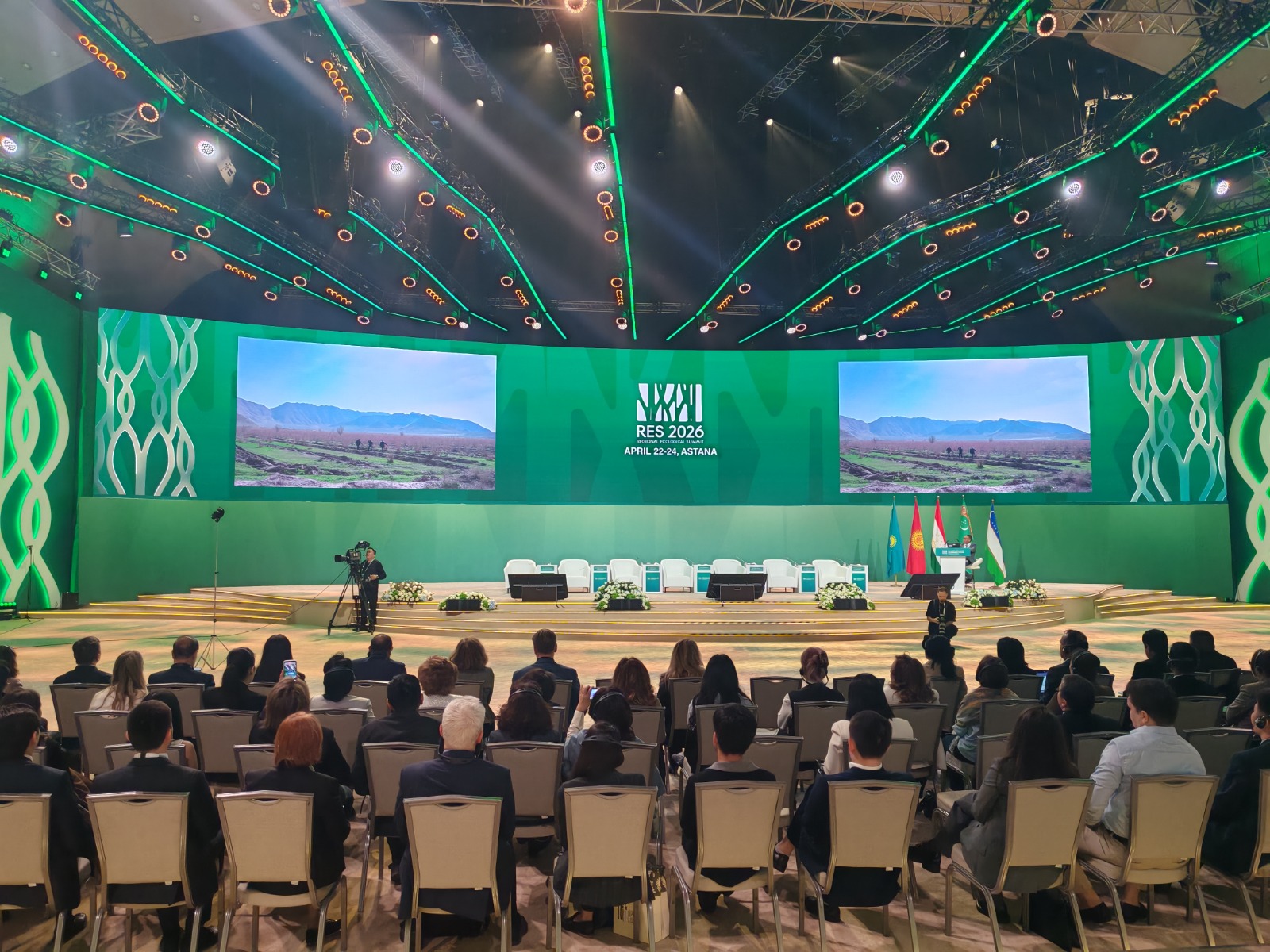
Astana, April 24, 2026 — Representatives of Central Asian governments, international organizations, and the scientific community gathered today for the panel session “Transboundary Landscape Restoration in Central Asia,” held with the support of the World Bank as part of the CACCC-2026 - RES-2026.
The event, organized with the participation of the Regional Environmental Centre for Central Asia (CAREC), brought together representatives from Kazakhstan, Kyrgyzstan, Tajikistan, Turkmenistan, and Uzbekistan, as well as international partners, including the United Nations Convention to Combat Desertification.
Participants emphasized the growing need for coordinated action to address land degradation, which affects up to 80% of the region’s territory and results in annual economic losses estimated at around 6% of the combined GDP of Central Asian countries. Increasing climate pressures — including accelerated warming and a rising frequency of extreme weather events — require a shift from fragmented initiatives to systemic regional solutions.
Regional cooperation and international support
The session reaffirmed the critical role of international partners, including the Food and Agriculture Organization of the United Nations, the UN Convention to Combat Desertification, and the Regional Environmental Centre for Central Asia, in supporting countries across the region.
The RESILAND CA+ program, implemented with World Bank support, already covers more than 469,000 hectares of land and is expected to reduce greenhouse gas emissions by over 11 million tons of CO₂ equivalent.
International financial institutions and donors, including Germany, the Republic of Korea, and China, as well as climate funds such as the Global Environment Facility and the Green Climate Fund, continue to provide significant investments, enabling the scaling-up of sustainable land management practices.
From commitments to action
Participants emphasized that Central Asian countries are increasingly moving from strategic declarations to practical implementation. Key priority areas include:
● Sustainable rangeland management and agroforestry;
● Large-scale afforestation programs, including the planting of billions of trees;
● Modernization of water management systems;
● Development of digital platforms for natural resource monitoring.
These measures are already improving agricultural resilience, protecting infrastructure, and reducing disaster risks for hundreds of thousands of people across the region.
Contribution to the global agenda
The outcomes of the session directly contribute to the achievement of the Sustainable Development Goals, including:
● SDG 15 (Life on Land)
● SDG 13 (Climate Action)
● SDG 17 (Partnerships for the Goals)
● SDG 16 (Peace, Justice and Strong Institutions)
Outlook
Participants agreed that further progress will require:
● deeper harmonization of regional policies;
● deployment of digital tools to improve access to data and knowledge;
● expanded scientific and technical collaboration;
● greater engagement of the private sector in investments for sustainable landscapes.
Central Asia is emerging as a unique model of transboundary natural resource governance, demonstrating how regional cooperation can become a driver of sustainable development and climate resilience.
-------------------------------------
CACCC-2026 is hosted by CAREC as part of the Resilient Landscapes in Central Asia (RESILAND CA+) Program of the World Bank, in cooperation with the Central Asia Water and Energy Program (CAWEP), the World Bank, and Deutsche Gesellschaft für Internationale Zusammenarbeit (GIZ) GmbH, with additional valuable support from other programs and partners.
Additional Information:
Dilovarsho Dustzoda — Deputy Team Leader of the Project Implementation Group for “Sustainable Landscape Restoration in the Republic of Tajikistan: Regional Component”, CAREC
Azamat Kauazov – Deputy Team Leader of Uzbekistan Resilient Landscape Restoration project: regional component, CAREC
Lyudmila Kiktenko – Deputy Team Leader, “Restoration of Sustainable Landscapes in Kyrgyzstan: Regional Component” Project, CAREC