

The regional training workshop on developing Green Climate Fund (GCF) Concept Notes has successfully concluded in Almaty. The workshop aimed to support Central Asian countries in building a pipeline of national climate projects for submission to the Green Climate Fund and to strengthen their access to climate finance.
In the following brief interviews, participants share their impressions of the workshop.
KAZAKHSTAN
Aidar Yessembayev
Head of the Office of Competence for Technology Commercialization of Green Technologies and Investment Projects Department
International Green Technologies and Investment Projects Center of the Ministry of Ecology and Nature Resources of the Republic of Kazakhstan.
KYRGYZSTAN
Tairov Mairambek
Monitoring and Evaluation Specialist for the Regional Economic Development Project,
Community Development and Investment Agency (ARIS).
TAJIKISTAN
Orzu Odinaev
GCF Readiness project Coordinator.
TURKMENISTAN
Mergen Kepbanov
Project Office Director in Turkmenistan, the Regional Environmental Centre for Central Asia (CAREC).
UZBEKISTAN
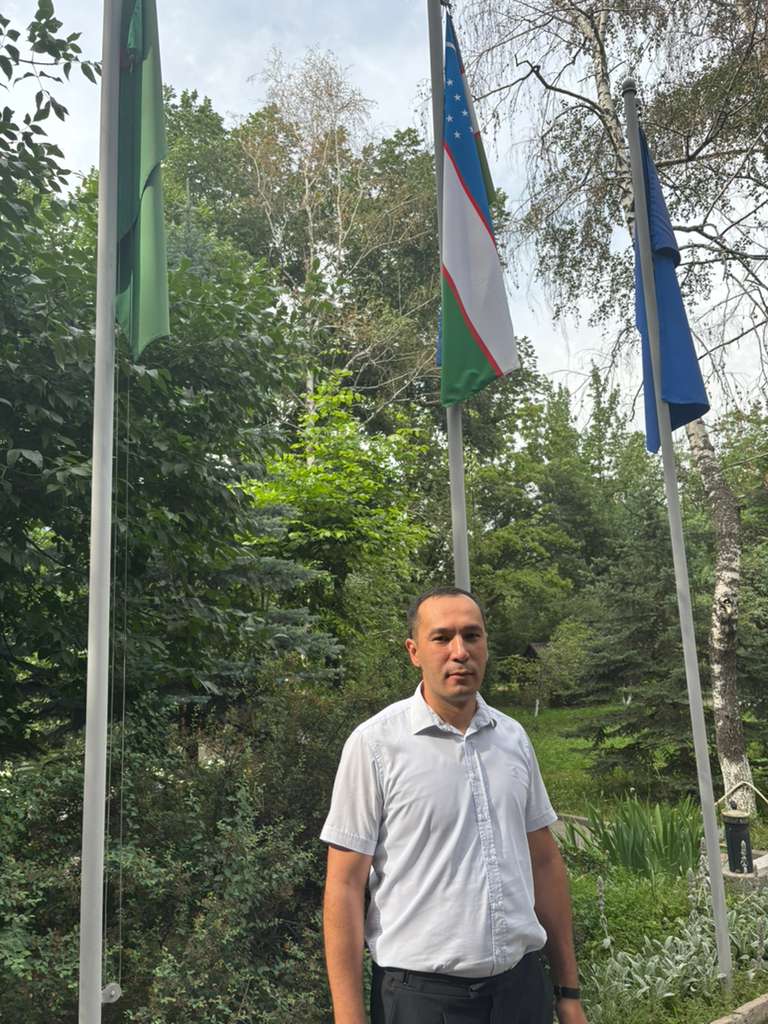
Elbek Shomuratov
Head of Department in the National Centre for Climate Change under the National Committee on Ecology and Climate Change of the Republic of Uzbekistan, National Centre for Climate Change under the National Committee on Ecology and Climate Change of the Republic of Uzbekistan.
1. How would you assess the training overall?
Aidar Yessembayev (Kazakhstan): The training was very useful, informative and practical. It was well organized and provided a good balance between technical presentations, discussions and hands-on group exercises.
Tairov Mairambek (Kyrgyzstan): A more effective approach would have been to structure the training around a single, end-to-end case study. The facilitators could take one project idea and walk participants through every Green Climate Fund (GCF) requirement—from problem analysis to the final Concept Note. Country teams could then develop their own materials using this common example as a practical reference.
Orzu Odinaev (Tajikistan): The training was very useful, informative and practical. It was well organized and provided a good balance between technical presentations, discussions and hands-on group exercises.
Mergen Kepbanov (Turkmenistan): I highly appreciate the professionalism of the trainers and the quality of the training materials provided by the Regional Resource Centre for Asia and the Pacific of the Asian Institute of Technology (AIT RRC.AP). The workshop provided a deeper understanding of the Green Climate Fund's requirements, introduced participants to successful examples of project proposals, and strengthened our skills in developing climate projects. I am confident that the knowledge gained and the professional connections established during the workshop will contribute to the further development of national and regional initiatives on climate change and sustainable development.
Elbek Shomuratov (Uzbekistan): First, it brought together Central Asian countries in a truly collaborative way — helping us coordinate our activities in climate finance mobilization, exchange information, share national programming processes, and present our project ideas to each other. This regional cooperation was invaluable. Second, the involvement of international and well-experienced trainers made a huge difference. Having experts from AIT RRC.AP leading the sessions ensured that we received up-to-date, practical, and globally benchmarked knowledge. Their experience with real GCF projects, SAP policy updates, and the submission system gave us insights that we simply could not get from reading guidelines alone. The combination of regional peer learning and expert international facilitation created a powerful environment for capacity building. The workshop was well-structured, hands-on, and directly applicable to our work.
2. Do you think there is a need for more training of this kind in Central Asia?
Aidar Yessembayev (Kazakhstan): Yes, there is a clear need for similar trainings in the future, especially with more practical sessions on project design, budgeting, logframe development and application of the GCF investment criteria.
Orzu Odinaev (Tajikistan): Yes, there is a clear need for similar trainings in the future, especially with more practical sessions on project design, budgeting, logframe development and application of the GCF investment criteria.
Mergen Kepbanov (Turkmenistan): I believe it would be highly beneficial to organize similar training workshops and seminars for a broader range of specialists from relevant ministries and government agencies in Turkmenistan. This would strengthen national capacity for developing high-quality project proposals, enhance inter-agency coordination, and expand the country's ability to access financing through the Green Climate Fund (GCF). Such training opportunities help strengthen the professional skills of specialists, expose them to international best practices, facilitate knowledge exchange with colleagues from other countries, and improve their understanding of donor requirements. In addition, they contribute to building national capacity and enhancing Turkmenistan's ability to mobilize international climate finance. I believe it is particularly important to organize such training for specialists from relevant ministries and government agencies who are directly involved in the development and implementation of climate change and sustainable development projects.
Elbek Shomuratov (Uzbekistan): In Central Asia, many national agencies and accredited entities still have limited experience with the GCF’s Simplified Approval Process (SAP) and the new concept note requirements. The training addressed a concrete gap: how to move from a project idea to a bankable concept note, especially regarding environmental and social safeguards, gender mainstreaming, and private sector engagement. Given the increasing climate vulnerabilities in our region — from water scarcity to desertification — such hands-on trainings are essential. We need more of these, possibly with follow-up mentoring sessions after the workshop.
3. What new knowledge or skills did you gain?
Aidar Yessembayev (Kazakhstan): The training helped to better understand GCF additionality and how to clearly link project ideas with the GCF investment criteria. It also strengthened understanding of how to structure a strong climate rationale.
Orzu Odinaev (Tajikistan): The training helped to better understand GCF additionality and how to clearly link project ideas with the GCF investment criteria. It also strengthened understanding of how to structure a strong climate rationale.
Mergen Kepbanov (Turkmenistan): During the training, I gained new knowledge about the Green Climate Fund's procedures and requirements for preparing Concept Notes and project proposals. I found the sessions on the structure of a Concept Note, the GCF project assessment criteria, and practical approaches to developing climate initiatives that meet international standards particularly valuable. I also learned about current approaches to mobilizing climate finance, mechanisms for working with Accredited Entities, and successful regional experiences in preparing and implementing climate projects. The exchange of experience with participants from other Central Asian countries was especially valuable, as it provided practical insights into addressing common regional challenges related to climate change and sustainable development.
Elbek Shomuratov (Uzbekistan): I learned how to use the new GCF concept note template correctly, including each section and where to find the required background information. Most importantly, I understood the main criteria for successful submission: clear problem analysis, strong theory of change, logical framework with measurable indicators, integration of GESI and safeguards, and demonstrated country ownership. I also learned how to provide supporting materials and information — such as baseline data, stakeholder mapping, vulnerability assessments, and evidence of NDA endorsement — and how to organize them for the submission. Most importantly, I understood the critical importance of country ownership — that GCF funding succeeds when national priorities, local stakeholders, and NDAs drive the project design, not external agendas.
4. How do you plan to apply what you learned in your work?
Aidar Yessembayev (Kazakhstan): The knowledge and practical skills gained will be useful for preparing more robust concept notes and full funding proposals, as well as for reviewing project documents as part of my work with the national Direct Access Entity in Tajikistan.
Orzu Odinaev (Tajikistan): The knowledge and practical skills gained will be useful for preparing more robust concept notes and full funding proposals, as well as for reviewing project documents as part of my work with the national Direct Access Entity in Tajikistan.
Mergen Kepbanov (Turkmenistan): The knowledge I gained will help me participate more effectively in the development of project proposals and the promotion of climate initiatives at both the national and regional levels. I would also like to emphasize that the CAREC Project Office participated in the preparation of the Concept Note for FAO for submission to the new regional GCF. This training will be valuable for my future professional work, as it provided me with practical knowledge and skills in preparing Green Climate Fund Concept Notes and project proposals. The knowledge gained will help me contribute more effectively to the development of initiatives in the fields of climate change, environmental protection, and sustainable development, while applying international approaches and requirements in project preparation. Furthermore, the knowledge acquired during the training will strengthen cooperation with national and international partners and improve the quality of project proposals developed to attract international climate finance. I believe that the skills I have acquired will be highly valuable in my future work and will support the advancement of national and regional projects aimed at addressing environmental and climate challenges.
Elbek Shomuratov (Uzbekistan): This training will directly support our future work in several ways. First, we will continue consulting with international experts to develop Uzbekistan’s country program for the GCF, update our national adaptation plans, and provide technical support to candidate local authorities and banks in obtaining accreditation. Second, we now have the practical skills to develop high-quality concept notes using the correct template, logical framework, and supporting documentation. Finally, the regional coordination and information exchange with other Central Asian countries will enable us to align our climate finance mobilization efforts more effectively.
5. What was the most valuable part of the training for you?
Aidar Yessembayev (Kazakhstan): The most useful parts were the practical sessions on problem/tree analysis, climate rationale formulation, theory of change and development of draft concept notes. These exercises helped translate GCF requirements into concrete project design steps.
Orzu Odinaev (Tajikistan): The most useful parts were the practical sessions on problem/tree analysis, climate rationale formulation, theory of change and development of draft concept notes. These exercises helped translate GCF requirements into concrete project design steps.
In turn, the workshop trainer, Solomon Kofi Mensah, Climate Change Cluster Head, the Regional Resource Centre for Asia and the Pacific of the Asian Institute of Technology (AIT RRC.AP), also shared the following reflections:

“We would like to add this acknowledgement note also: The response from participants has been extremely positive and encouraging. Throughout the training, there was a high level of engagement, with participants actively asking questions, sharing country experiences, and discussing potential project ideas. This demonstrated not only strong interest in the subject matter but also a clear demand for practical guidance on how to enhance capacity, understanding the evolving processes, frameworks and frameworks for accessing climate finance through the Green Climate Fund.
Many participants highlighted that while climate challenges and investment needs in their countries are well recognized, there is often limited capacity and experience in translating these priorities into a well-structured, funding-ready concept that meet GCF investment criteria and demonstrate a paradigm shift as per GCF requirements. The workshop therefore helped to fill this important gap by providing hands-on support, practical tools, and a clearer understanding of the GCF project development process.
What has been particularly encouraging is the enthusiasm of country teams to apply the knowledge immediately. The active discussions and initial project concepts developed during the workshop indicate that the information is highly relevant and timely for the region. This reinforces the need for continued capacity-building efforts to help countries strengthen their climate project pipelines and access the financial resources needed to advance resilience and sustainable development objectives. This important workshop, one of the flagship climate finance capacity-building initiatives of the AIT Regional Resource Centre for Asia and the Pacific (AIT RRC.AP), was made possible through the generous financial support of the Ministry of the Environment, Japan (MOEJ) and the warm hospitality, strong partnership, and invaluable support of the Regional Environmental Centre for Central Asia (CAREC).”
Recall, the Regional Resource Centre for Asia and the Pacific of the Asian Institute of Technology (AIT RRC.AP), with financial support from the Ministry of the Environment of Japan and in partnership with the Green Climate Fund (GCF) Secretariat and in cooperation with the Regional Environmental Centre for Central Asia (CAREC), convened a regional training workshop aimed at strengthening the capacity of climate finance stakeholders across Central Asia to develop high-quality Green Climate Fund (GCF) concept notes.
The workshop brought together representatives from National Designated Authorities (NDAs), Accredited Entities (AEs), Direct Access Entities (DAEs), government agencies, civil society organizations, and other key stakeholders from across the region to enhance their understanding of GCF funding modalities, particularly the Simplified Approval Process (SAP), and support the development of strong climate project pipelines."