
DUSHANBE, Tajikistan – 14 May 2026 – A key side event titled “Taking action across agrifood systems for biodiversity and global impact at CBD COP17” was held as part of the 35th Session of the FAO
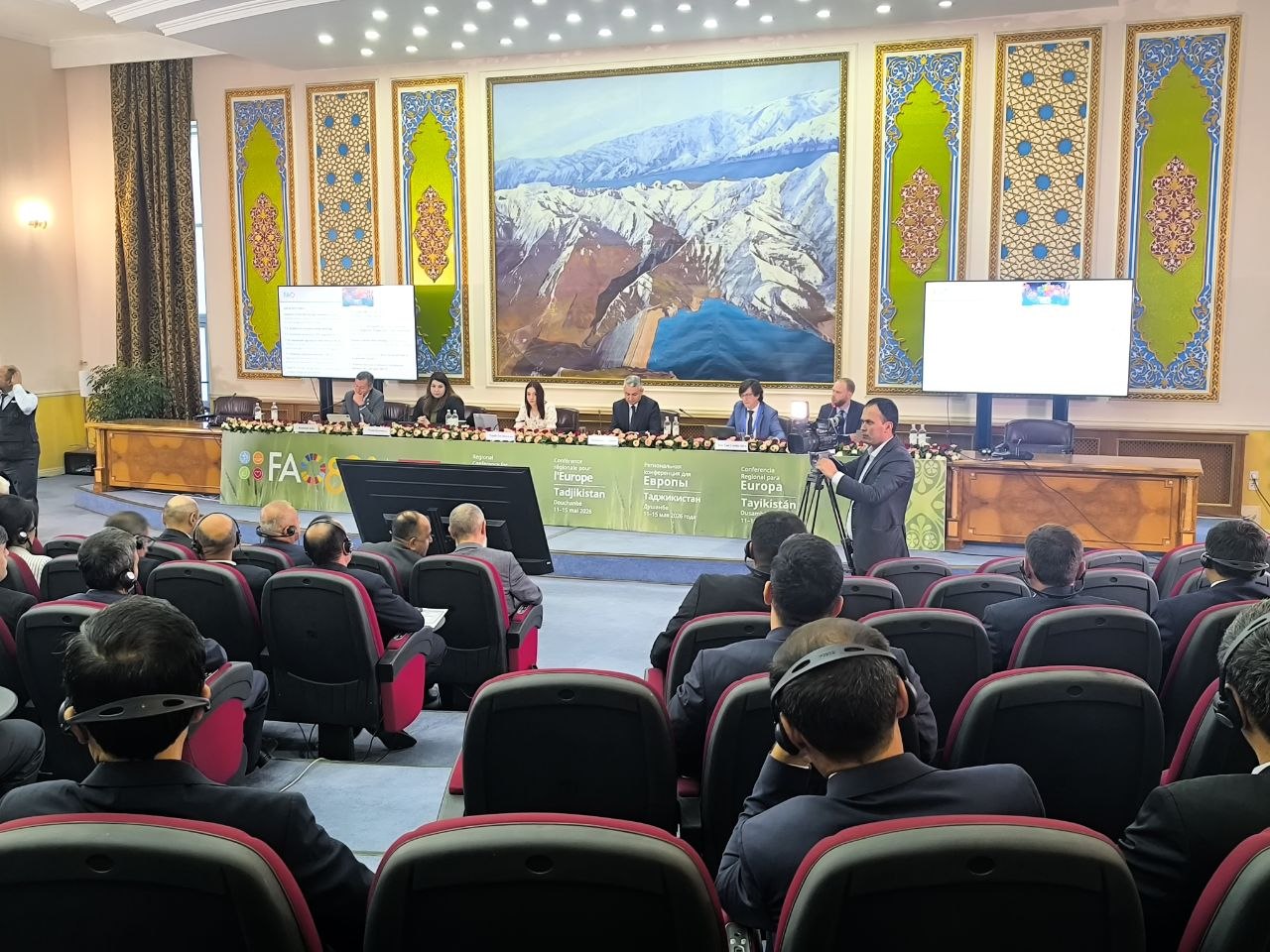 Regional Conference for Europe (ERC35). Participants discussed the integration of the environmental agenda into agriculture and preparations for the upcoming 17th Conference of the Parties to the Convention on Biological Diversity (COP17), to be held in Armenia.
Opening the session, Raimund Jehle, FAO Deputy Regional Representative, emphasized the inseparable link between food systems and biodiversity. He noted that the transformation of the agrifood sector is critical for achieving the goals of the Kunming-Montreal Global Biodiversity Framework (KMGBF).
Jeremy Schlickenrieder, Natural Resources Officer at the FAO Regional Office, underscored in his address that agrifood systems are at the epicenter of environmental challenges:
● Dual Role of Systems: Agrifood systems simultaneously suffer from land degradation, climate change, and biodiversity loss while also being their primary drivers.
● Path to Solution: The discussion aimed not to vilify the agrifood sector, but to recognize it as an essential part of the solution to global problems.
● Link to Conventions: Achieving the goals of the three Multilateral Environmental Agreements (on climate, biodiversity, and desertification) is impossible without considering the central role of food systems.
Isfandiyor Shukurzoda, First Deputy Chairman of the Committee for Environmental Protection under the Government of the Republic of Tajikistan, presented the country's achievements in this area:
● Expansion of Protected Areas: Officially protected natural areas now cover 22% of Tajikistan's territory.
● International Initiatives: Through the initiatives of President Emomali Rahmon, issues of glacier protection and water security have been elevated to the global agenda.
● Sustainable Development: Active work is underway to restore degraded lands and introduce climate-resilient agrotechnologies.
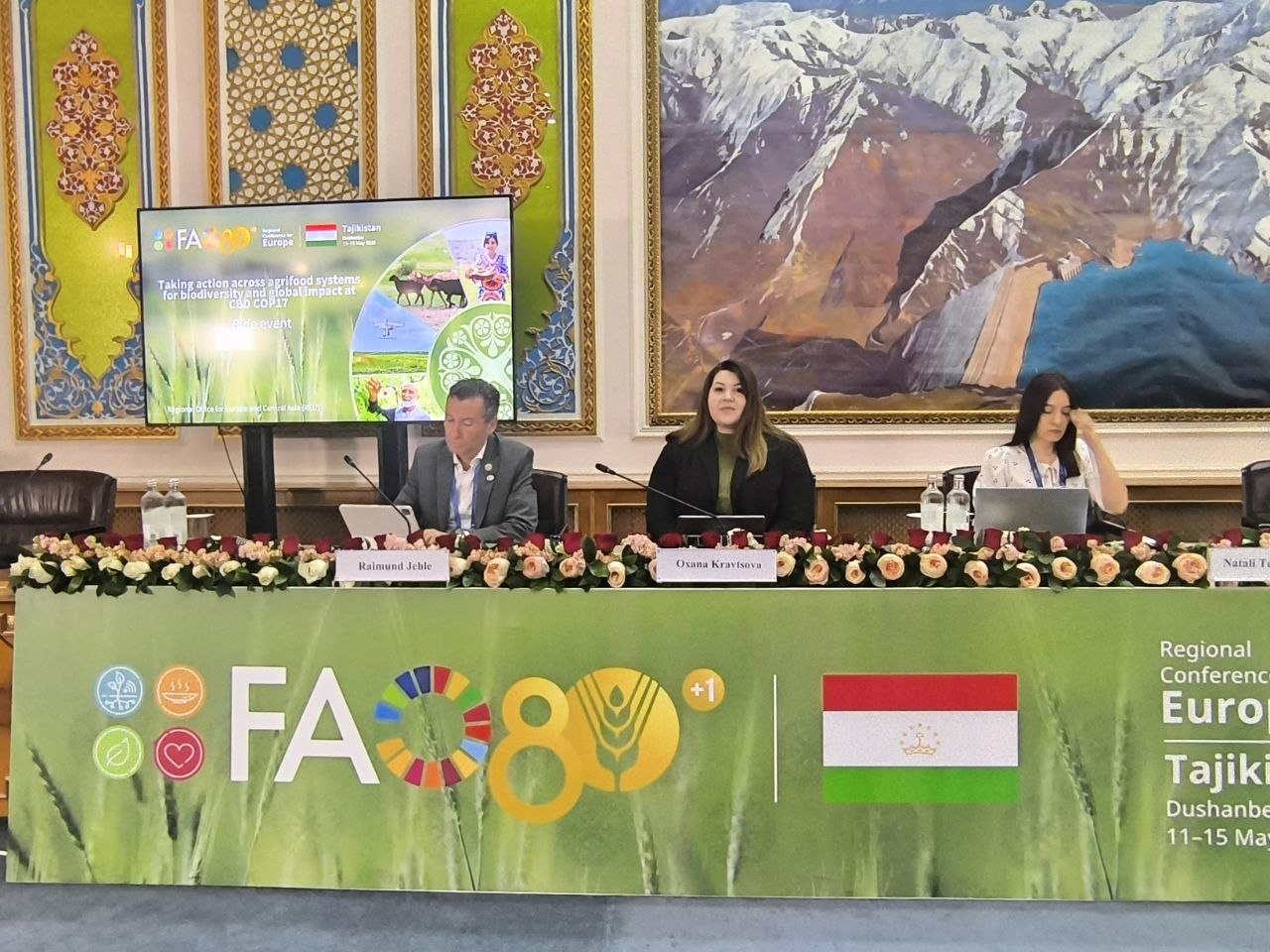
Oxana Kravtsova, Coordinator of the Regional One Health Program at the Regional Environmental Centre for Central Asia (CAREC), presented the Center's role as a key link in the implementation of the KMGBF in the region. She announced that an agreement was signed in Rome in February 2026, officially designating IUCN as the sub-regional technical support center for Central Asia, operating in close partnership with CAREC.
Oxana Kravtsova highlighted three strategic mechanisms of CAREC's work:
● Alignment of National Strategies (NBSAPs): CAREC coordinates the updating of national biodiversity plans for all five countries in the region, ensuring the exchange of experience regarding monitoring indicators.
● Integration into Agrosystems: Practical projects are being implemented, such as Resiland CA+ for pasture management and FAO/GEF biosafety projects in the Kyrgyz Republic (developing a GMO framework and strengthening laboratory infrastructure).
● One Health Approach: The Center links the health of people, animals, and ecosystems. Kravtsova mentioned the “One Health in Nature Conservation in Central Asia” project, which aims to prevent zoonotic diseases by expanding protected areas by 500,000 hectares.
“The recognition of CAREC within the technical-scientific architecture of the KMGBF is the result of years of work in strengthening regional cooperation,” noted Oxana Kravtsova.
Established in 2001 by the governments of the five Central Asian countries, CAREC is a neutral intergovernmental organization. The Center promotes cooperation in water resource management, climate change adaptation, and biodiversity conservation.
Media Contacts:
● Oxana Kravtsova — One Health Program Coordinator, okravtsova@carececo.org
● Irina Bubenko — One Health Program Specialist, ibubenko@carececo.org
● Shoira Toirova — One Health Program PR Consultant