

Millions of hectares of deserts and drylands across Central Asia absorb tens of millions of tonnes of carbon dioxide every year, yet this vast contribution remains largely invisible in international climate reporting. To bridge this gap and enable the region’s countries to legally issue carbon credits, Central Asia needs its own regional carbon standard. This was the focus of a dedicated session held on 13 November at the Uzbekistan Pavilion during the UN Climate Change Conference (COP31), organised by the Central Asian University of Environmental and Climate Change Studies (Green University) with the support of the National Committee on Ecology and Climate Change of the Republic of Uzbekistan.
The discussion brought together scientists, ministry officials, representatives of international organisations, and climate finance experts. Presenting the regional perspective, Lyudmila Kiktenko, Environmental Management Programme Manager at the Regional Environmental Centre for Central Asia (CAREC), outlined why a shared methodological approach is essential for the region.
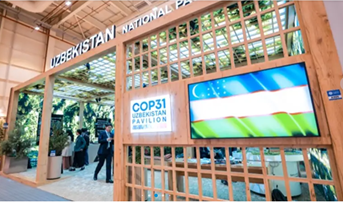
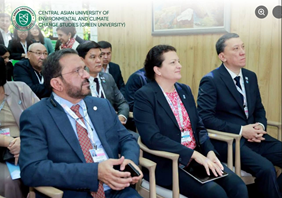
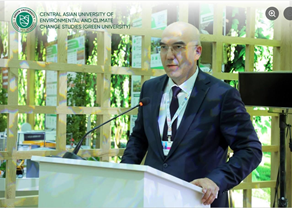
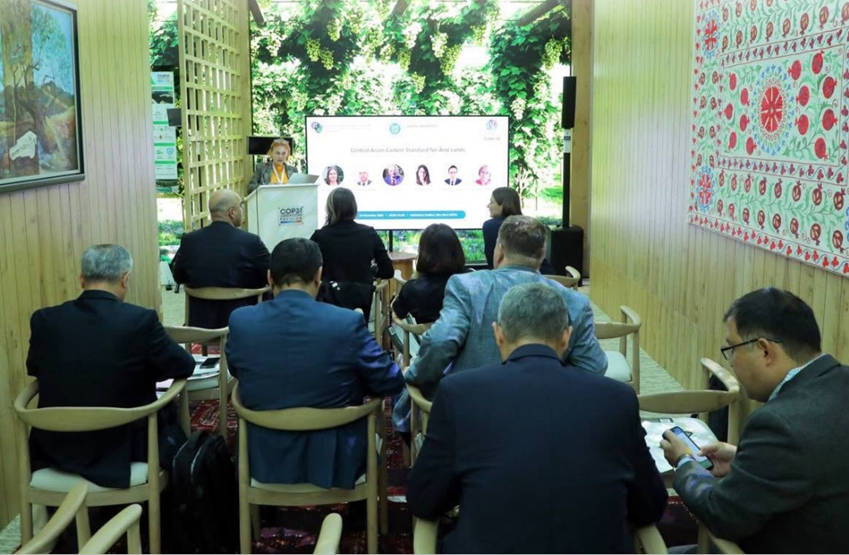
Working moments from the session at the Uzbekistan Pavilion during COP31 (Antalya, 13 November 2026). Photo: Green University
Why Global Calculations Overlook Central Asia’s Deserts
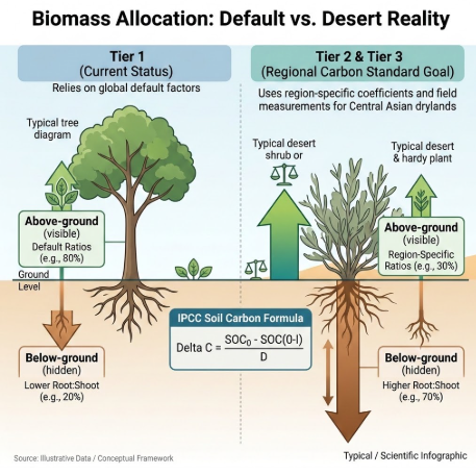
Central Asia forms the largest continuous dryland zone in the world. While its ecosystems know no national borders, climate accounting across the region still relies on outdated, fragmented practices. When reporting carbon sequestration in the Land Use, Land-Use Change and Forestry (LULUCF) sector, Central Asian countries must depend on generic IPCC default coefficients. These formulas were designed without accounting for the specific characteristics of arid and saline soils, resulting in a severe underestimation of actual greenhouse gas absorption.
"Internationally recognised coefficients for our soil types simply do not exist, meaning we are literally overlooking tens of millions of tonnes of CO₂ absorbed annually by our deserts," Ms Kiktenko noted in her address. "To prove our real figures to the world and gain access to the global carbon market, the region needs accurate Tier 2 and Tier 3 data of its own — and, above all, a unified regional methodology."
Canopy-to-root ratio of black saxaul (Haloxylon ammodendron) in Central Asian dryland ecosystems. Source: Li et al., Quaternary International (2011)
The Cost of Acting Alone: Why Regional Cooperation Pays Off
Building a scientific evidence base and navigating international verification individually would impose heavy costs on Central Asian countries.
First, the financial burden is prohibitive for any single national budget. In harsh desert environments, measuring and proving to international auditors the biomass of desert halophytes — such as saxaul or glasswort, which conceal up to 80 per cent of their root systems underground — requires complex and costly field research. Given that neighbouring countries share virtually identical ecosystems, commissioning and paying for the exact same scientific studies five times over makes little economic sense.
Equally pressing are the timeline and market risks. Navigating UN bureaucratic procedures alone can take years, leaving promising climate projects stalled. Moreover, if countries enter the international market with small, fragmented national initiatives, they risk competing against one another and driving down the price of carbon credits.
A Joint Path to the Carbon Market: Three Practical Steps for 2027
A clear way forward lies in jointly utilising the mechanism under Article 6.4 of the Paris Agreement. By pooling resources, Central Asian countries can split the costs of international consultants and submit a single baseline accounting methodology for the region’s drylands to the UN, rather than five separate applications. The next step would be registering a collective "umbrella" Programme of Activities (PoA), allowing Uzbekistan, Kazakhstan, and their neighbours to link national project sites sequentially to an already approved framework — avoiding repetitive screening and cutting international audit costs dramatically.
To translate this vision into action, CAREC proposed launching three practical steps as early as 2027.
First, establishing a Regional Working Group bringing together leading scientists and ministry representatives to draft the carbon standard.
Second, setting up a network of cross-border pilot sites in the Aral Sea and Caspian regions to conduct joint instrumental measurements and build an indisputable evidence base for UN verification.
Third, anchoring the new regional standard within national climate priorities during the next update of the countries’ Nationally Determined Contributions (NDCs).
As participants — including Prof. Bakhtiyor Pulatov, Rector of Green University, and leading soil carbon researchers — emphasised, Central Asia has a rare opportunity to become a global pioneer and set the benchmark for dryland ecosystems worldwide. CAREC stands ready to provide its regional platform and technical expertise to help the region’s countries move forward together.
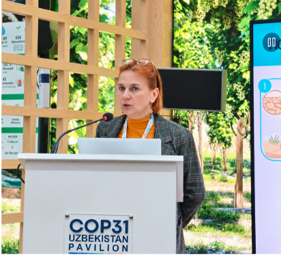
Author: Lyudmila Kiktenko — Environmental Management Programme Manager, Deputy Team Leader of the Resilient Landscape Restoration Project in Kyrgyzstan: Regional Component, CAREC.