

From February 11 to 13, 2026, within the framework of the project “Restoration of Sustainable Landscapes in the Republic of Tajikistan,” a working visit was conducted to the districts of Kabadiyan, Shahritus, and Nosiri Khusrav in Khatlon Region.
The main purpose of the visit was to monitor the implemented activities, assess the socio-economic impact of the project, and meet with beneficiaries — members of Pasture User Associations (PUAs) and Common Interest Groups (CIGs).
Construction of a Pumping Station in the “Tigrovaya Balka” Nature Reserve
On February 11, monitoring of the construction of a pumping station was carried out at the State Nature Reserve “Tigrovaya Balka” (Beshai Palangon).
Construction works are 80% complete. The project plans to irrigate 100 hectares of land. Saxaul and turanga — desert and steppe tree species characteristic of the reserve’s natural conditions — will be planted across 100 hectares.
Environmentally sustainable approaches are being applied: only native tree species are planted. This initiative will help restore degraded lands and strengthen the ecosystem of the protected natural area.
Support to Rural Communities: Machinery, Greenhouses, Beekeeping
Meetings were held with members of PUAs and CIGs in the districts of Shahritus, Nosiri Khusrav, and Kabadiyan. Through the project, beneficiaries received substantial material and technical support, including:
- 53 XT-244 tractors (each equipped with a plough and trailer);
- 75 power tiller sets (plough, trailer, and ripper);
- 79 greenhouses measuring 6×12 meters;
- 480 bee colonies with all necessary beekeeping equipment;
- Materials for the rehabilitation of irrigation systems (pipes of various diameters, water pumps for irrigation, cement, and other construction materials).
The results are already visible:
- Increased crop yields;
- New sources of income created;
- Improved relationships within communities;
- New employment opportunities generated.
Beneficiaries note that participation in groups has strengthened cooperation, mutual support, and confidence in the future.
Sayyora Kirgizova (Nosiri Khusrav District)
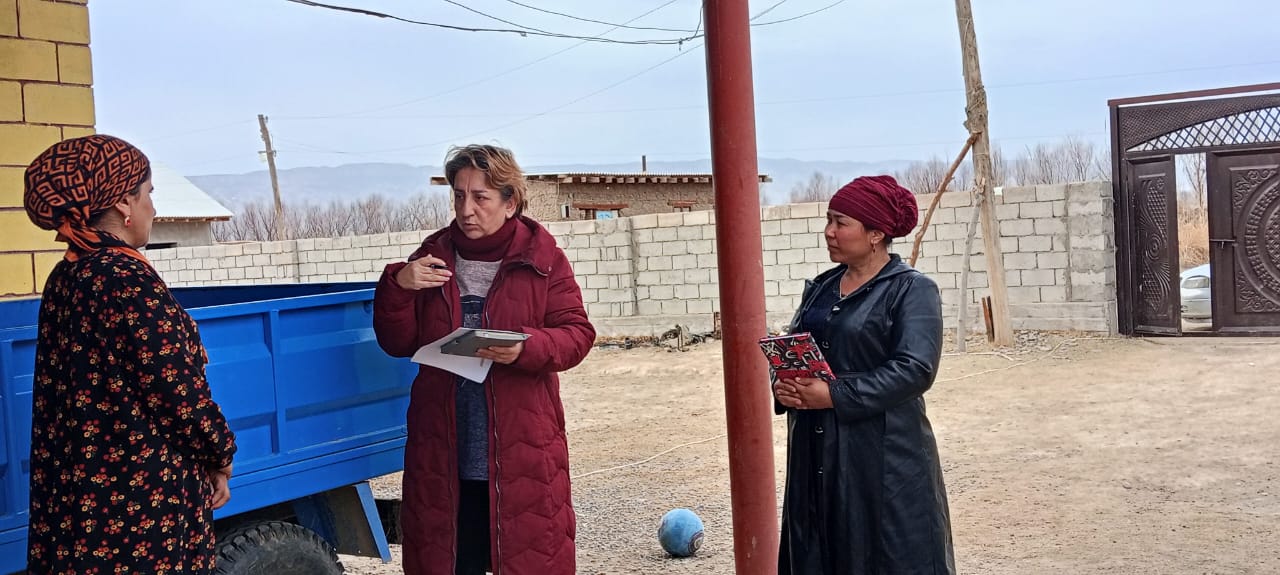
Sayyora is a mother of six children. Through the project, her group received an XT-244 tractor.
Previously, cultivating 2 hectares of land required significant time, rented machinery, and additional expenses. Now, the family independently cultivates their fields, reduces costs, and achieves stable harvests.
The family’s income has increased, and they are now able to plan further development of their farm.
“Now we work faster and more confidently. Having our own machinery gives us independence,” says Sayyora.
Savriddin Rasulov (Kabadiyan District)
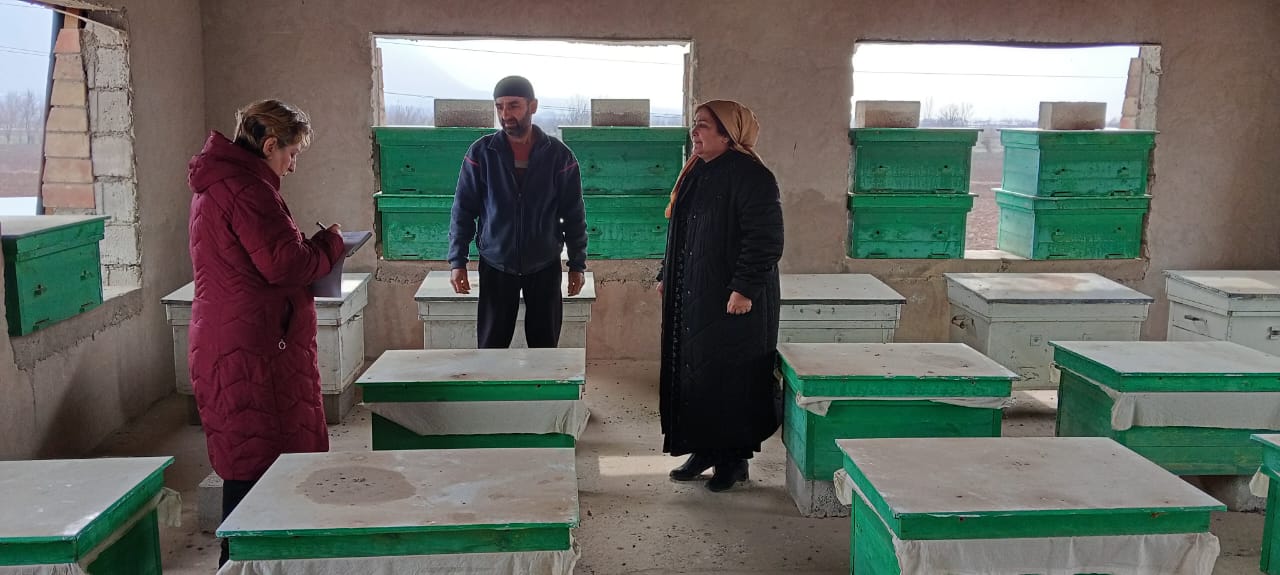
Savriddin received 20 bee colonies through the project to develop beekeeping.
Today, he produces honey, sells it at the local market, and earns a stable income. Beekeeping has become an additional source of income for his family of 13 members.
He plans to expand his apiary and teach beekeeping skills to his children and neighbors.
Alisher Juraev (Nosiri Khusrav District)
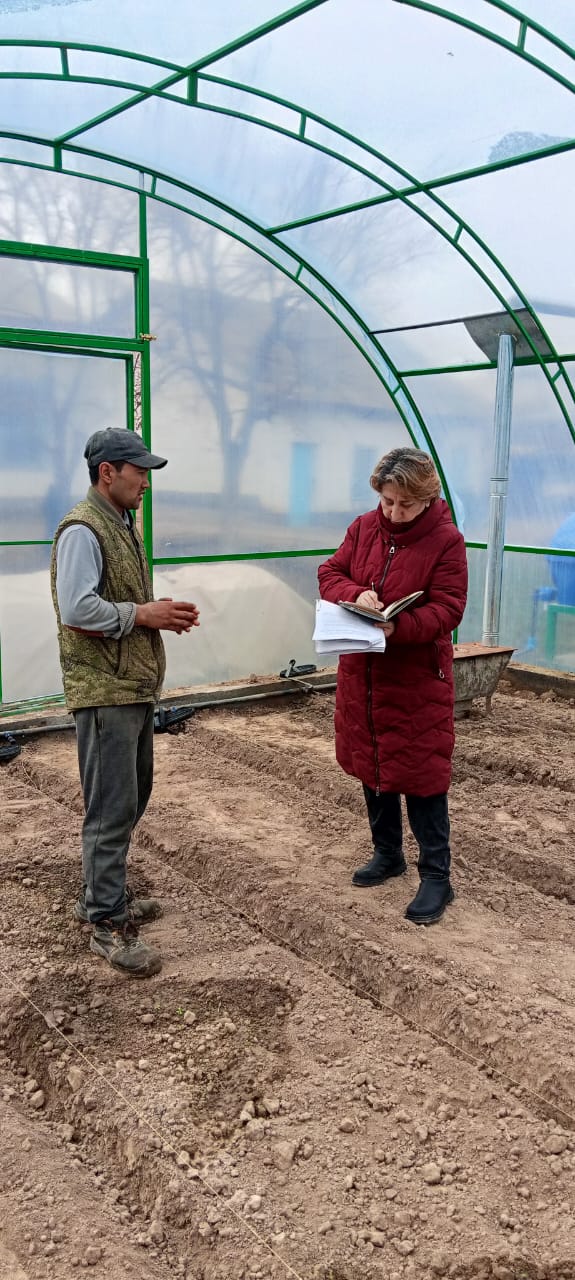
Alisher received a 72 m² greenhouse.
Early vegetable crops — tomatoes, cucumbers, and bell peppers — are grown in the greenhouse. Part of the produce is distributed among group members to meet their household needs, while the remaining portion is sold at the local market. The income generated is reinvested into the next planting cycle, making the process sustainable and continuous.
The conducted survey showed that:
- The living standards of beneficiaries are gradually improving;
- Access to agricultural machinery has increased;
- Joint pasture management practices are improving;
- Communities are becoming more cohesive and organized.
Today, we see tangible changes: restored lands, functioning machinery, new greenhouses, and growing family incomes. Most importantly, we see people gaining confidence in their future.
The project contributes not only to restoring natural resources but also to strengthening the economic resilience of rural communities.
Landscape restoration is an investment in nature, the economy, and the future of Tajikistan.
The Tajikistan Resilient Landscapes Restoration Project is part of the World Bank’s RESILAND CA+ program, aimed at strengthening landscape resilience across Central Asian countries. Similar national and regional activities are also being implemented in Kyrgyzstan and Uzbekistan.
The Regional Environmental Centre for Central Asia (CAREC) implements the regional component of the Tajikistan Resilient Landscape Restoration Project.
Additional Information:
Solijon Mirzoev — RESILAND Tajikistan Project Manager, Center for the Implementation of Investment Projects under the Committee for Environmental Protection of the Government of the Republic of Tajikistan.
Dilovarsho Dustzoda — Deputy Team Leader of the Project Implementation Group for “Sustainable Landscape Restoration in the Republic of Tajikistan: Regional Component”, CAREC