

In the Republic of Tajikistan, systematic efforts are continuing to address one of the country’s most pressing environmental challenges — land degradation and the decline of forest cover. From February 9 to 16, 2026, within the framework of the “Tajikistan Landscapes Restoration” project (RESILAND Tajikistan), a comprehensive set of activities was implemented to supply forestry enterprises with high-quality planting material and support large-scale reforestation efforts.
Addressing Land Degradation Challenges
Over recent decades, many districts across the country have experienced soil erosion, pasture depletion, loss of woody and shrub vegetation, and increasing desertification of slopes. Some territories were previously forested but later degraded due to unsustainable land use, while others remained unused and outside economic circulation for many years.
“The target districts — Kabadiyan, Shahritus, and N. Khusrav in Khatlon Region — were selected based on the severity of land degradation, climatic conditions, availability of suitable areas for afforestation, and the readiness of local communities to participate in restoration activities. In these territories, both the restoration of degraded forest areas and the establishment of new protective and economically valuable plantations are being carried out,” noted Solidjon Mirzoev, RESILAND Tajikistan Project Coordinator.
Scope of Activities and Planting Materials
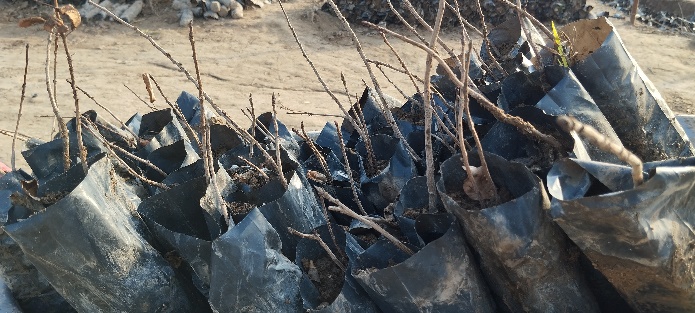
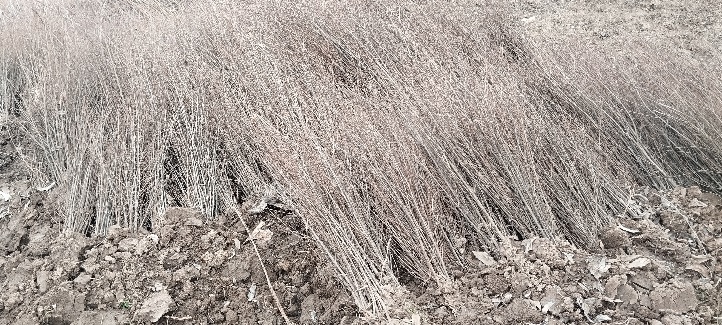
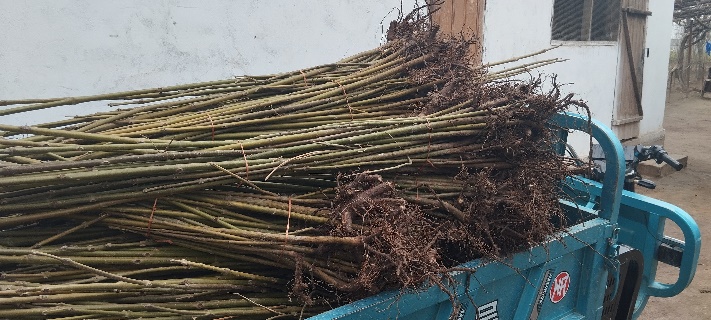
A total of 56,620 saplings were prepared and distributed for planting, including:
· Paulownia — 16,660 saplings
· Local pistachio — 39,960 saplings
· Elm — selected one-year-old saplings that underwent additional quality sorting
The saplings were delivered to forestry enterprises in target districts for planting across 113 hectares of state forest fund land.
According to forestry specialist Azam Salimov, species selection was based on ecological adaptability and economic value.
“Paulownia demonstrates rapid growth and strong soil-stabilizing capacity; pistachio is well adapted to the arid conditions of southern districts and provides economic benefits; and elm is resistant to wind erosion and effective in forming protective shelterbelts. Together, these species support ecological stabilization while improving local livelihoods,” he explained.
The newly planted trees will not only restore forest cover but also strengthen soil protection against erosion, improve local microclimatic conditions, and contribute to the development of sustainable agricultural landscapes.
Quality Control and Monitoring
During field visits to the districts of Shahrinav, Rudaki, Kabadiyan, Shahritus, N. Khusrav, Panj, and Khuroson, planting materials underwent comprehensive inspection. Key assessment criteria included:
· plant height
· trunk thickness
· condition and integrity of root systems
· compliance with agrotechnical standards
Where non-compliance was identified, additional sorting procedures were conducted. This quality assurance approach helps ensure high survival rates and the long-term sustainability of forest plantations.
Strengthening Community Participation
Joint Forest Management Groups play a central role in project implementation. Local residents actively participate in site selection, planting operations, maintenance activities, and ongoing monitoring of plantations, ensuring long-term stewardship of restored forest areas.
“Communities are interested in creating healthier environmental conditions for future generations, securing access to natural resources, and developing sustainable income opportunities. Participation in the project therefore represents not only an environmental contribution but also tangible social and economic benefits,” emphasized Solidjon Mirzoev.
Social and Environmental Impact
Reforestation activities directly contribute to improving the quality of life, strengthening skills in sustainable natural resource management, and enhancing regional food and environmental security.
Local residents are actively engaged in soil preparation, transportation of planting materials, planting operations, and plantation maintenance.
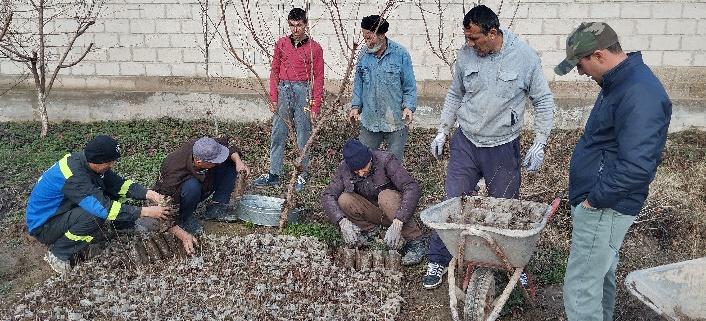
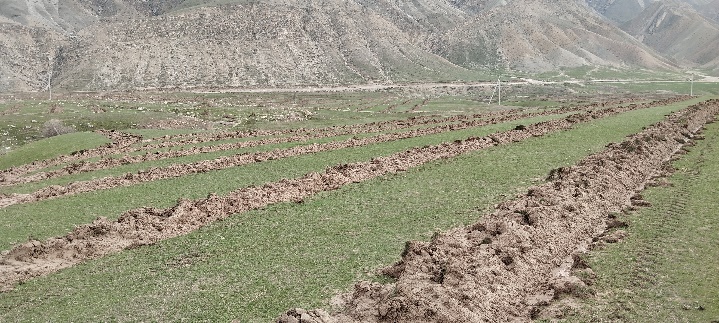
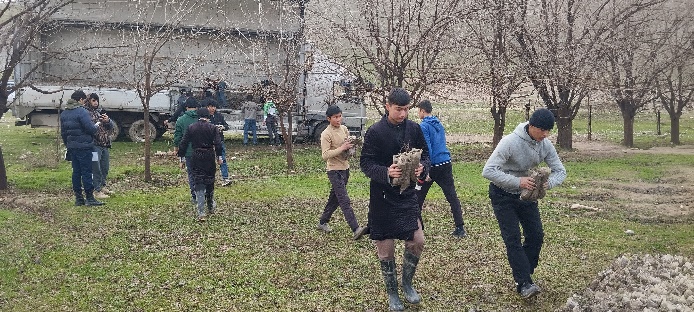
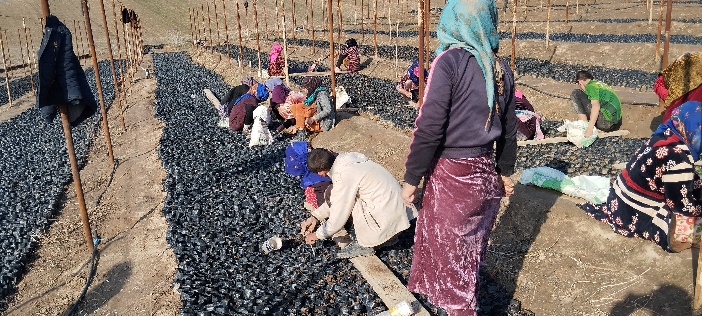
This participation promotes responsible natural resource use while providing practical forestry experience and additional income opportunities.
The restored lands remain under the ownership of state forestry enterprises (leskhozes). Under the established cooperation mechanism, local communities receive 70% of harvested products, while 30% is allocated to forestry enterprises. This model creates shared responsibility and long-term incentives for maintaining productive orchards and forest plantations.
Additional benefits for rural households include fodder for livestock obtained through seasonal pruning and use of wood residues as household heating fuel.
Thus, the project not only addresses environmental challenges but also contributes to the socio-economic development of the territories by fostering a sustainable model of responsible natural resource management and long-term cooperation between forestry enterprises and local communities.
Forest restoration efforts contribute to:
· reduced dust storms and wind erosion
· improved soil moisture retention
· enhanced biodiversity
· increased resilience to climate change
The project demonstrates that a comprehensive approach — combining high-quality planting materials, scientific species selection, and active community engagement — can effectively address land degradation while supporting sustainable rural development.
The “Tajikistan Landscapes Restoration” project forms part of the World Bank’s RESILAND CA+ regional program, aimed at strengthening landscape resilience across Central Asia. Similar initiatives are being implemented in Kyrgyzstan and Uzbekistan to achieve shared national and regional environmental objectives.
The regional component of the program is implemented by the Regional Environmental Centre for Central Asia (CAREC).
The Tajikistan Resilient Landscapes Restoration Project is part of the World Bank’s RESILAND CA+ program, aimed at strengthening landscape resilience across Central Asian countries. Similar national and regional activities are also being implemented in Kyrgyzstan and Uzbekistan.
The Regional Environmental Centre for Central Asia (CAREC) implements the regional component of the Tajikistan Resilient Landscape Restoration Project.
Additional Information:
Solijon Mirzoev — RESILAND Tajikistan Project Manager, Center for the Implementation of Investment Projects under the Committee for Environmental Protection of the Government of the Republic of Tajikistan.
Dilovarsho Dustzoda — Deputy Team Leader of the Project Implementation Group for “Sustainable Landscape Restoration in the Republic of Tajikistan: Regional Component”, CAREC