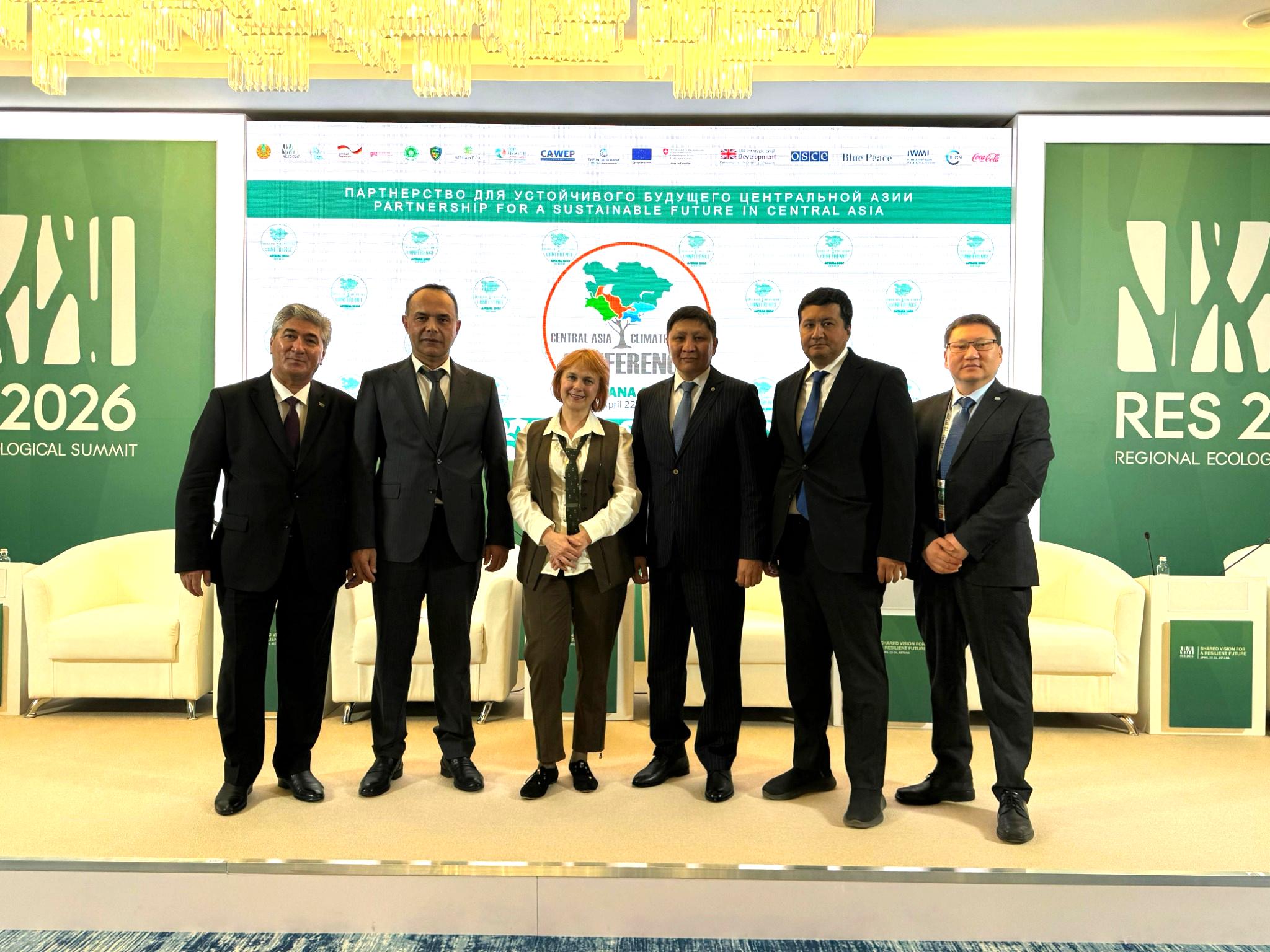
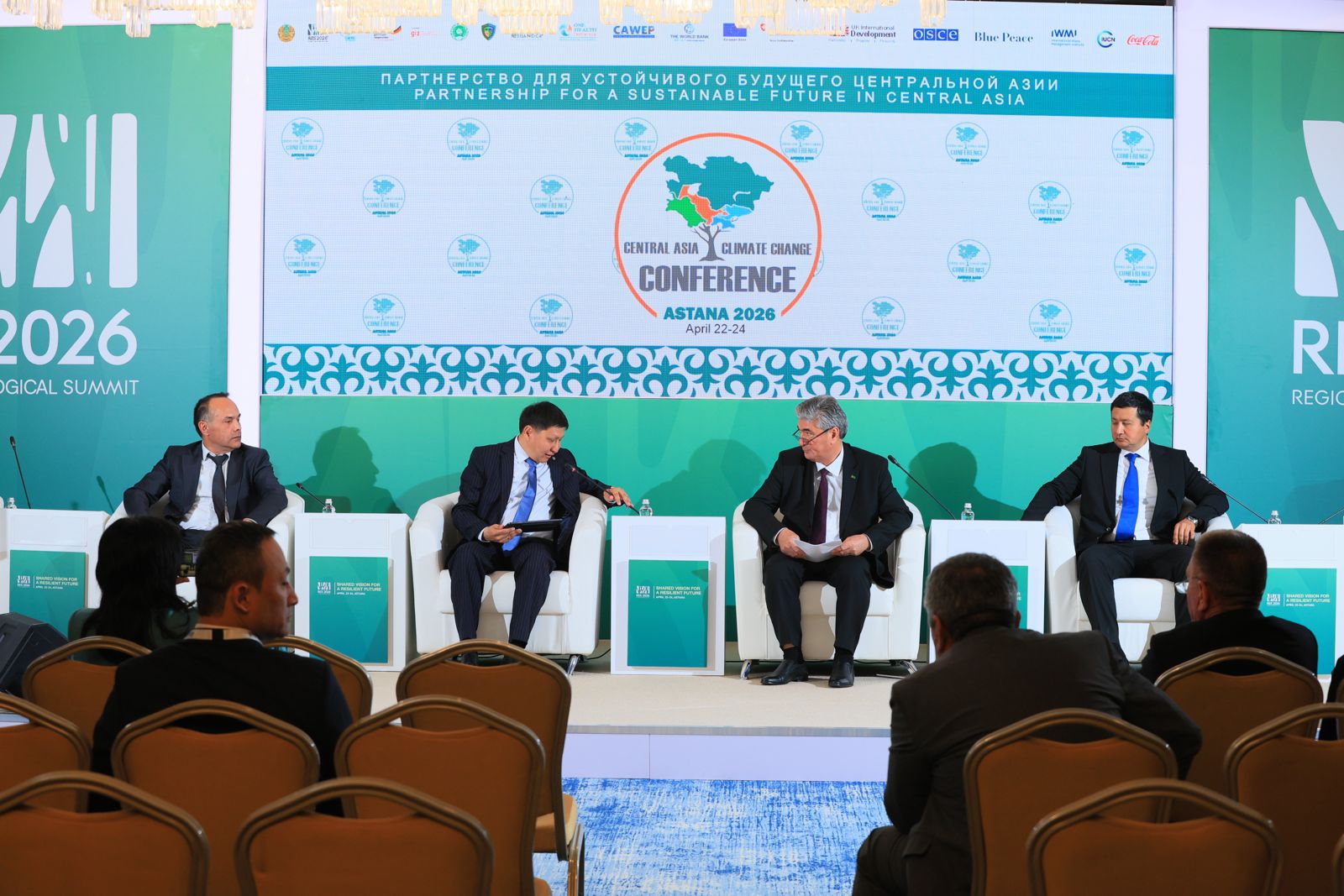
ASTANA, April 23, 2026 — Today, at the Hilton Astana hotel, within the framework of the Central Asia Climate Change Conference (CACCC-2026), the fifth meeting of the Regional Advisory Committee (RAC) of the RESILAND CA+ program “Restoration of Sustainable Landscapes in Central Asia” was concluded
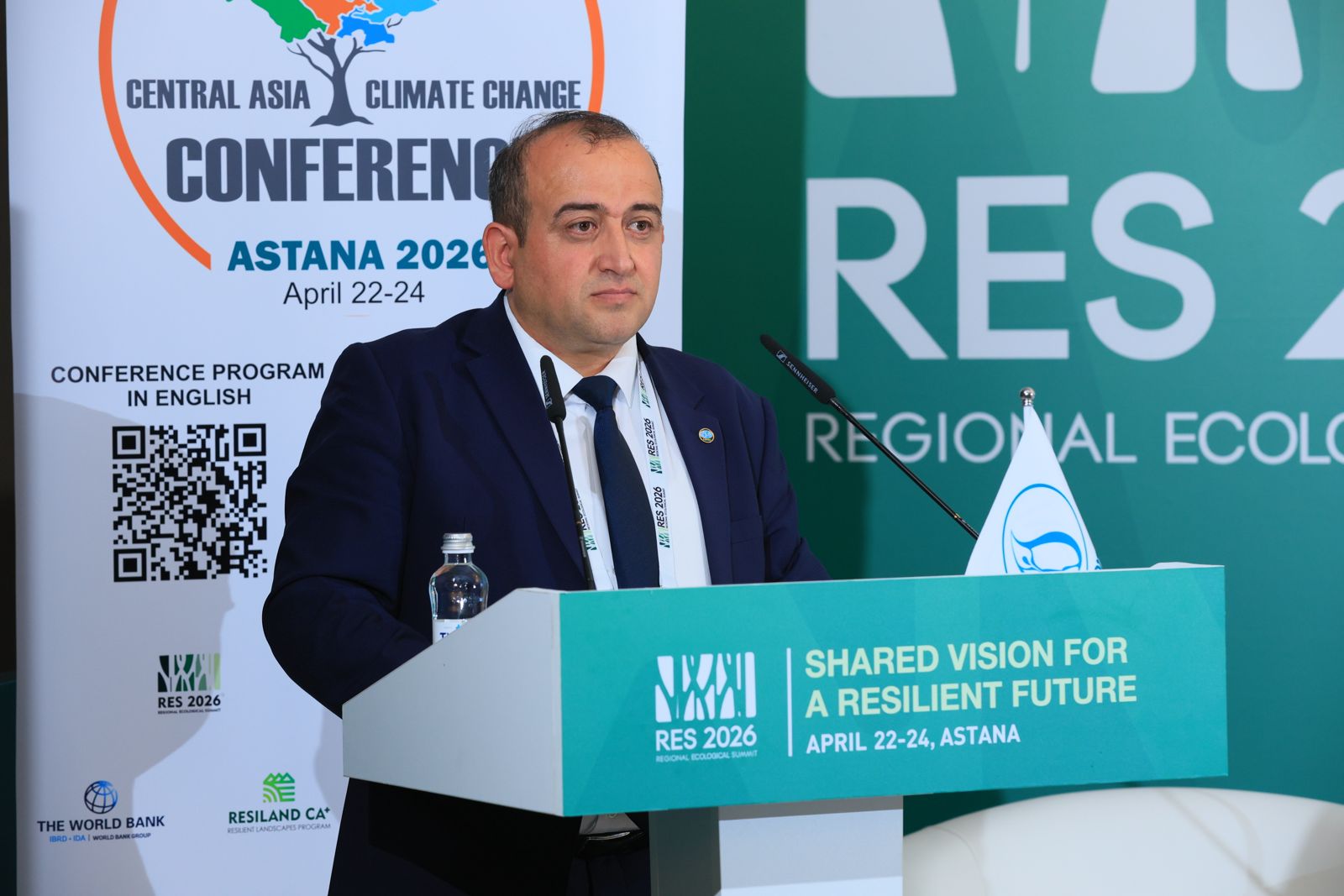 Around the round table gathered nominated members of the RAC from Central Asian countries, as well as representatives of the World Bank, the UN Convention to Combat Desertification (UNCCD), and the Regional Environmental Centre for Central Asia (CAREC), to review progress achieved, agree on priorities, and outline further steps within the World Bank flagship RESILAND CA+ program.
The meeting was moderated by Dilovarsho Dustzoda, advisor to the Executive Director of CAREC, and opened jointly by Dr. Bayrammurad Durdyyev, Chair of the RAC and Head of the Biodiversity Laboratory of the National Institute of Deserts, Flora and Fauna of Turkmenistan, and Dr. Batyr Mamedov, Executive Director of CAREC.
A program created for a Region in Crisis
Central Asia is losing the fight against land degradation: up to 80% of the region’s territory is affected, costing the region annually about 6% of its combined GDP. Warming in the region is occurring twice as fast as the global average, and the region is facing increasing threats of mudflows, floods, and desertification, which are destroying not only landscapes but also roads, infrastructure, and the livelihoods of millions of people.
Since 2019, the World Bank’s RESILAND CA+ program has served as the region’s main instrument to reverse this trend. Ongoing projects in Kyrgyzstan, Tajikistan, and Uzbekistan together cover 469,558 hectares under sustainable land management and aim to sequester more than 11 million tons of CO₂ equivalent over the lifetime of the program. In Kyrgyzstan, the focus is on innovative pasture management and reforestation across approximately 50,000 hectares. In Tajikistan, the restoration of mountain ecosystems and the creation of protective forest belts protect the population from mudflows across more than 120,000 hectares of degraded land. In Uzbekistan, efforts are focused on forest and pasture restoration.
Kyrgyzstan’s approach reflects a philosophy increasingly shared across the region.
““The Kyrgyz Republic considers disaster risk reduction an integral part of sustainable natural resource management, including forest restoration, rational pasture management, and the development of early warning systems, which helps reduce the vulnerability of populations and infrastructure,” added Daurbek Sakiev, Director of the Department for Monitoring and Forecasting Emergency Situations of the Ministry of Emergency Situations of Kyrgyzstan.
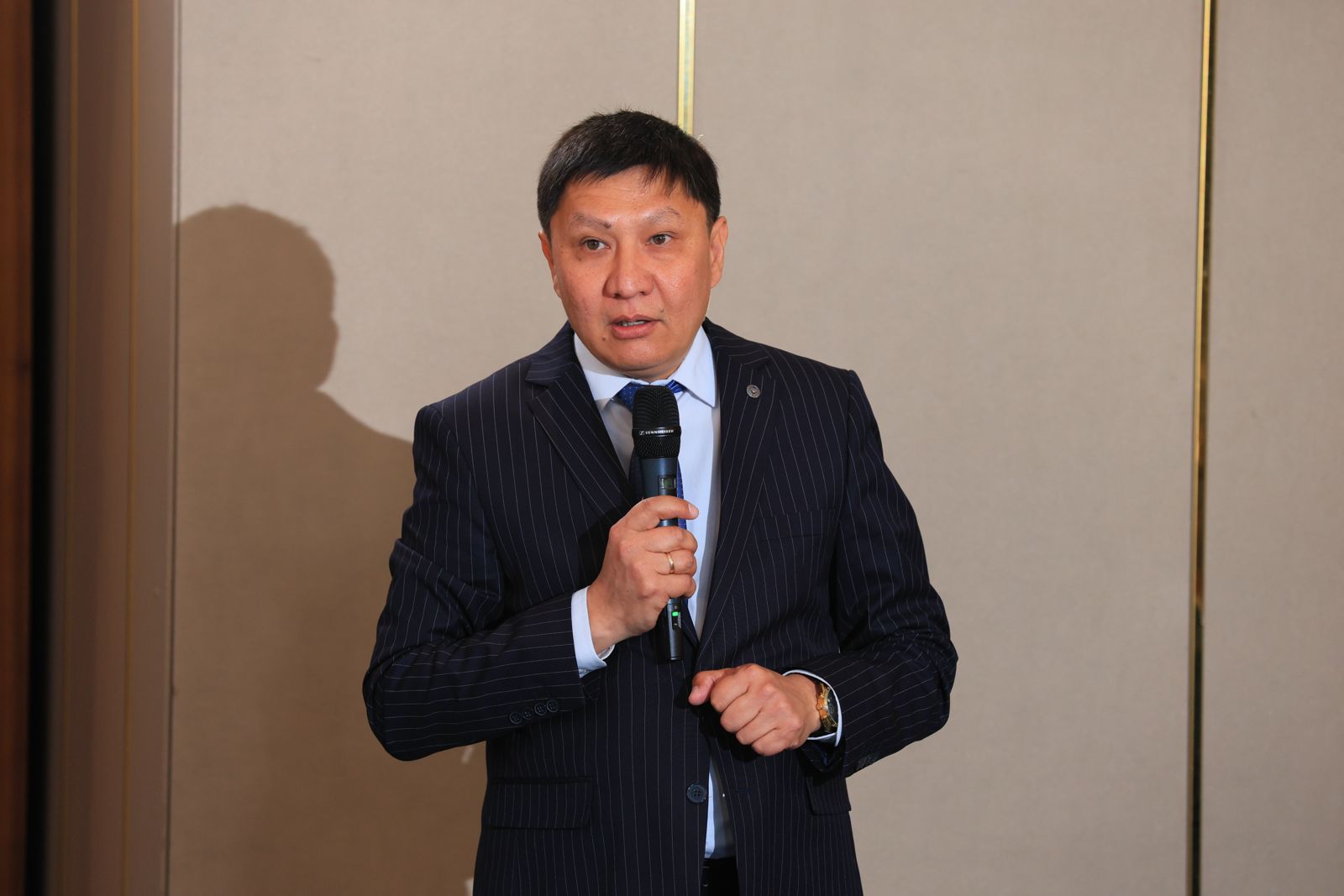 A central part of the meeting was a series of presentations by RAC members — Daurbek Sakiev (Kyrgyz Republic), Solijon Mirzoev (Republic of Tajikistan), Dr. Bayrammurad Durdyyev (Turkmenistan), Dr. Erkin Mukhitdinov (Republic of Uzbekistan) — on interim results of national RESILAND CA+ projects, with special emphasis on pasture conservation, mountain areas, and sustainable landscape restoration. Representatives of Kazakhstan and Turkmenistan also shared updates on their accession to the RESILAND CA+ program.
Ludmila Kiktenko, CAREC Program Manager, reported on the implementation of decisions from the previous RAC meeting, including transboundary coordination, , the development of joint online platforms, and harmonization of regional policies, which are currently being finalized or aligned across the five countries.
Following the meeting, a new RAC Chair and a RESILAND CA+ program implementation plan for the next six months were agreed upon.
RAC members confirmed their commitment to moving from isolated national goals toward a unified concept of sustainable landscapes in Central Asia and reaffirmed the need to accelerate the deployment of a regional landscape knowledge portal based on ICT, as well as an online catalog on transboundary mudflows and floods — infrastructure necessary for coordinated, data-driven transboundary solutions.
Participants emphasized the importance of what the RAC represents: a rare and functioning mechanism through which five countries with different systems and priorities speak a common language on land resources, climate, and sustainability — and turn that shared language into concrete action on the ground.
For further information, contact:
Lyudmila Kiktenko
Deputy Team Leader of the Project Implementation Group for
“Sustainable Landscape Restoration in the Republic of Kyrgyzstan: Regional Component”, CAREC
lkiktenko@carececo.org
Azamat Kauazov
Deputy Team Leader of Uzbekistan Resilient Landscape Restoration Project: Regional Component, CAREC
cacip@carececo.org
Dilovarsho Dustzoda
Deputy Team Leader of the Project Implementation Group for
“Sustainable Landscape Restoration in the Republic of Tajikistan: Regional Component”, CAREC
ddustzoda@carececo.org