

As part of the International Conference "Rational Use of Antimicrobials to Combat AMR: A One Health Approach," a poster session was held featuring young scientists and researchers from leading medical and scientific centers across Kazakhstan. The presented studies cover key areas of containing antimicrobial resistance (AMR)—from molecular diagnostics and five-year hospital surveillance to assessing the awareness of future physicians.
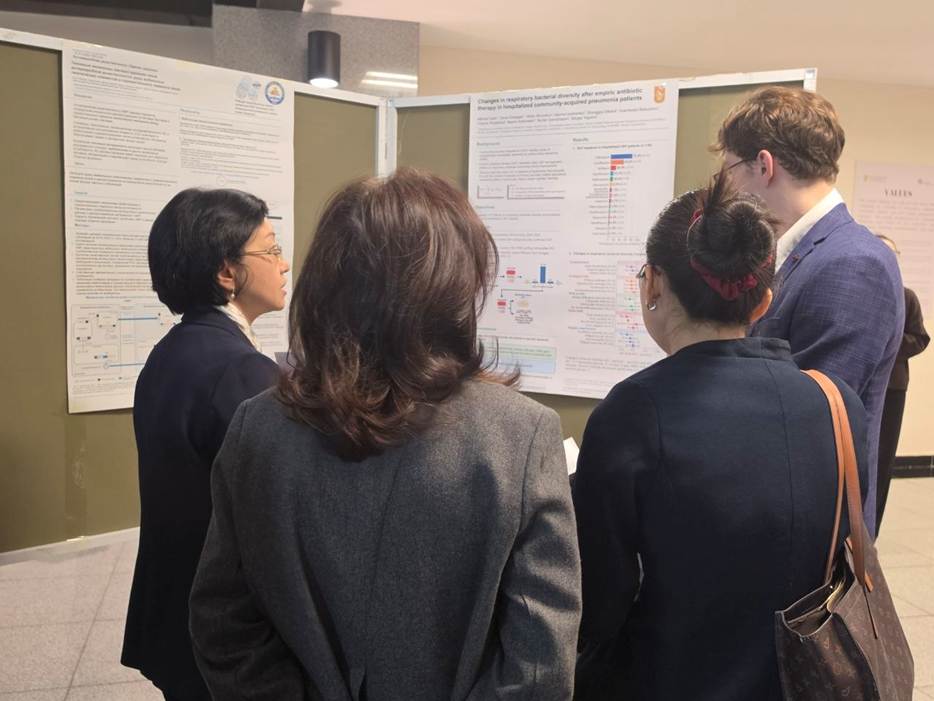
Clinical Surveillance and the Economics of Antibiotic Therapy
A substantial portion of the research focused on analyzing real-world clinical practice in multidisciplinary hospitals and specialized centers in Kazakhstan:
Economics and Drug Consumption Structure. A team of authors from the Corporate Fund "University Medical Center" presented a retrospective analysis of antimicrobial costs and consumption over an eight-year period (2018–2025). During this time, overall inpatient antibiotic consumption decreased by 63%; however, procurement expenditures doubled due to the use of high-cost reserve agents and antifungal medications (meropenem, voriconazole). The authors noted that the share of "Access" group antibiotics (first-line baseline drugs) under the WHO AWaRe classification (52.9% in 2025) remains below the 60% target threshold, while consumption is dominated by the "Watch" category (antibiotics with a higher potential for developing resistance).
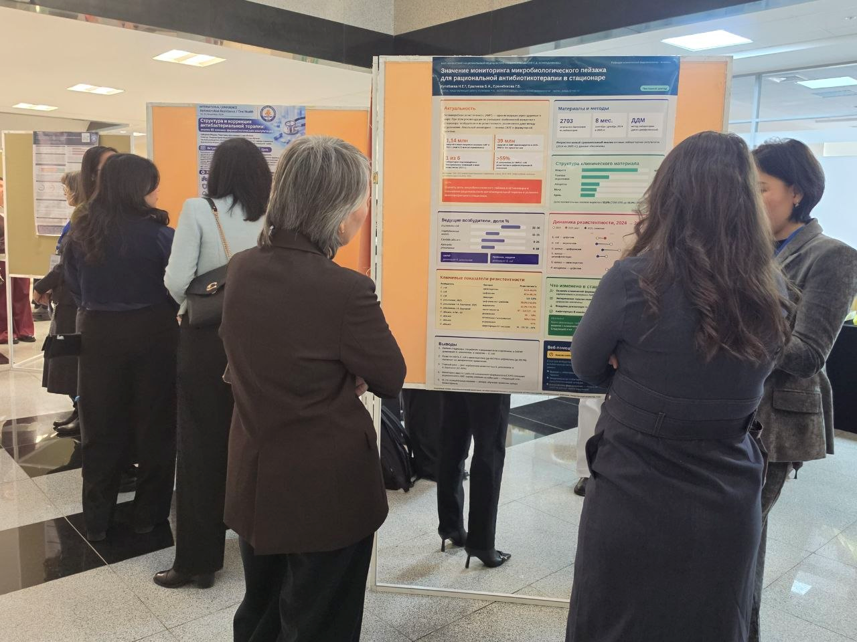
Microbiological Landscape of Hospital Wards. Researchers from the Asfendiyarov Kazakh National Medical University analyzed 2,703 bacteriological test results from 2024–2025. The study confirmed that microbial profiles vary even within a single hospital: Klebsiella pneumoniae dominates in intensive care units (ICUs), whereas Escherichia coli prevails in surgical departments. Implementing local surveillance alongside the work of a clinical pharmacologist enabled the hospital to revise its empirical therapy, discontinuing ineffective cefazolin and introducing de-escalation protocols based on culture results.
Five-Year Trends in Orthopedics. Specialists from the Academician N. D. Batpenov National Scientific Center of Traumatology and Orthopedics examined the evolution of staphylococcal resistance in periprosthetic joint infections between 2021 and 2025 based on 2,937 isolated strains. The findings revealed near-total resistance of pathogens to oxacillin (92–100%) and a progressive surge in resistance to cephalosporins (cefoxitin resistance rose from 18.8% to 54.8%, and ceftriaxone from 9.7% to 48.6%). Vancomycin and linezolid remain the absolute reserve drugs for treating such complications.
Genomics and Novel Diagnostic Methods
Two poster presentations by a joint research group from Nazarbayev University, the Kazakh National Agrarian Research University (KazNARU), and Karaganda Medical University explored the application of targeted next-generation sequencing (tNGS) in community-acquired pneumonia:
Comparing tNGS and Classical Microbiology. In a study by Sh. D. Orkara et al. (48 sputum samples), targeted sequencing identified an average of 2.42 microorganisms per sample compared to 1.04 via conventional culture, successfully detecting fastidious (difficult-to-culture) pathogens. At the same time, the sensitivity for detecting genetic resistance determinants relative to phenotypic testing stood at 41.2%, underscoring the need to combine molecular and conventional methods in clinical practice.
Dynamics of Resistance Genes During Therapy. A study by Dana Duisegali and colleagues (90 hospitalized pneumonia patients in Karaganda) analyzed paired sputum samples collected prior to and three days after initiating empirical antibiotic therapy. The researchers found that within just 72 hours of treatment, a multidirectional restructuring of the respiratory resistome occurs: the diversity of resistance genes to aminoglycosides increases, whereas resistance determinants to beta-lactams and trimethoprim decline.
Workforce Training and the One Health Approach
A dedicated track of the poster session addressed the educational dimension of AMR containment:
Medical Students' Awareness. Undergraduate students at Astana Medical University (N. S. Kenzhali, G. S. Kussainova, et al.) evaluated the knowledge of 195 students across seven academic programs regarding AMR within the One Health framework. Mean knowledge scores increased 2.5-fold from the first year to senior years (rising from 2.0 to 5.0 out of 8), with pharmacy students demonstrating the highest level of preparedness (76% achieving a sufficient knowledge score). The study established a direct statistical correlation between understanding One Health principles and AMR literacy, substantiating the need for cross-cutting integration of these topics into the curricula of all medical specialties.
Antibiotic Use Practices Among Youth. Qaraqat Khabitqyzy, a student at the Asfendiyarov Kazakh National Medical University (supervised by M. B. Burumbayeva), conducted a survey among students aged 17–22. Despite high general awareness of the resistance issue (94%), high-risk behaviors persist in practice: 32% of respondents reported purchasing antibiotics without a prescription, 30% reused leftover medications, and 16% discontinued their treatment course prematurely.
The poster session in Astana clearly demonstrated that local microbiological surveillance, the adoption of advanced molecular diagnostics, and systematic training of future specialists within the One Health paradigm are becoming essential tools for preserving the efficacy of antimicrobials across Central Asia.
This article was prepared as part of coverage of the regional agenda of the Program "One Health for Pandemic Prevention, Food Systems Resilience and Ecosystem Health in Central Asia," implemented by the Regional Environmental Centre for Central Asia (CAREC) with financial support from the World Bank Group and the Pandemic Fund (HEPR).
Shoira Toirova — Communications Specialist, One Health Program shoira.tajikistan@gmail.com
For further information:
Oksana Kravtsova — Regional Manager of the One Health Program, CARECokravtsova@carececo.org