

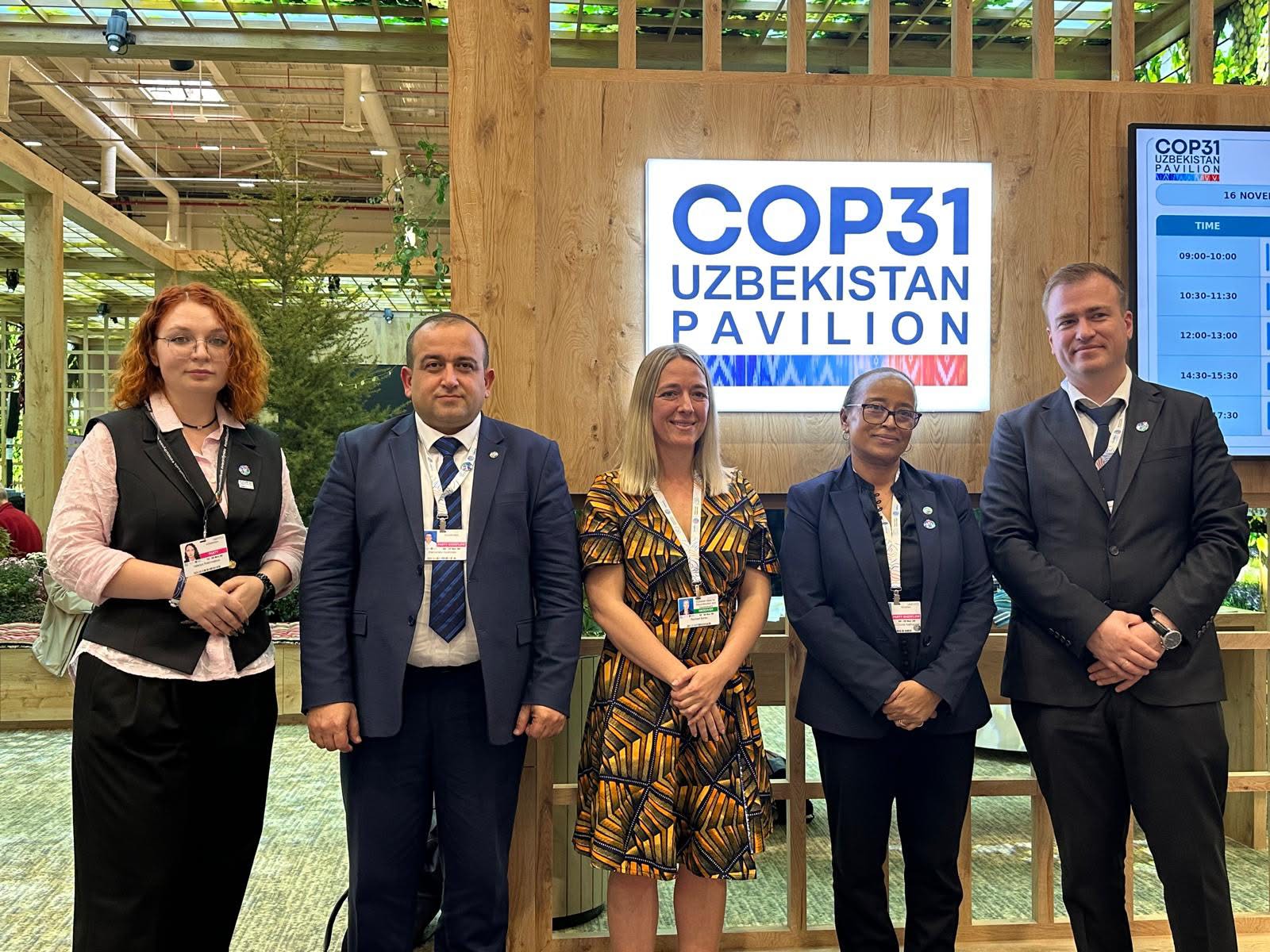
Antalya, Türkiye, 16 November 2026
How can Central Asia turn ambitious climate commitments into projects that attract international investment? This question was at the center of discussions at COP31, where the Regional Environmental Center for Central Asia (CAREC) highlighted the importance of stronger partnerships, reliable climate data, and investment-ready projects. The reduction of methane emissions in Uzbekistan's oil and gas sector was presented as a practical example of how climate action can generate both environmental and economic benefits.
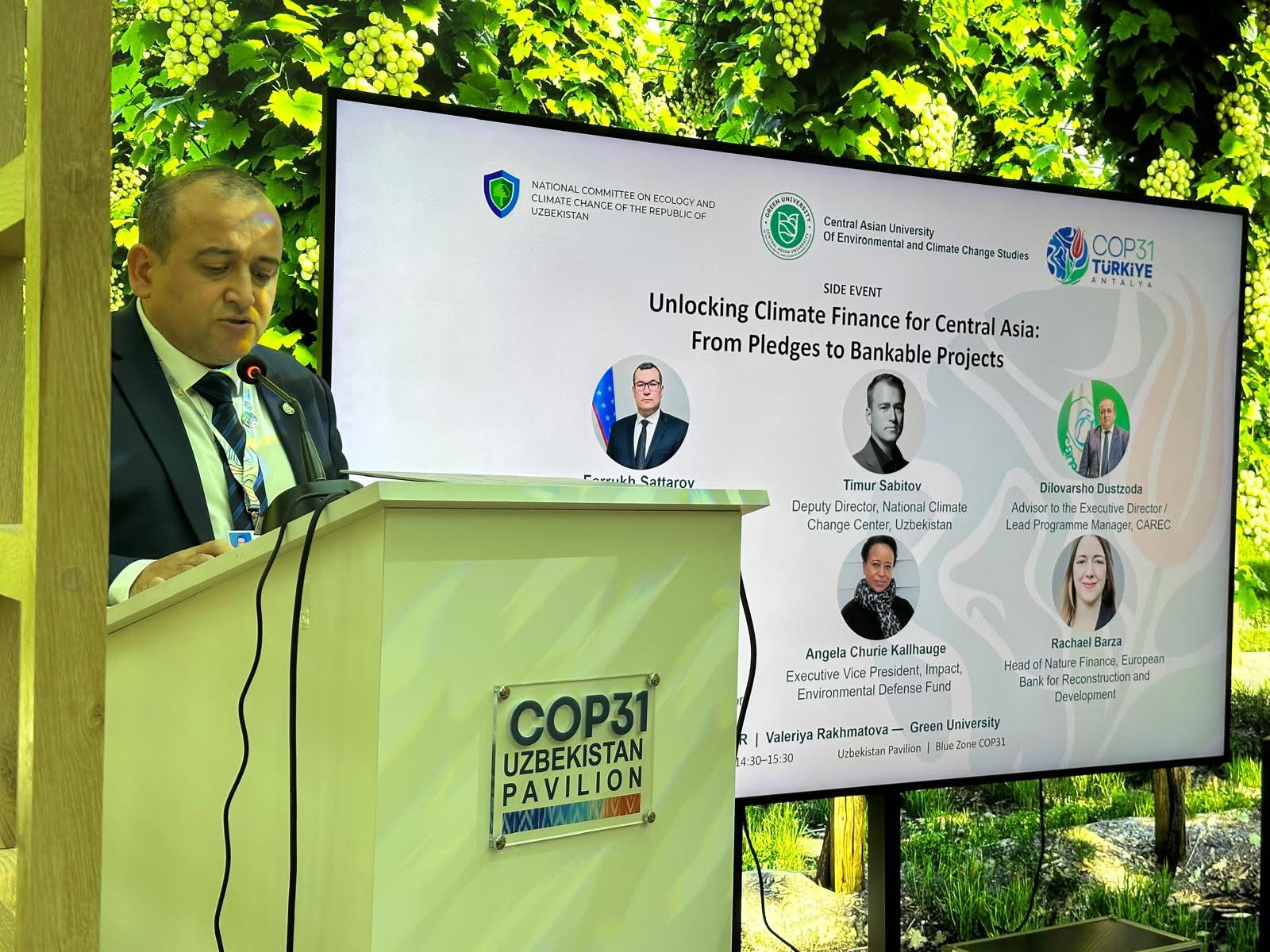
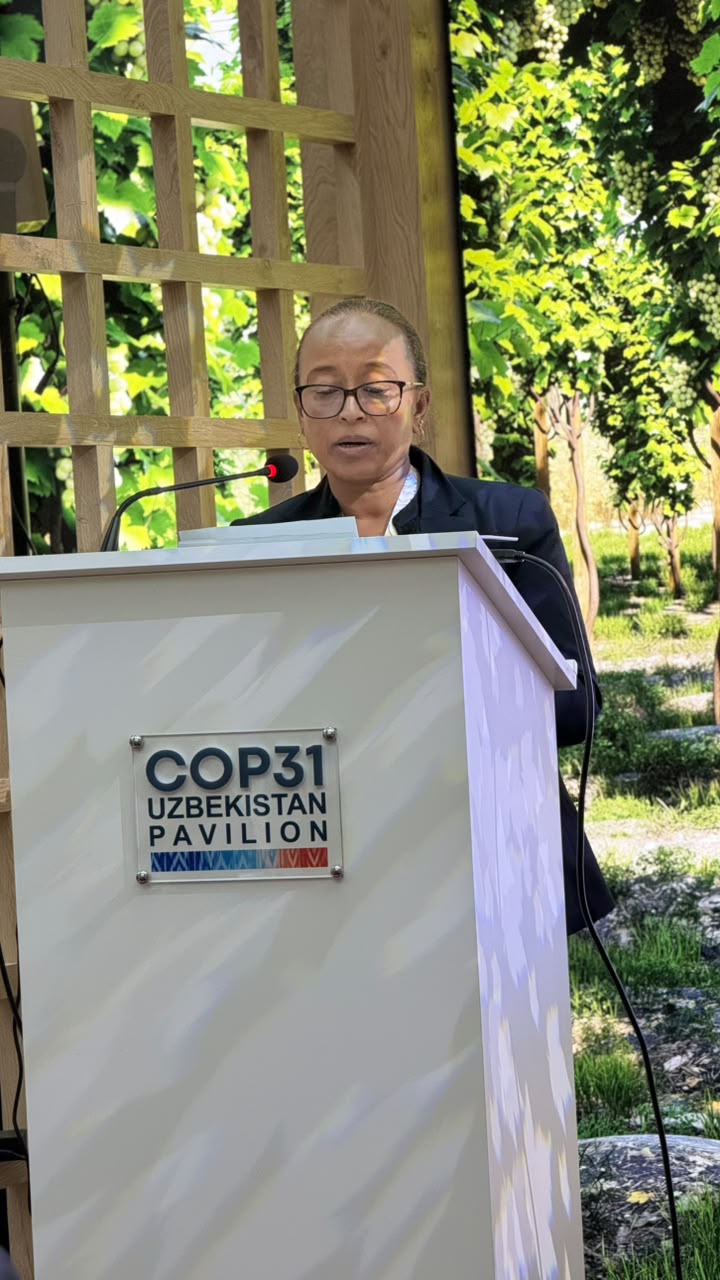
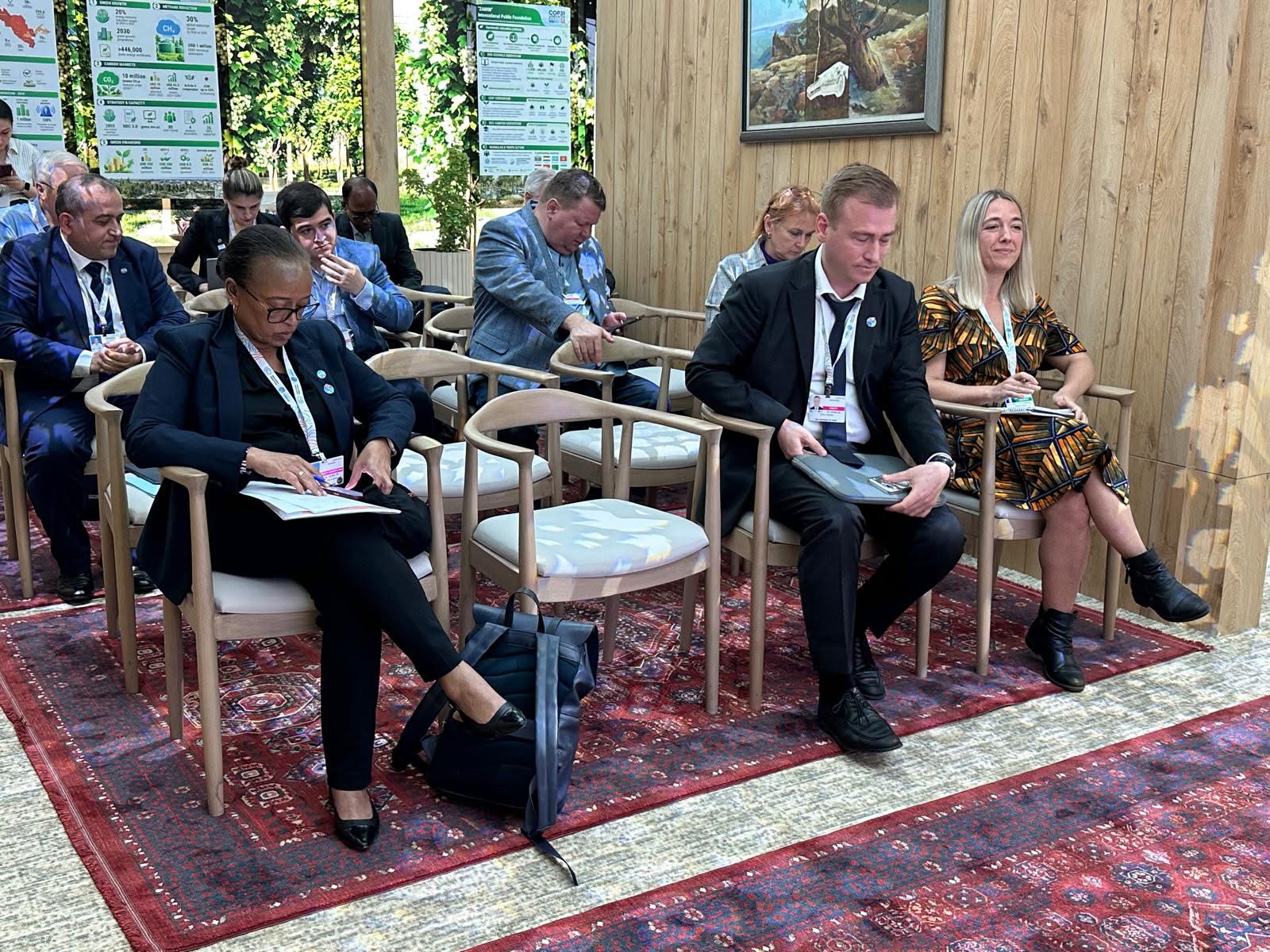
On 16 November 2026, CAREC participated in the side event “Unlocking Climate Finance for Central Asia: From Pledges to Bankable Projects,” held at the Uzbekistan Pavilion in the Blue Zone of COP31 in Antalya, Türkiye.
The event was organized by Green University, with the National Climate Change Center of Uzbekistan as co-organizer. It brought together representatives of government institutions, international organizations, development partners, and financial institutions to discuss practical approaches to mobilizing climate investment in Central Asia.
Representing CAREC, Dilovarsho Dustzoda, Advisor to the Executive Director and Lead Programme Manager, presented the organization's experience in supporting climate action in Uzbekistan and across the region, emphasizing the importance of connecting technical cooperation with investment opportunities.
Climate finance: moving beyond commitments
Central Asia is increasingly experiencing the impacts of climate change, including rising temperatures, water scarcity, glacier retreat, and land degradation. Addressing these challenges while maintaining sustainable economic development requires substantial investment.
For Uzbekistan, this challenge is particularly relevant as the country advances implementation of its updated Nationally Determined Contribution (NDC 3.0), which aims to reduce greenhouse gas emissions intensity per unit of GDP by 50% by 2035 compared with 2010 levels.
Achieving this objective will require not only international financial support but also effective mechanisms to translate national climate priorities into concrete investment projects.
One of the key messages of CAREC's intervention was that access to climate finance depends not only on the availability of financial resources but also on countries' ability to develop technically sound, economically viable, and investment-ready projects.
“The challenge for Central Asia is not only to attract more climate finance, but also to make sure we are ready to turn that finance into action. We need reliable data, strong partnerships, and well-prepared projects that can deliver measurable results,” said Dilovarsho Dustzoda, Advisor to the Executive Director and Lead Programme Manager at CAREC.
This approach highlights the importance of strengthening institutional capacities, improving climate data and monitoring systems, and establishing closer cooperation between governments, technical organizations, development banks, and private investors.
Building on regional dialogue: CAREC's contribution to climate finance
CAREC has consistently promoted climate finance as an important component of regional climate cooperation.
The annual Central Asia Climate Change Conference (CACCC), organized by CAREC, serves as a regional platform bringing together government representatives, international development partners, financial institutions, and technical experts to discuss practical approaches to climate action.
In 2025, the conference in Ashgabat focused on “Achieving the Global Climate Finance Goal through Regional and National Actions in Central Asia.” Discussions addressed mechanisms to mobilize financial resources, strengthen international partnerships, and translate climate commitments into practical actions.
At CACCC-2026 in Astana, these discussions continued through a dedicated session on climate finance and private-sector participation. Particular attention was given to blended finance, green bonds, public-private partnerships, and instruments for reducing investment risks.
These discussions reflect a growing recognition that international climate commitments must be supported by national capacities to identify, develop, and implement investment projects.
CAREC contributes to this process by facilitating regional cooperation, strengthening technical expertise, and supporting the development of methodologies and practical tools that can help countries identify climate investment opportunities.
Methane reduction: where climate action meets economic opportunity
One of the most promising examples highlighted during CAREC's intervention was the reduction of methane emissions in the oil and gas sector.
Methane is a powerful greenhouse gas, but methane emissions from oil and gas operations also represent a potential loss of valuable energy resources.
Reducing these emissions can therefore deliver multiple benefits: lowering greenhouse gas emissions, improving operational efficiency, recovering natural gas, and potentially reducing economic losses.
According to the International Energy Agency's Global Methane Tracker 2026, approximately three-quarters of methane emissions from oil and gas operations could be reduced using existing technologies. Many mitigation measures can be economically attractive because they enable the recovery and productive use of natural gas.
However, identifying emissions sources is only the beginning. Transforming technical mitigation opportunities into investment projects requires reliable data, engineering assessments, economic analysis, and appropriate financing mechanisms.
This is where CAREC's ongoing work with international partners is helping establish an important foundation for future investments.
From satellite monitoring to investment opportunities in Uzbekistan
With financial support from the Global Methane Hub (GMH), CAREC implements the project “Central Asian Capacity Building for Methane Emission Reduction (CA CBMER)” through its Regional Climate Action Transparency Hub (ReCATH).
The project supports Kazakhstan, Kyrgyzstan, Tajikistan, Turkmenistan, and Uzbekistan in strengthening national capacities to assess, monitor, and reduce methane emissions from the oil and gas sector.
Its activities include improving methane inventories, strengthening monitoring, reporting, and verification systems, assessing regulatory frameworks, and developing practical approaches to reducing methane emissions.
The project also supports economic and financial analysis of mitigation opportunities and the development of potential pilot project concepts.
In Uzbekistan, CAREC has implemented the project “Enhancing Uzbekistan's Methane Inventories (UzEMI)” with support from the Environmental Defense Fund (EDF).
The initiative focuses on strengthening methane emissions assessment in the country's oil and gas sector by combining satellite observations with national technical expertise and existing inventory information.
This work contributes to a better understanding of methane emissions sources and supports more informed decisions on potential mitigation measures.
Importantly, the value of improved methane data extends beyond environmental reporting.
Reliable information can help identify facilities where leak detection and repair, equipment modernization, and gas recovery technologies may provide measurable environmental and economic benefits.
With additional technical assessments, feasibility studies, and financial analyses, such opportunities could serve as the basis for future investment proposals.
CAREC's experience demonstrates how climate transparency, technical capacity building, and investment preparation can reinforce one another.
What does it take to attract climate investment?
For Uzbekistan and other Central Asian countries, attracting climate finance requires more than identifying environmental challenges or establishing ambitious climate targets.
Potential investors need to understand whether projects are technically feasible, economically viable, and capable of delivering measurable results.
In the oil and gas sector, this may involve assessing the costs of methane reduction technologies, estimating recoverable gas volumes, evaluating potential financial returns, and establishing reliable systems to monitor emissions reductions.
Different projects may require different financing approaches.
Commercially viable projects may attract direct investment from energy companies, commercial banks, or other private investors.
Other projects may require concessional financing, guarantees, technical assistance, or blended finance to address specific risks and investment barriers.
International financial institutions and development partners can play an important role by supporting project preparation, strengthening financial structures, and facilitating access to appropriate financing instruments.
For CAREC, an important opportunity lies in connecting its technical expertise and experience in regional cooperation with institutions capable of financing project implementation.
Regional cooperation can strengthen investment opportunities
While Uzbekistan provides a practical example, many climate challenges and investment opportunities are shared across Central Asia.
Water management, renewable energy, energy efficiency, landscape restoration, and methane emissions reduction all offer opportunities for stronger regional cooperation.
Through initiatives such as ReCATH, CA CBMER, and the World Bank-supported RESILAND CA+ programme, CAREC facilitates knowledge exchange, institutional cooperation, and technical capacity building among Central Asian countries.
These activities support countries in sharing experience, developing compatible approaches, and identifying opportunities for future investment.
Regional cooperation can also help address challenges related to limited project-preparation capacity, relatively small project sizes, and the transboundary nature of many climate risks.
Turning climate ambition into measurable results
The discussions at COP31 reinforced an important message for Central Asia: international climate finance commitments must ultimately translate into practical investments and measurable climate benefits.
For Uzbekistan, significant opportunities exist in renewable energy, energy efficiency, methane emissions reduction, sustainable water management, and climate-resilient land use.
Realizing these opportunities requires stronger connections between national climate priorities, technical expertise, project developers, development partners, and financial institutions.
CAREC's experience demonstrates how regional organizations can contribute by improving the technical foundations of climate action, strengthening institutional capacities, and facilitating partnerships.
The next step is to build on these foundations and support the development of a stronger pipeline of investment-ready climate projects.
The success of climate finance should ultimately be measured not only by the resources pledged, but by investments implemented, emissions reduced, and resilience strengthened.
For CAREC and its partners, connecting climate ambition with practical investment opportunities remains an important priority for regional cooperation.
Additional information:
Dilovarsho Dustzoda – Advisor to Executive Director / Lead Prgramme Manager, ReCATH Manager ddustzoda@carececo.org
#CAREC #climatefinance #methane #GMH #EDF #RESILANDCA+ #RESILANDTJ #RESILANDKG #RESILANDUZ #ReCATH #ICAT #WorldBankGroup #COP31