

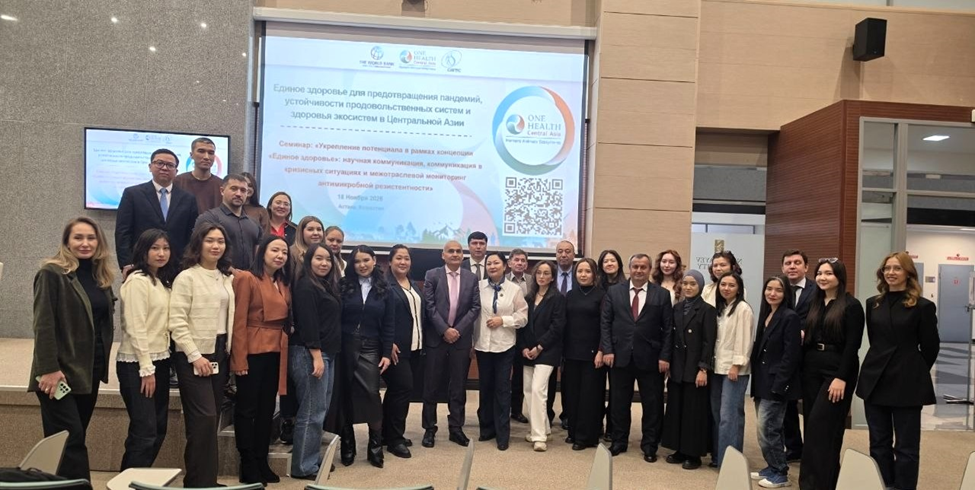
18 November 2026, Astana. A regional seminar entitled “Strengthening Capacity under the One Health Approach: Science Communication, Crisis Communication and Cross-Sectoral Surveillance of Antimicrobial Resistance” was held at the Nazarbayev University School of Medicine. Organised by the Regional Environmental Centre for Central Asia (CAREC) in a hybrid format, the event brought together healthcare, veterinary and environmental specialists, members of the scientific community, representatives of international organisations, journalists and press officers from across Central Asia.
The seminar marked the opening of World AMR Awareness Week (18–24 November), which in 2026 is held under the theme “One Health, One Action: Act Now to Protect Our Present and Future from Antimicrobial Resistance”. It also served as a preparatory platform ahead of the International Conference “Rational Use of Antimicrobial Agents for Combating Antimicrobial Resistance: One Health Approach”, scheduled for 19–20 November 2026.
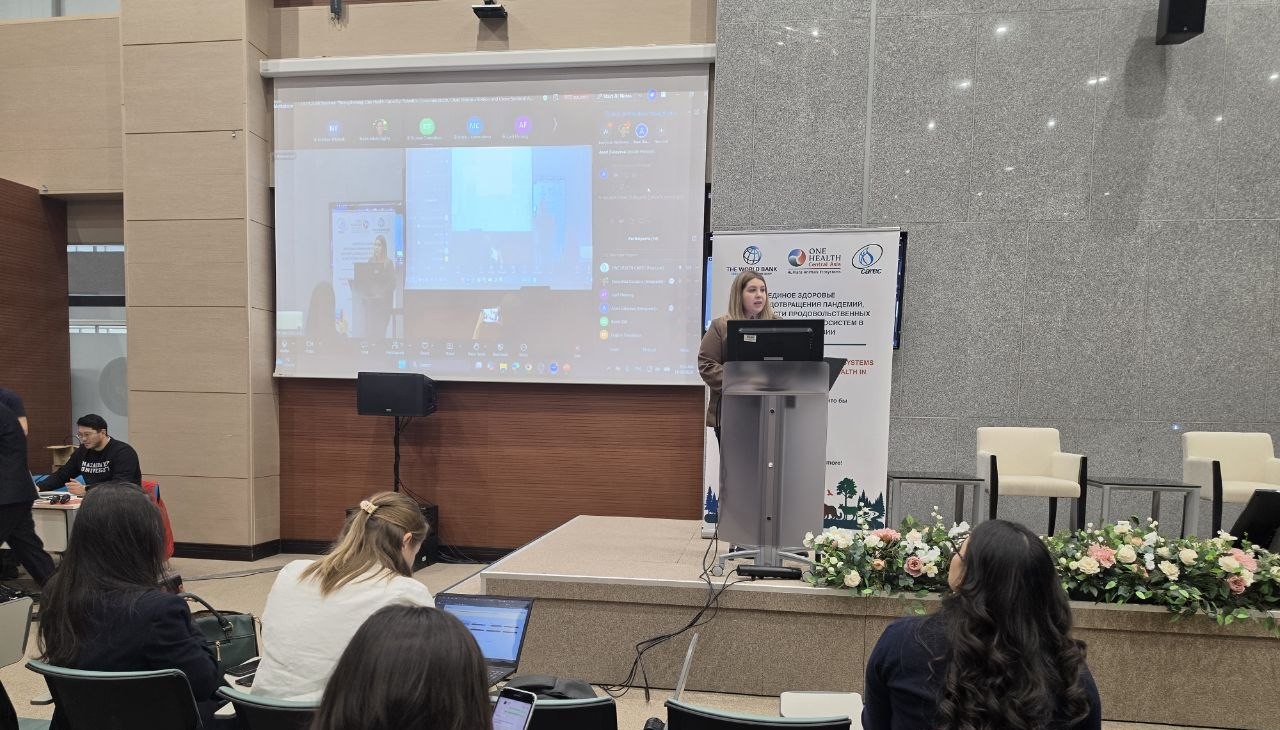
Addressing AMR requires not only scientific research, laboratory diagnostics, and effective epidemiological surveillance systems, but also the practical application of research findings and coordinated action across different sectors. In her welcoming remarks, Oksana Kravtsova, Head of the Environment and Health Program at CAREC, emphasized the importance of strengthening cross-sectoral cooperation among healthcare professionals, veterinary specialists, environmental experts, scientists, and media representatives. She noted that overcoming professional and institutional barriers, exchanging knowledge, and communicating scientific findings in an accessible way help bring together the efforts of different stakeholders and contribute to developing effective solutions under the One Health approach.
Moving from scientific research to practical action, based on cooperation and the exchange of experience, is becoming one of the key conditions for addressing AMR in Central Asia.
The Seminar Program Brought Together Three Interconnected Areas
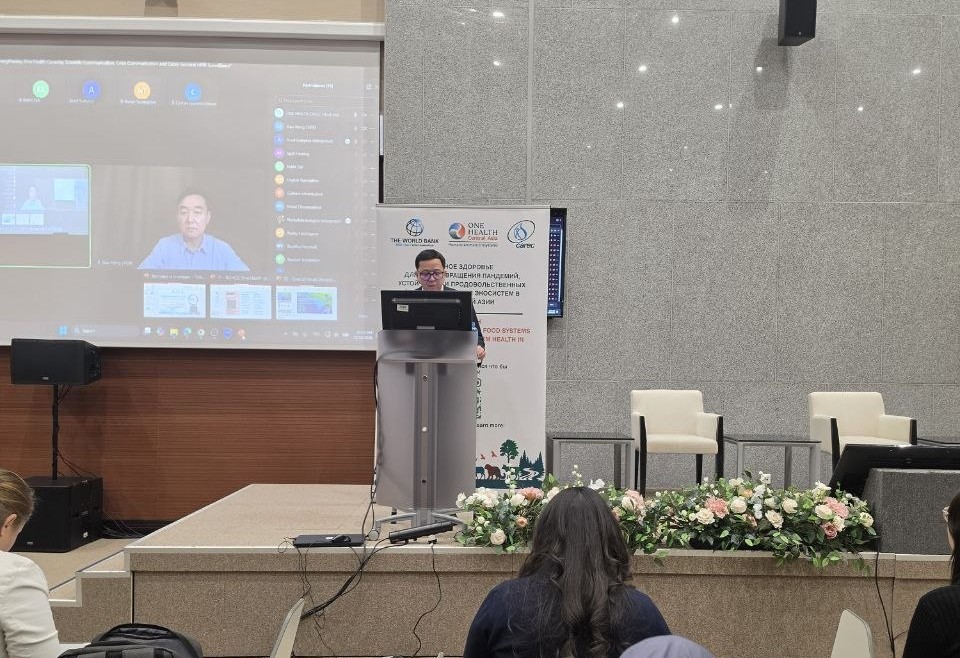
The first area focused on science communication. With guidance from international and regional experts, participants explored the principles of scientific publishing, how to select peer-reviewed journals, and the structure of a scientific article. The practical scientific writing workshop will provide an opportunity to further develop participants' manuscript projects, including research on AMR and zoonotic diseases.
Speakers included Professor Xiao-Nong Zhou of Shanghai Jiao Tong University and the Chinese Center for Disease Control and Prevention (China CDC); Professor Kairat Tabynov (CAREC); and representatives of Kazakhstan's academic community — Associate Professor Abduzhappar Gaipov of NUSOM and Professor Raushan Ryschanova of A. Baitursynov Kostanay Regional University.
The second area addressed crisis communication and media engagement. Experts discussed how to communicate effectively with the public and partners during zoonotic disease outbreaks, counter misinformation and build trust in official information sources.
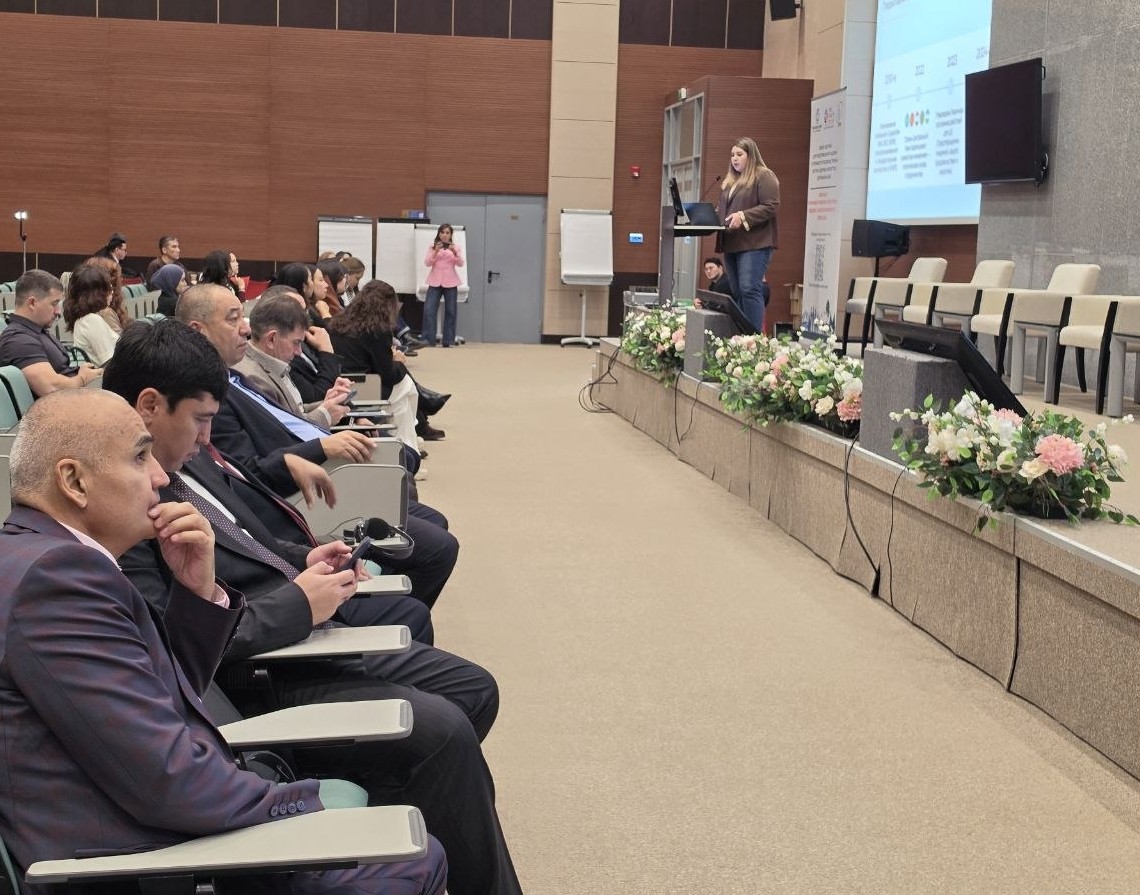
The session featured Dr. Kristina Rolfheim-Bue, Director of Communications at the Norwegian Institute of Public Health (FHI); Olga Izhik, WHO Risk Communication and Infodemic Management Specialist; and Shoira Toirova, Communications Specialist at CAREC. The discussion highlighted that effective crisis communication must be a two-way process, starting with understanding the needs, questions and concerns of the public. Recommendations should be not only scientifically sound but also practical and feasible in people's everyday circumstances.
The third area focused on cross-sectoral AMR surveillance. Representatives from the health, veterinary and environmental sectors discussed mechanisms for joint data collection and analysis, monitoring antimicrobial use, and identifying opportunities to detect resistant microorganisms in the environment and wastewater. The practical session included the development of a draft joint AMR surveillance protocol for a pilot site.
As a result of the seminar, participants gained practical tools for preparing scientific publications, organising crisis communication and strengthening cross-sectoral AMR surveillance. Particular attention was given to building professional connections among specialists from different fields and promoting a coordinated regional approach to combating antimicrobial resistance in Central Asia.
Shoira Toirova — Communications Specialist, One Health Program
For further information:
Oksana Kravtsova — Regional Manager of the One Health Program, CARECokravtsova@carececo.org