

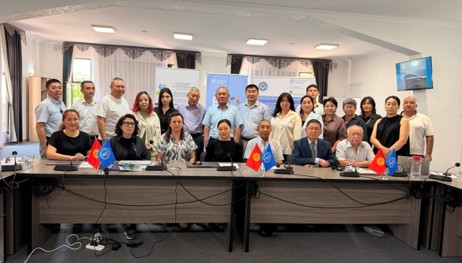
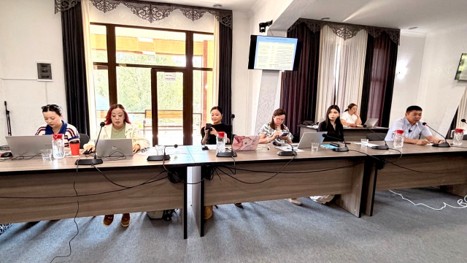
On June 29–30, 2026, a two-day national workshop titled “Implementation of the National Biosafety Mechanism under the Cartagena Protocol: Digitalization, Inclusivity, and Interagency Cooperation” was held in the Issyk-Kul Region, organized by the Kyrgyz Republic Branch of the Regional Environmental Center for Central Asia (RECCA) as part of the FAO/GEF project “Implementation of the Kyrgyz Republic’s National Biosafety Mechanism in accordance with the Cartagena Protocol on Biosafety.”
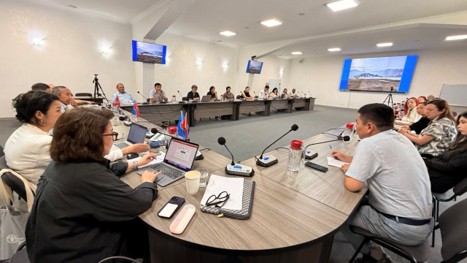
The seminar served as a platform for taking stock of the project’s progress to date and discussing next steps for developing the National Biosafety Mechanism under the Cartagena Protocol. A distinctive feature of the seminar was that the organizers aimed not only to present the results of the work carried out but also to gather feedback from all stakeholders. The views of government agencies, the expert community, regional representatives, organic producers, farmers, and civil society organizations will form the basis for practical recommendations on the further development of the national biosafety system.
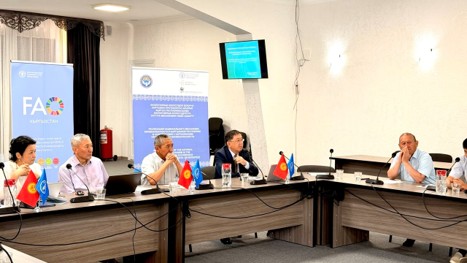
In his opening remarks at the seminar, Alymzhan Bektemirov, Chief Specialist of the Flora Department at the Ministry of Natural Resources, Ecology, and Technical Supervision of the Kyrgyz Republic, noted that Kyrgyzstan acceded to the Cartagena Protocol as early as 2005, but that for many years, insufficient work had been carried out under the protocol.
“Today, thanks to financial support from the Global Environment Facility (GEF), technical support from the FAO, and the implementation of the CAREC project in Kyrgyzstan, a solid foundation has been laid for the development of the national biosafety system. In a short period of time, extensive work has been carried out to improve legislation; the Law of the Kyrgyz Republic “On Biosafety” has been adopted; and the development of subordinate regulatory documents has begun. On behalf of the Ministry of Natural Resources, Ecology, and Technical Supervision, I would like to express my sincere gratitude to FAO, CAREC, and all partners for their joint efforts to strengthen biosafety in our country.”
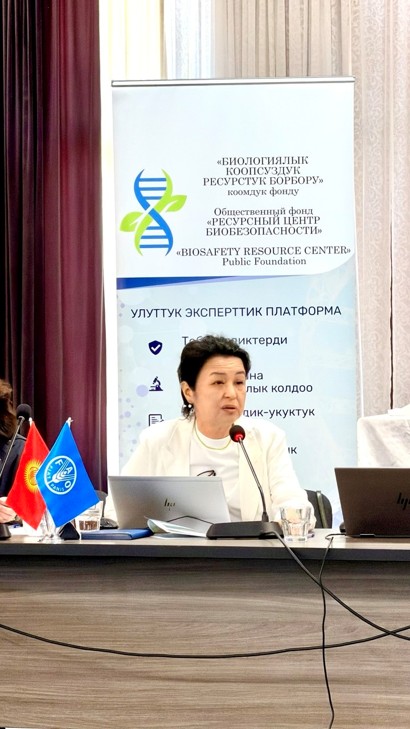
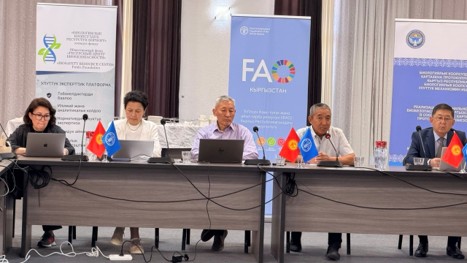
FAO Project Manager Cholpon Alibakieva emphasized that the project is of particular importance not only for Kyrgyzstan but also for the entire Central Asian region.
“This project is one of the first FAO/GEF biosafety projects being implemented in Central Asian countries. In a relatively short period of time, our joint efforts have yielded significant results: the legislative framework is being improved, the skills of specialists from government agencies, laboratory staff, and customs officials are being enhanced, and training is being provided to farmers and educators. FAO will continue to support the Kyrgyz Republic on biosafety issues as well as in other strategic areas—biodiversity conservation, climate change adaptation, agricultural development, and natural and water resource management. We are confident that the project’s objectives will be successfully achieved.”
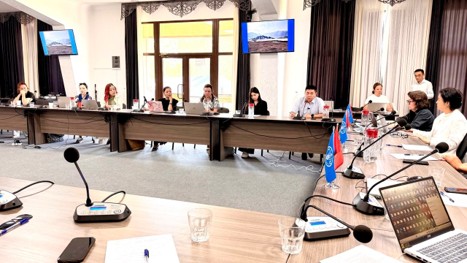
Kuban Matraimov, Director of the CAREC Branch in the Kyrgyz Republic, noted that over the years of the project’s implementation, the foundation for an effective national biosafety system has been laid, and that this seminar will be an important step in identifying future priorities.
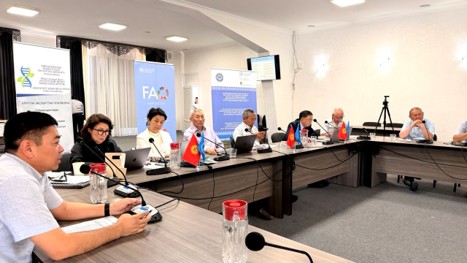
“Over the years of the project’s implementation, significant work has been done to strengthen the country’s institutional capacity. Regulatory and legal documents have been developed, dozens of training events have been organized, and cooperation between government agencies, the scientific community, and the regions has been strengthened. Today, our main task is to listen to the views of all stakeholders and jointly determine what steps need to be taken next. That is precisely why this seminar is structured as an open discussion and a collaborative effort to develop recommendations that will form the basis for the further development of the national biosafety system.”
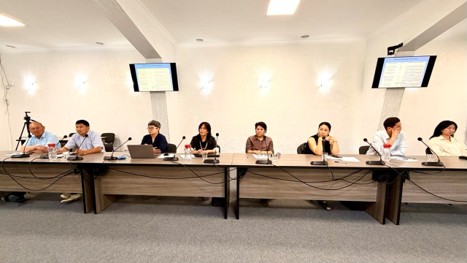
Day One: Digitalization, Public Awareness, and Inclusivity
On the first day, participants discussed the results of the project’s implementation, issues related to the digitalization of the National Biosafety Mechanism, the development of a national web resource, integration with the international Biosafety Clearing-House, and modern approaches to raising public awareness. Informational videos produced as part of the project, aimed at raising public awareness of biosafety issues, were presented.
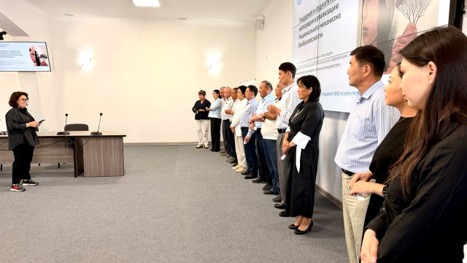
Special attention was given to issues of gender equality and inclusivity. FAO representative Guzel Bekenova gave a presentation on integrating gender perspectives into the implementation of the National Biosafety Mechanism. Participants discussed how ensuring equal opportunities for women and men contributes to more effective decision-making, broader participation by various population groups, and the sustainable implementation of government policy in the field of biosafety.
Day Two: Recommendations for Future Work
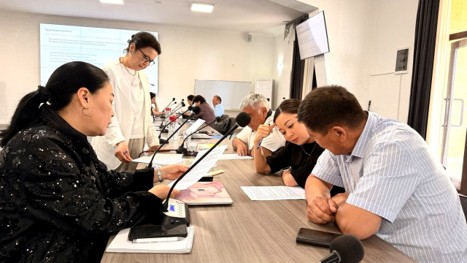
The second day of the seminar began with a discussion of the key findings from the first day. The main focus was on open dialogue and the development of recommendations for the further development of the national biosafety system.

During the discussions, representatives of government agencies, Kyrgyzstandart, the Naryn Regional Directorate for the Development of Organic Agriculture, the Association of Forest and Land Users of Kyrgyzstan, the “Beren” Agricultural Cooperative in the Talas Region, as well as representatives from higher education institutions—Osh Technological University and the Talas Regional Multidisciplinary Institute of the Kyrgyz National University named after J. Balasagyn.
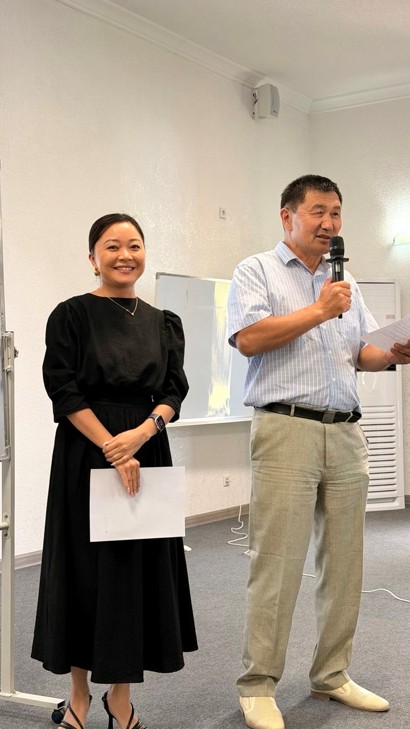
This format made it possible to discuss actual needs on the ground, identify existing challenges, and gather suggestions that will be used in preparing an analytical report and practical recommendations for the further development of the National Biosafety Mechanism of the Kyrgyz Republic.
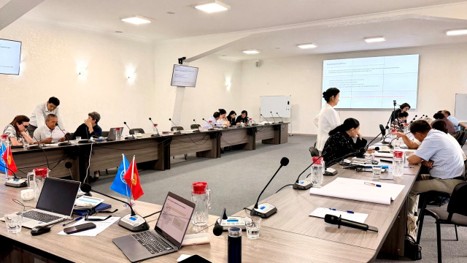
Based on the results of the two-day meeting, recommendations will be prepared aimed at further improving the national biosafety system, developing digital tools, strengthening interagency cooperation, and effectively fulfilling the Kyrgyz Republic’s obligations under the Cartagena Protocol on Biosafety.
Additional information:
Kuban Matraimov Director of the Kyrgyz branch of the CAREC kyrgyzstan@carececo.org