

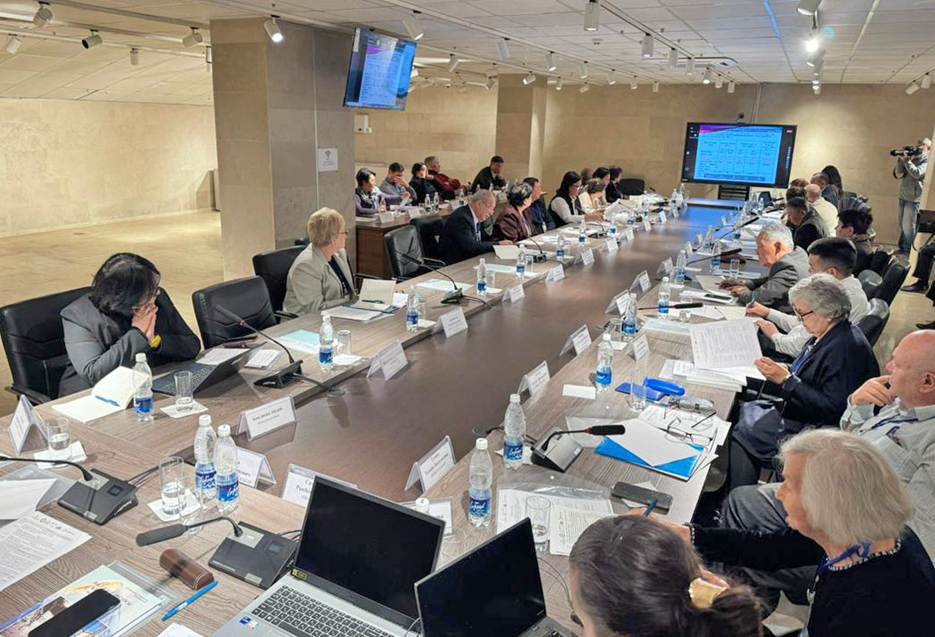
The international scientific conference on Water and Energy Resources and Climate Risks in Central Asia as a Basis for Achieving Sustainable Landscapes (the 5th Mamatkanov Readings) was held on 5 November 2025 in Bishkek, Kyrgyz Republic.
The Mamatkanov Readings are held in memory of Academician Kanysh Mamatkanov, an outstanding Kyrgyz hydrologist and one of the founders of modern research on water resources of the Tien Shan and Central Asia. His work on the formation and use of water resources in mountain regions laid the scientific foundation for rational water use and river-flow forecasting. Today, the Mamatkanov Readings serve as a regular international platform for exchanging knowledge and strengthening scientific cooperation among countries in the region.
The conference was organized by the Institute of Water Problems and Hydropower of the National Academy of Sciences of the Kyrgyz Republic (IWP&HP, NAS KR) and the World Bank’s RESILAND CA+ Program, with support from the Research Center for Ecology and Environment of Central Asia (Bishkek).
The event brought together leading experts from Kyrgyzstan, Kazakhstan, and Uzbekistan—45 participants in total—and featured 10 scientific presentations reflecting the latest research findings on the region’s water-energy resources.
Scientific focus: sustainable landscapes and risk management
The discussions centered on the interlinkages between landscape conditions, water-energy resources, georisks, and climate change. With accelerating glacier melt and the growing frequency of extreme natural events, particular attention was given to the impacts of mudflows and floods on the safety of water-intake infrastructure and landscape conditions—and, consequently, on the safety, health, and well-being of people and ecosystems.
Scientists presented research findings in the following areas:
assessment of the water-energy balance of the Kyrgyz Republic considering degradation of mountain ecosystems;
modeling river-runoff formation and forecasting hazardous hydrological processes;
use of satellite data to monitor glacier dynamics, snow cover, and slope deformations;
assessment of the resilience of water-intake systems and infrastructure in high mudflow-risk zones;
application of KG RESILAND tools to assess landscape vulnerability and plan measures for restoring degraded areas.
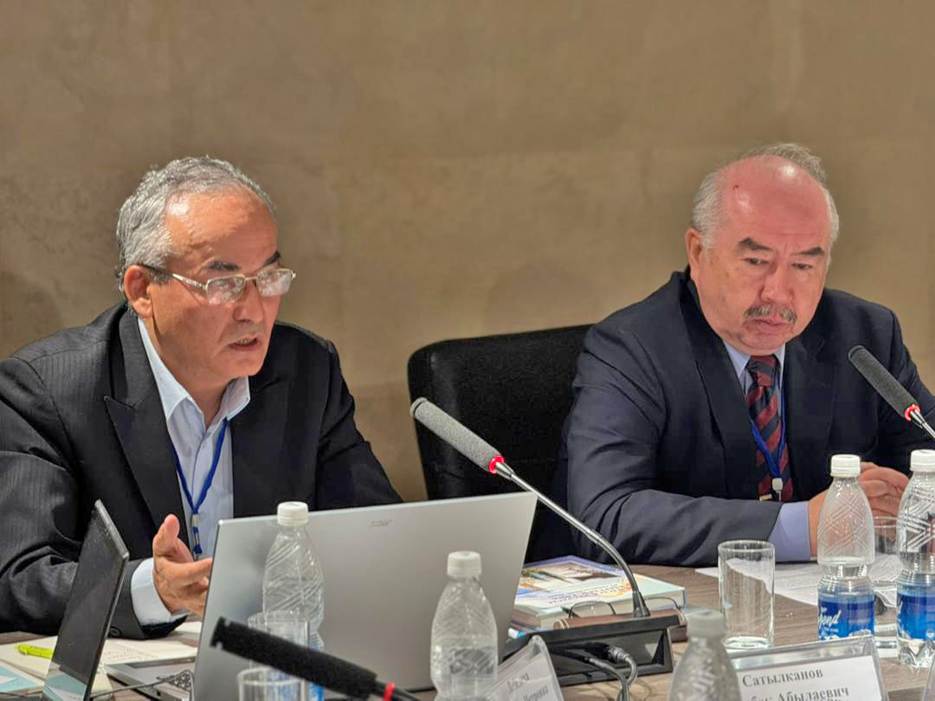
Participants emphasized that modern science increasingly contributes directly to improving quality of life and strengthening ecosystem resilience. Scientific research supports solutions to transboundary water and environmental challenges, while geospatial maps of mudflow hazards, biodiversity, and natural risks are becoming important tools for sustainable development and disaster risk reduction.
Official opening and keynote remarks
The conference was opened by Dr. Rysbek Satylkanov, Director of the IWP&HP NAS KR.
Welcome remarks were made by:
- Nurbek Zheenbaev, Director, Institute of Physics, National Academy of Sciences of the Kyrgyz Republic;
- Aidai Bayalieva, Task Team Leader for RESILAND project, World Bank
They highlighted that effective management of water and landscape resources requires integrated approaches that combine traditional knowledge and scientific data, modern nature-based and engineering solutions, and interstate cooperation.
Outcomes and recommendations
Participants noted the following key outcomes:
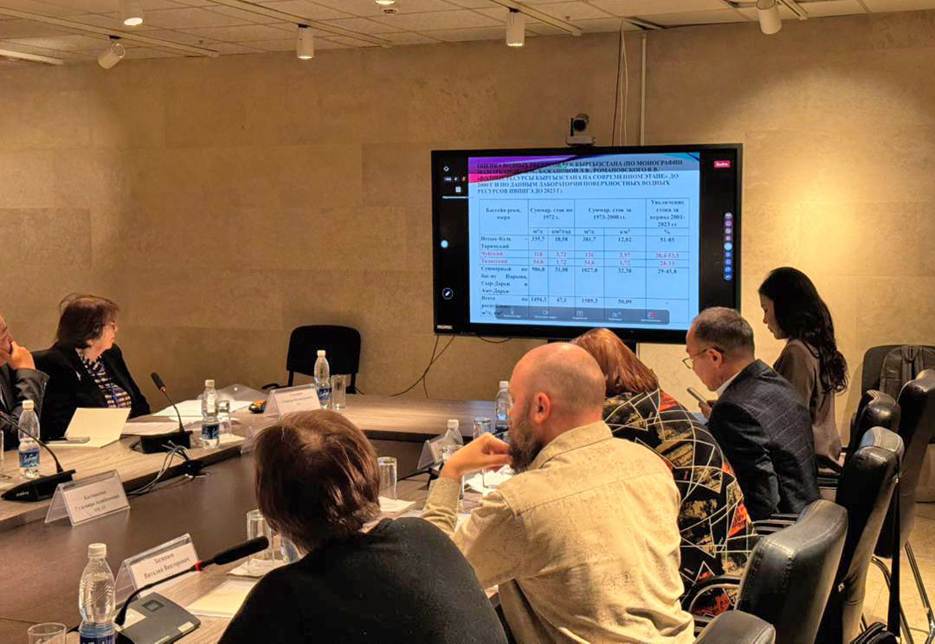
- Climate change is causing atypical fluctuations in the hydrological regime of rivers, including shifts in flood timing, the emergence of two flood peaks, increases in average annual discharge, and changes in runoff structure. Continued development of scientifically based forecasting and adaptation methods is necessary.
- Scientific research on the impacts of modern climate conditions on the hydrological regimes of Central Asian river systems should continue. Monitoring of climate impacts on water resources and mountain-river dynamics should be strengthened, with regular measurements conducted on existing water channels to improve hydrological data.
- A reassessment of the region’s surface water resources is needed to ensure water security.
- Kyrgyzhydromet is advised to accelerate reconstruction and restoration of hydrometric stations to resume systematic observations.
- When designing irrigation and hydropower infrastructure, the location of hydrological stations must be considered to avoid distortion of natural river flow.
- Implementation of adaptation measures is recommended, including construction of storage reservoirs to regulate spring runoff and prevent water shortages during the irrigation season.
- Methods should be developed to assess the contribution of buried ice and glaciers to the water resources of mountain rivers.
- Drilling new monitoring and operational wells in groundwater discharge zones (particularly in the Chui Basin) is recommended to increase water availability for irrigation.
- Scientific work on systematizing and assessing the hydropower potential of small watercourses should continue to support the development of small hydropower.
- All materials presented at and endorsed by the conference are recommended for public dissemination.
Participants emphasized that science plays a direct role in safeguarding people’s well-being by improving safety, health, access to clean water, and sustainable development.
All participants expressed deep appreciation to the organizers and donors for the high level of preparation and implementation of the conference, as well as for supporting international scientific cooperation aimed at strengthening the resilience of Central Asia in the context of climate change.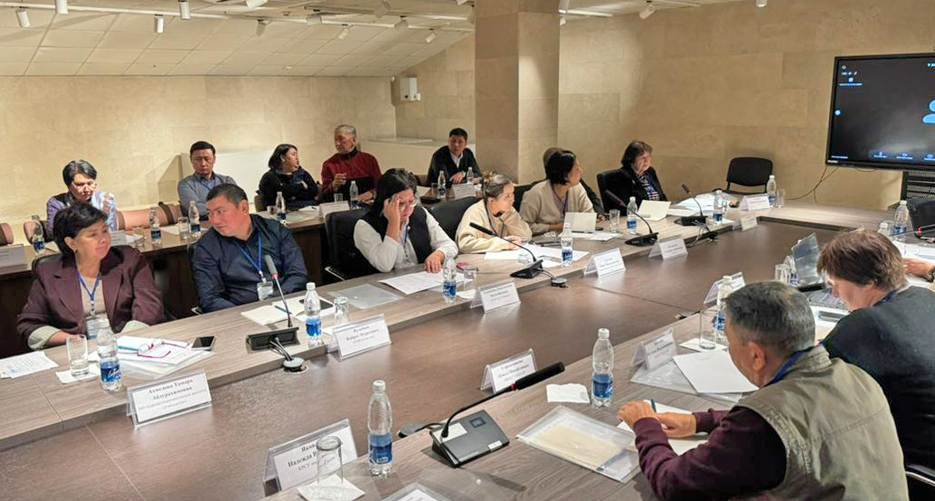
The 5th Mamatkanov Readings have become an important mechanism for promoting approaches that integrate science, governance, and practical measures to restore natural resilience under changing climate conditions.
The Kyrgyz Republic Resilient Landscape Restoration Project is part of the World Bank’s RESILAND CA+ Program, which aims to enhance the resilience of regional landscapes in Central Asian countries. The program is also implemented in Tajikistan and Uzbekistan with similar national and regional objectives.
The Regional Environmental Centre for Central Asia (CAREC) implements the regional component of the Kyrgyz Republic Resilient Landscape Restoration Project.
Contacts:
Chinara Berbayeva – Deputy Director, Project Implementation Department under the Ministry of Emergency Situations of the Kyrgyz Republic / Project Manager, RESILAND Kyrgyzstan
Lyudmila Kiktenko – Deputy Team Leader, “Restoration of Sustainable Landscapes in Kyrgyzstan: Regional Component” Project, CAREC