
Dear Readers!
When Kyrgyzstan transitioned to a market economy in the 1990s, the country moved quickly by regional standards. But the informal economies that held village economies together began to fray. For many villages, especially those far from urban centers, goods didn't reach markets, skills went unrecognized, and young people saw little reason to stay.
The “One Village One Product” (OVOP) initiative, launched in 2007 with support from JICA, offered a new model for rural revitalization. Rather than imposing solutions from the outside, OVOP focused on enabling communities to transform traditional crafts and local resources into sustainable sources of income. Producers learned not only to create high-quality products but also to engage with broader markets, building confidence and professional skills along the way.
In Issyk-Kul, for example, centuries-old felt-making traditions, which once used mainly for yurts and household items, have been revitalized for modern markets. Likewise, natural products like white honey and sea buckthorn, a locally harvested berry, are being transformed into food and body care products that appeal to health-conscious consumers both domestically and abroad. These successes illustrate how local knowledge and natural resources can be leveraged for economic growth without losing cultural identity.
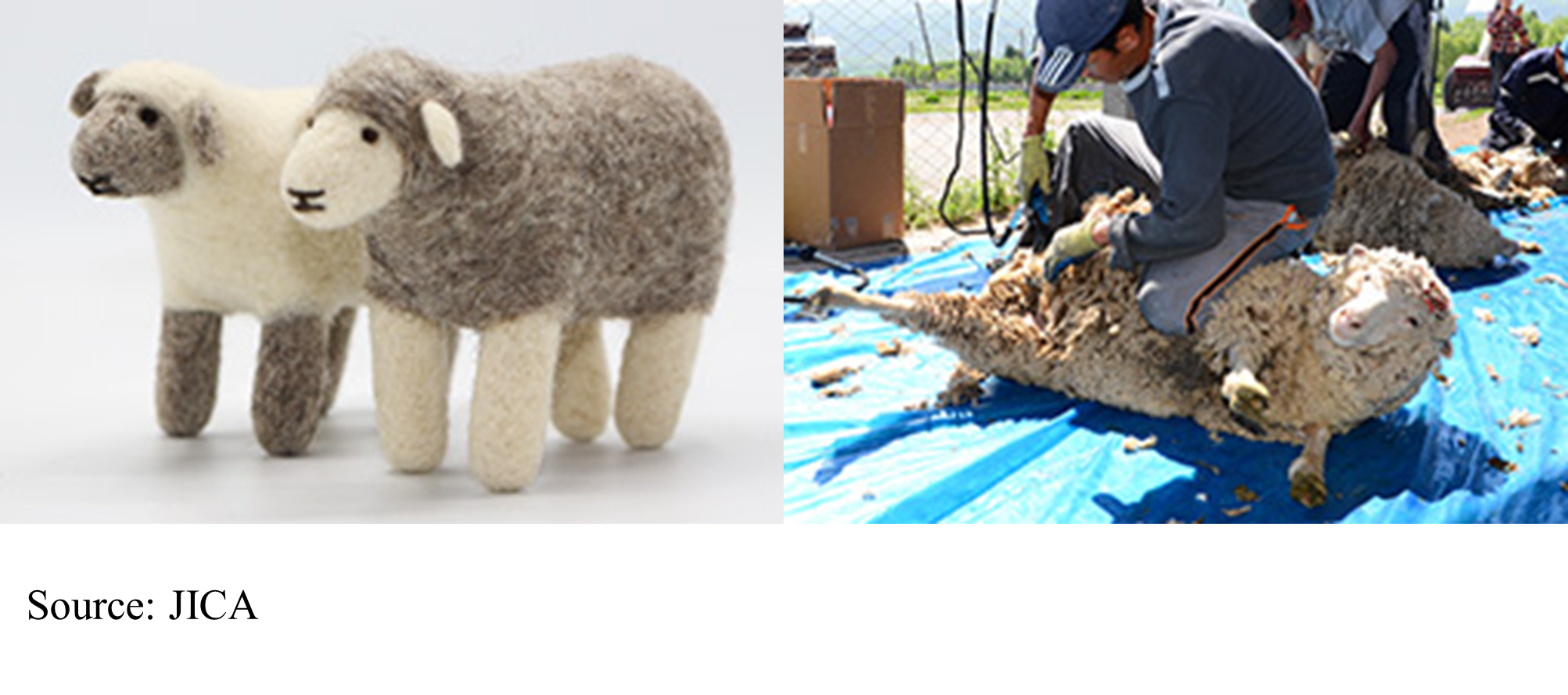
The journey was not without challenges. Early participants navigated new territory in marketing, quality control, and collaboration. Shared workspaces and production groups encouraged peer learning and teamwork, helping people earn income while remaining close to home. Over time, local leadership strengthened. In 2011, the Kyrgyzstan OVOP Association was founded to support community-based enterprises, formalize training programs, and expand participation across the country.
OVOP has also grown more diverse. Beyond felt products, communities now produce carpets, dried fruits, jams, herbal soaps, and other items, reflecting the variety of regional resources. Leaders visited other countries to study similar initiatives, bringing back ideas to adapt locally. Gradually, external consultants stepped back, allowing the initiative to become a locally managed, self-sustaining movement.
By the early 2020s, OVOP had evolved into a national network, connecting thousands of producers across multiple regions. In 2022–2023, it was formally recognized as a National Economic Project of the Kyrgyz Republic.
The story of OVOP in Kyrgyzstan is a testament to how tradition and innovation can work hand in hand. It has addressed poverty and migration while fostering community cohesion, strengthened women’s economic participation, and helped rural producers connect with global markets. By turning local skills into sustainable livelihoods, OVOP has not only bolstered incomes but also reinforced the social fabric of Kyrgyzstan’s rural communities.
Stay informed through our series for further case studies, practical insights, and expert perspectives. Subscribe to the OVOP Kyrgyzstan YouTube channel and follow the blog of Japan International Cooperation Agency (JICA) for in-depth information and exclusive content.
#OVOP #RESILANDCA #KGRESILAND #Kyrgyzstan #WorldBank #REC #OneVillageOneProduct #NatureBasedSolutions #NBS #CentralAsia