
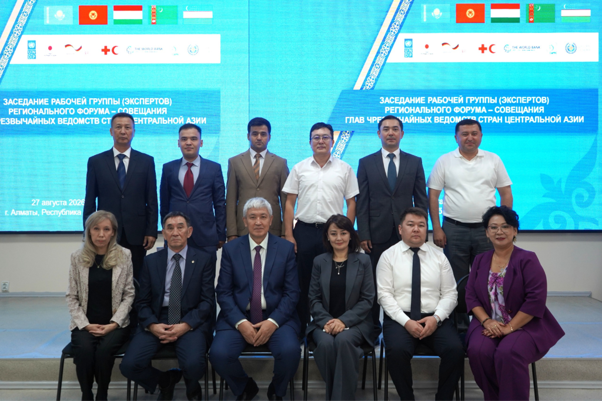
On 27 August 2026, a meeting of the Expert Working Group of the Regional Forum – Meeting of the Heads of Emergency Authorities of Central Asian Countries was held in Almaty. One of the key outcomes of the meeting was the agreement on the draft Regional Roadmap for Mitigating the Impacts of Transboundary Mudflows and Floods.
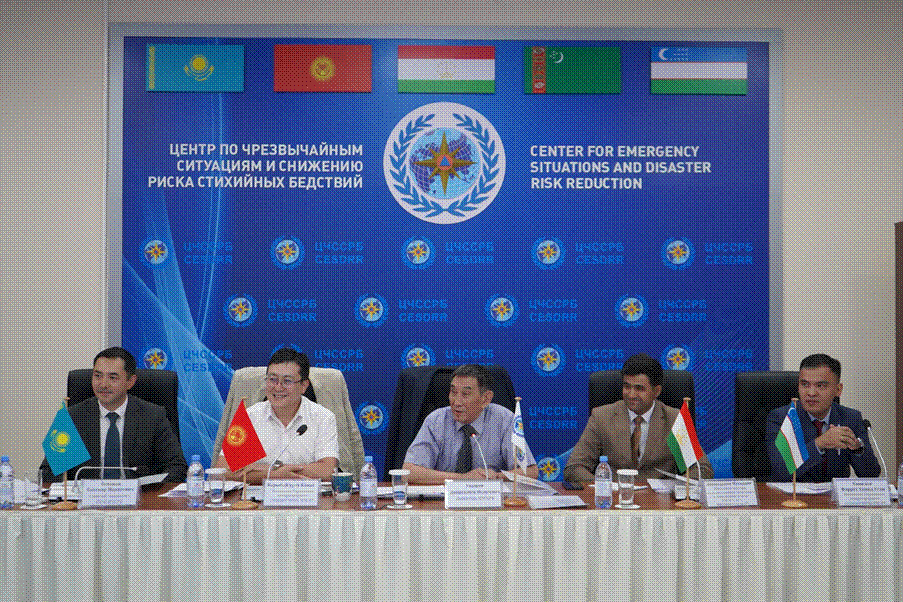
The meeting was held at the Center for Emergency Situations and Disaster Risk Reduction (CESDRR), with the support of the United Nations Development Programme (UNDP), the International Federation of Red Cross and Red Crescent Societies (IFRC), and the Ministry of Emergency Situations of the Republic of Uzbekistan.
The meeting brought together representatives of the emergency authorities of Central Asian countries and the Secretariat of the Regional Forum. The main task of the Expert Working Group was to discuss and agree on documents to be submitted for consideration by the heads of emergency authorities of the countries of the region at the upcoming Regional Forum, scheduled to take place on 19–21 October 2026 in Tashkent under the chairmanship of Uzbekistan.
The Regional Environmental Centre for Central Asia (CAREC) is contributing to the preparation of the Regional Forum within the framework of the World Bank’s Resilient Landscapes Restoration Program in Central Asia (RESILAND CA+) and is one of the co-organizers of the event, alongside UNDP, GIZ, IFRC, KazAID, and JICA.
One of the documents reviewed and agreed upon by the experts was the draft Regional Roadmap for Mitigating the Impacts of Transboundary Mudflows and Floods. The Roadmap is being developed under the regional component of the Resilient Landscape Restoration Project in the Kyrgyz Republic (KG RESILAND), which is part of the RESILAND CA+ Program.
The Roadmap is intended to establish a coordinated regional approach to reducing the risks associated with transboundary mudflows and floods and to strengthen cooperation among Central Asian countries in disaster risk prevention and reduction.
The document builds on analytical materials prepared under the KG RESILAND project, including a review of transboundary river basins in Central Asia, an analysis of national policies and measures related to mudflow and flood risk management, a review of financing mechanisms, and stakeholder mapping. These materials help identify existing risks, mechanisms for cooperation among the countries, and priority areas for further regional collaboration.
During the meeting, the Expert Working Group discussed and agreed on four draft documents:
● the Concept of the 2026 Regional Forum – Meeting of the Heads of Emergency Authorities of Central Asian Countries;
● the Regional Concept for Enhancing the Resilience of Central Asian Cities to Disaster and Climate Change Risks until 2030;
● the Regional Roadmap for Mitigating the Impacts of Transboundary Mudflows and Floods;
● proposals for establishing a Regional Mechanism for International Response to Large-Scale and Transboundary Emergencies.
The Expert Working Group also took note of and endorsed the results of the UNDP regional projects “Strengthening the Regional Disaster Risk Reduction System in Central Asia” and “Enhancing Urban Resilience to Disaster and Climate Risks in Central Asia,” as well as the GIZ regional programme “Climate Risk Management in Central Asia.”
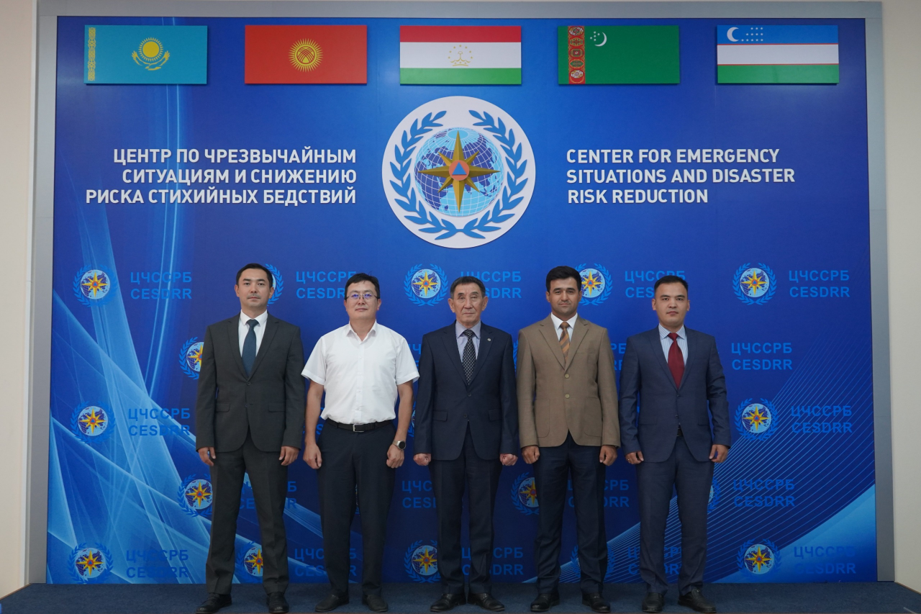
Following the meeting, the Central Asian countries expressed their intention to intensify joint efforts and continue taking coordinated measures at the regional level aimed at strengthening regional cooperation in disaster risk reduction.
For CAREC, the experts’ agreement on the draft Regional Roadmap represents an important milestone in developing practical mechanisms for regional cooperation. Following further coordination and approval, the document will provide a common framework for coordinating the actions of Central Asian countries to reduce the risks associated with transboundary mudflows and floods.
The development of the Roadmap forms part of the broader efforts of the RESILAND CA+ Program to strengthen transboundary cooperation, facilitate knowledge exchange, and promote coordinated approaches to landscape restoration and resilience to climate-related and natural hazards across Central Asia.
Additional Information:
Lyudmila Kiktenko – Deputy Head of the Project Implementation Unit, “Resilient Landscape Restoration in the Kyrgyz Republic: Regional Component” Project, CAREC, lkiktenko@carececo.org