

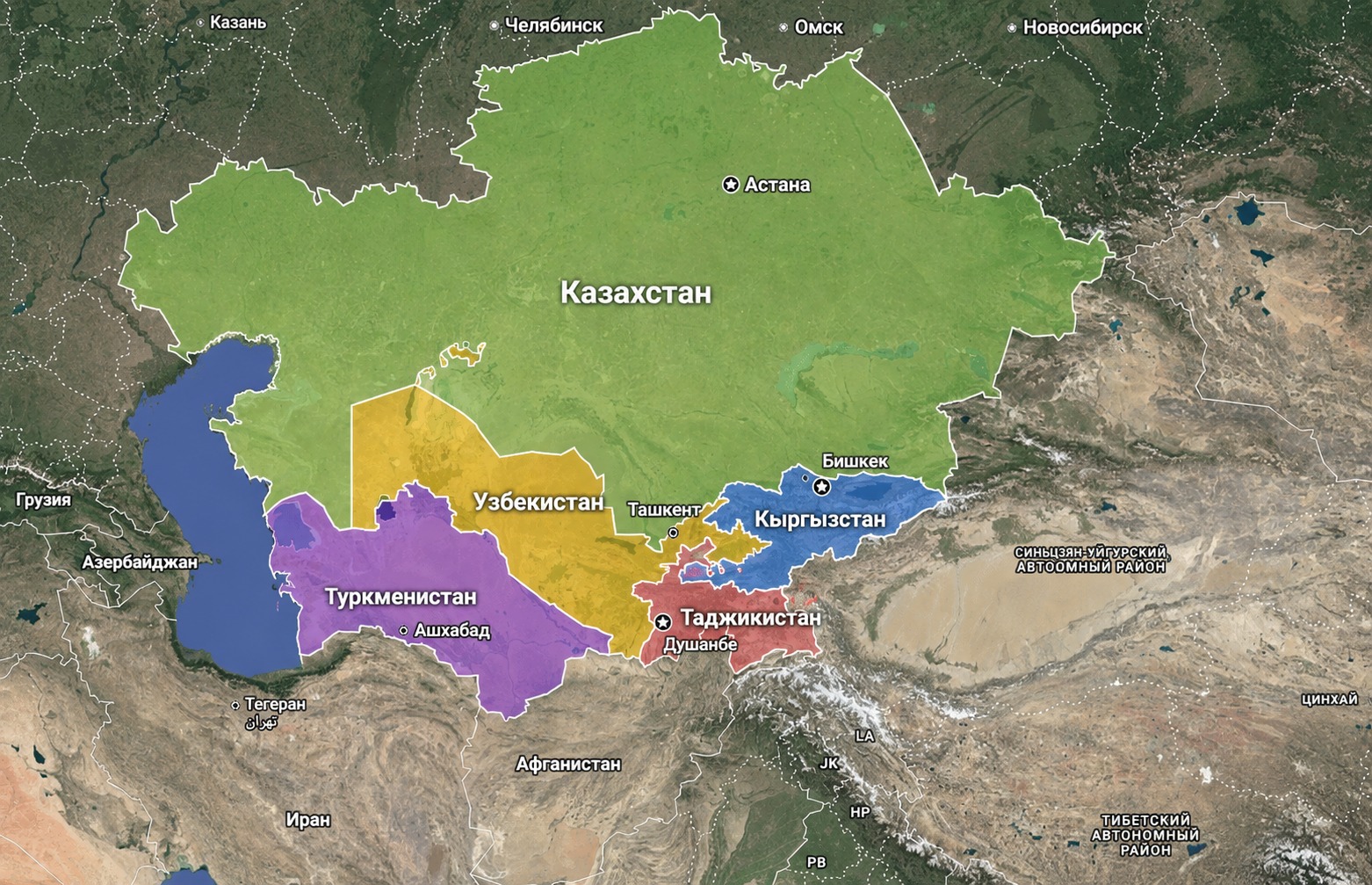
From June 1 to 2, 2026, the countries of Central Asia, together with the World Bank, held a two-day virtual regional meeting dedicated to reviewing the results of the third year of implementation of the large-scale multi-country project “Pandemic Preparedness and Response through the One Health Approach in Central Asia,” financed under the first round of grants from the Pandemic Fund.
.jpg)
Representatives of the relevant ministries of health, agriculture, and environment of Kazakhstan, the Kyrgyz Republic, Tajikistan, Turkmenistan, and Uzbekistan participated in the online meeting, along with representatives of the World Bank, the World Health Organization (WHO), the Food and Agriculture Organization of the United Nations (FAO), the World Organisation for Animal Health (WOAH), the United Nations Environment Programme (UNEP), and the Regional Environmental Centre for Central Asia (CAREC).
The main objective of the meeting was to review the progress made by countries in the health, veterinary, and environmental sectors in order to prepare a consolidated regional report to be submitted to the Pandemic Fund Secretariat by July 31, 2026.
World Bank's Director for the Central Asia Nadji Benhassine noted that the One Health Framework for Action for Central Asia has become an important political commitment by the countries of the region to jointly manage health risks. It has served as the basis for a broader regional initiative with a total budget of USD 130 million. In May 2025, the World Bank’s Board of Directors approved financing of USD 60 million for the Kyrgyz Republic and Tajikistan to strengthen epidemiological surveillance and response systems. According to him, the regional structures, professional networks, and cross-border cooperation mechanisms established in recent years provide a strong foundation for protecting Central Asia from future pandemics and other biological threats.
Country Progress Updates
Within the framework of the project, Kazakhstan focused on practical testing of response systems, workforce development, and digitalization. Interagency simulation exercises on outbreaks of Crimean-Congo Hemorrhagic Fever and brucellosis were conducted in Astana, resulting in recommendations for improving standard operating procedures.
At the same time, development of a biosafety information system continues based on government co-financing. Mapping of existing platforms has been completed, and technical specifications for the creation of an integrated intersectoral epidemiological surveillance system have been approved. Within the Frontline and Intermediate Applied Epidemiology Training Programs, 40 specialists were trained in 2025. In 2026, 21 participants are undergoing training, while another 20 have been enrolled to ensure the preparation of 40 district-level specialists. In addition, a practice of reciprocal guest lectures between medical and agricultural universities has been introduced, a simulation training exercise on anthrax outbreak response in Saran was conducted jointly with the U.S. Centers for Disease Control and Prevention (CDC), and a draft Roadmap for further development of the One Health approach has been prepared.
The Kyrgyz Republic presented the results of intersectoral efforts to implement the One Health approach involving the Ministry of Health, the Veterinary Service, and the Ministry of Natural Resources, Ecology and Technical Supervision. As part of strengthening the epidemiological surveillance system, more than 70 specialists from all regions of the country were trained in cholera prevention, diagnosis, and response. Interagency consultations were held to improve data exchange on food safety and cooperation with the International Food Safety Authorities Network (INFOSAN). The Veterinary Service reported on the implementation of the Veterinary Service Development Plan for 2024–2028, which предусматривает modernization of laboratories, expansion of PCR diagnostics, strengthening of epizootic surveillance, and monitoring of antimicrobial resistance. During the reporting period, hundreds of veterinary specialists received training in epidemiological surveillance, biosafety, and laboratory diagnostics. The environmental sector presented the results of integrating environmental protection services into the biological threat early-warning system. From January to April 2026, 140 environmental specialists completed training on pandemic preparedness, transboundary threats, and the impact of climate change on disease spread.
Tajikistan presented the results of project implementation in the agriculture, veterinary, and environmental sectors. Through the Ministry of Agriculture, with support from the International Development Association (IDA), modernization of five specialized laboratories and improvement of laboratory infrastructure are planned. The Food Security Committee continues developing the regulatory framework for establishing a national animal identification and traceability system. In 2026, implementation of several procurement procedures began, including the acquisition of mobile laboratories, incinerators for the disposal of biological materials, and equipment for diagnostic centers. In the environmental sector, activities are underway to map zoonotic disease risk areas considering climate factors and to establish a geographic information system (GIS) for wildlife monitoring in protected natural areas. Additional attention is being given to studying migratory bird routes and strengthening the capacity of environmental services in transboundary areas.
Turkmenistan presented the results achieved by the health and veterinary sectors under the project on pandemic preparedness and response through the One Health approach. The National Intersectoral One Health Committee continues its work, ensuring coordination among the health, veterinary, and environmental sectors. The project includes modernization of the epidemiological surveillance system, strengthening of laboratory networks, and development of mechanisms for interagency data exchange. Modern diagnostic equipment, including microscopes, autoclaves, refrigeration units, freezers, biological safety cabinets, and ELISA systems, has been procured for laboratories in Ashgabat, Arkadag, and the regions of the country. Preparations are also underway for implementation of the international quality standard ISO 15189 and for development of a national antimicrobial resistance monitoring system. With FAO support, an analysis of national legislation in the fields of veterinary medicine and zoonotic disease control was conducted. More than 30 standard operating procedures for laboratories were developed or updated, and a draft Strategic Plan for Brucellosis Surveillance for 2026–2030 was prepared. Among the country’s key priorities are combating brucellosis, rabies, and echinococcosis, strengthening epizootic surveillance, improving preventive animal vaccination systems, and enhancing intersectoral information exchange.
For Uzbekistan, implementation of the One Health approach serves as a comprehensive foundation for national biosafety and is directly linked to the management of climate-related and epidemiological risks. The country continues strengthening intersectoral cooperation among health, veterinary, and environmental services, while improving mechanisms for early detection of and response to threats. Experts from the World Organisation for Animal Health (WOAH) conducted a comprehensive assessment of the veterinary service using the international PVS methodology, and the results are being used for further system improvement. An important achievement was the introduction of the international “7-1-7” methodology for rapid disease detection and response in all 13 regions of the country. More than 325 specialists were trained under this initiative. International validation confirmed a high level of laboratory diagnostics for brucellosis, reaching 95 percent accuracy in several regional laboratories. Study visits for specialists to countries of the region, including the Kyrgyz Republic, were organized to facilitate experience sharing. Priority areas for future work include development of early warning systems, combating antimicrobial resistance, and strengthening laboratory capacity.
Regional Cooperation
At the conclusion of the meeting, the Regional Environmental Centre for Central Asia (CAREC), which serves as the Regional One Health Secretariat, 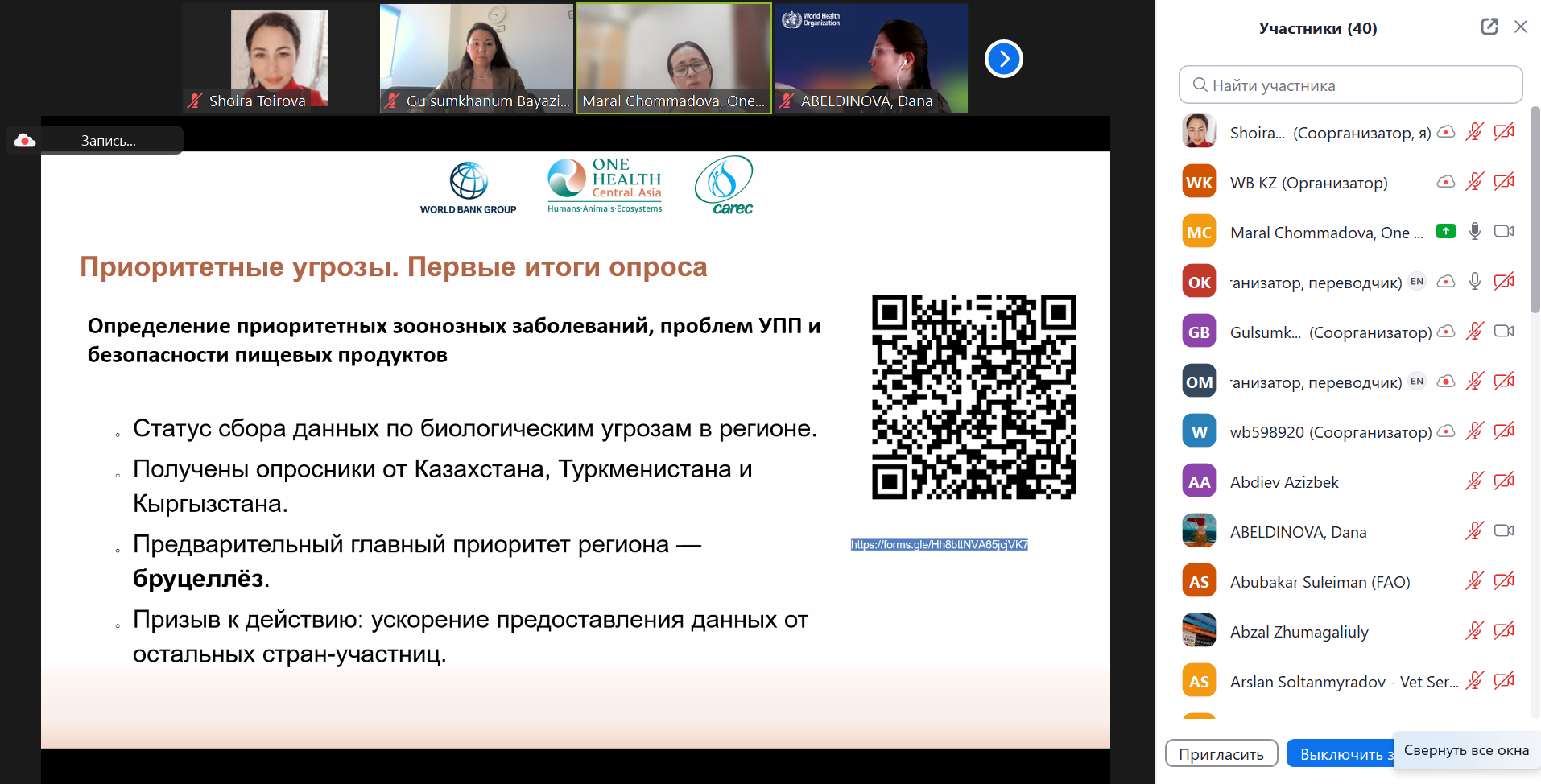 presented an overview of regional initiatives and plans for the coming period. It was noted that in May 2026, the final version of the Regional Action Plan and a package of accompanying legal documents were sent to the Ministries of Foreign Affairs of all five countries for intergovernmental review and coordination.
The Secretariat continues its work to identify common regional priorities in zoonotic diseases, food safety, and antimicrobial resistance. According to preliminary results of country surveys, brucellosis remains one of the most significant threats for the region. In the coming months, national consultations, a regional technical webinar on avian influenza control, preparation of cross-border simulation exercises involving Tajikistan and the Kyrgyz Republic, and the launch of a regional One Health information portal are planned. The portal will serve as a platform for knowledge sharing, coordination of actions, and dissemination of information on biosafety issues.
Summarizing the meeting, participants emphasized that the countries of Central Asia are consistently strengthening intersectoral and cross-border cooperation within the One Health framework, viewing it as a key instrument for preventing future pandemics, enhancing biological security, and ensuring the sustainable development of the region.
Shoira Toirova
PR Consultant, One Health Program