
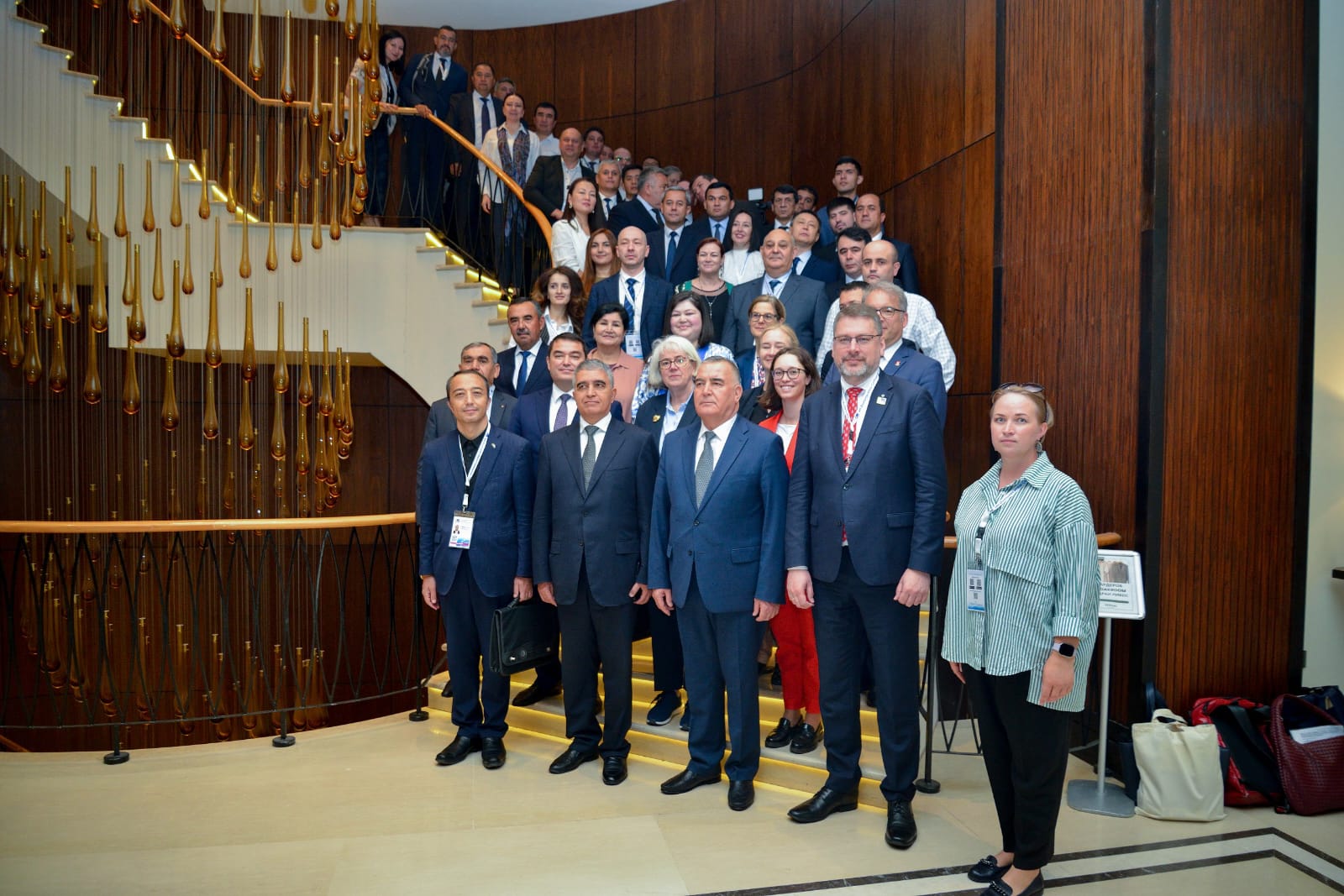
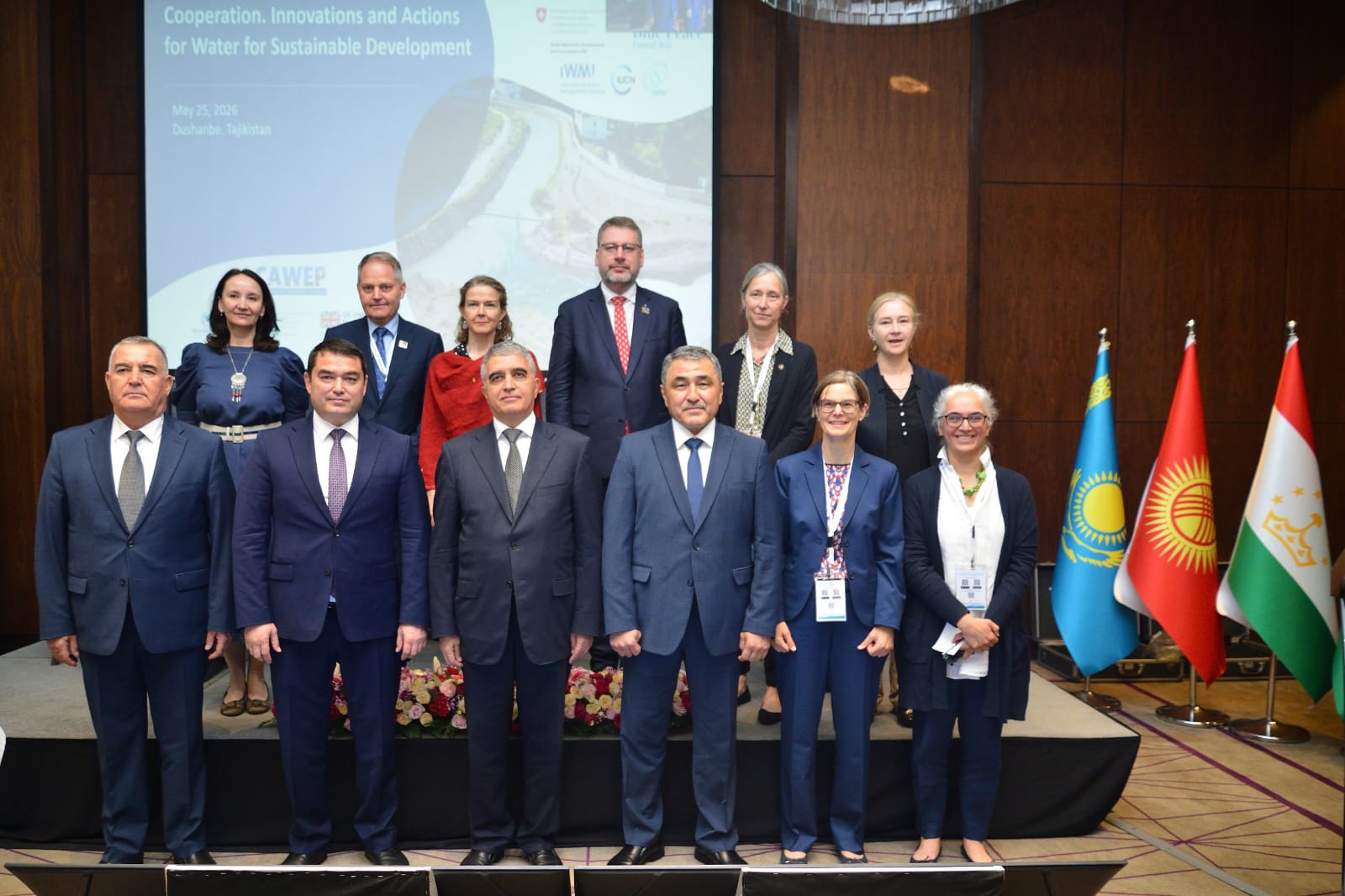
On 25 May in Dushanbe, the Regional Environmental Centre for Central Asia (CAREC) took part in the Pre-Conference Forum “Frontiers of Transboundary Cooperation: Innovations and Actions for Water for Sustainable Development,” held within the framework of the Fourth International High-Level Conference on the International Decade for Action “Water for Sustainable Development,” 2018–2028.
The Forum was organized under the Blue Peace Central Asia initiative with the support of the Swiss Agency for Development and Cooperation (SDC). The event was co-organized by the World Bank’s Central Asia Water and Energy Program (CAWEP), the Scientific Information Centre of the Interstate Commission for Water Coordination of Central Asia (SIC ICWC), and other partners.
The event brought together representatives of government agencies, international organizations, the expert community and development partners to discuss practical approaches to strengthening water cooperation in Central Asia.
During the Forum, Janine Kuriger, Head of the Water Section at SDC, reaffirmed Switzerland’s commitment to supporting regional and international cooperation in transboundary water management, water diplomacy, knowledge exchange and the promotion of solutions aimed at strengthening the climate resilience of the region’s water sector.
A central event of the Forum was the Ministerial Dialogue, which focused on the resilience of water resources in transboundary river basins, the introduction of digital solutions, adaptation to climate change and the improvement of basin management mechanisms in Central Asian countries.
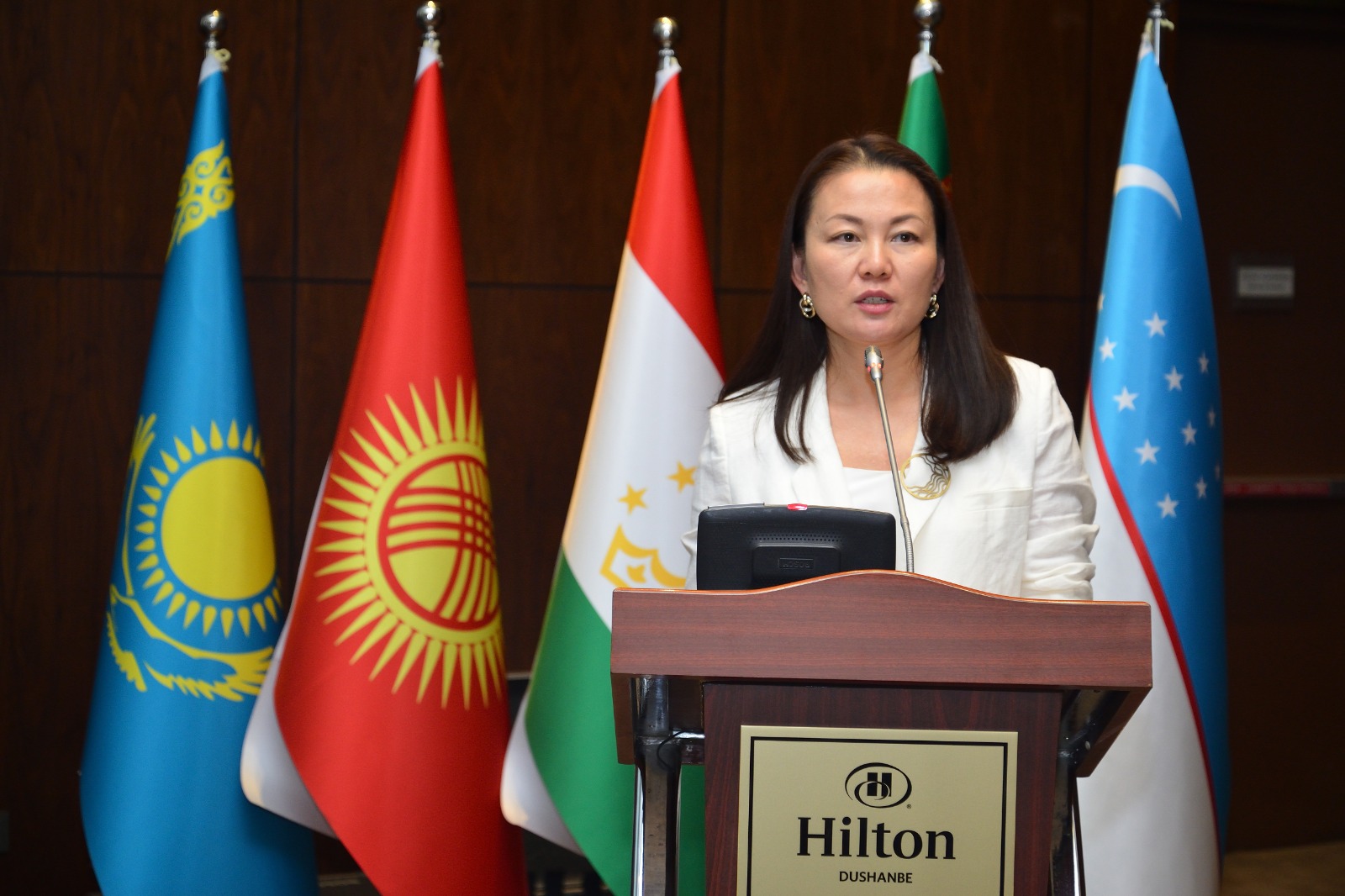
During the expert session “Climate Change and Water Scarcity Adaptation in the Water Sector of Central Asia,” Dilovarsho Dustzoda, Advisor to the Executive Director of CAREC, delivered a keynote presentation.
.jpeg)
In his remarks, he presented strategic approaches, practical examples and recommendations for strengthening regional cooperation amid climate change, increasingly frequent droughts and growing water scarcity. It was noted that around third of the region’s territory has a drought probability of 50% or higher, while in several countries severe droughts recur on average every five to six years. At the same time, a significant share of the population affected by emergencies in Central Asia faces the consequences of drought.
Priority areas for further joint work included the development of basin drought response protocols; the introduction of common drought indices, thresholds and seasonal forecasts; the creation of open basin information dashboards; canal modernization and the digitalization of water accounting; the development of climate-resilient agriculture and ecosystem restoration; and the preparation of investment programs benefiting vulnerable population groups.
“Central Asia already has strategies, institutions and practical experience. The next step is to transform them into shared data, agreed rules and joint adaptation investments at the river basin level,” it was noted during CAREC’s presentation.
The second panel discussion, “Water Scarcity: Challenges, Lessons Learned and Best Practices,” moderated by Irina Yugay, CAREC Programme Manager, presented regional and international best practices in adaptation, with the participation of experts from IUCN, UNESCO, the Netherlands and the Blue Peace Middle East initiative.
Other thematic sessions of the Forum focused on digitalization for a sustainable water economy, institutional cooperation and basin-level coordination of water resources management.
Following the discussions, participants identified three interconnected areas for further work.
First, transboundary water cooperation remains a vital foundation for regional stability, sustainable development and long-term cooperation in Central Asia. This requires strengthening basin mechanisms based on shared data, agreed rules and practical coordination.
Second, climate change adaptation and drought resilience must be grounded in scientific evidence and digital solutions. Water accounting, monitoring, forecasting, modelling and information exchange systems are essential for transparent and forward-looking water resources management.
Third, the region needs to move from dialogue to scalable practical action through operational partnerships, pilot projects, joint investments and measurable assessment of the benefits of cooperation.
Particular attention was given to the proposal to develop the Water Frontiers Dialogue — a practical platform bringing together capacity building, regional dialogue and the preparation of analytical products on the benefits of cooperation in transboundary basins.
The key messages of the Forum were presented on 26 May during the Fourth International High-Level Conference on the International Decade for Action “Water for Sustainable Development,” 2018–2028. Central Asia’s regional experience is expected to contribute to the agenda of the 2026 UN Water Conference and the Interactive Dialogue “Water for Cooperation.”
.jpeg)
.jpeg)
.jpeg)
.jpeg)
.jpeg)
For further information:
Irina Yugay
Acting Manager, Water Initiatives Support Programme CAREC i.yugay@carececo.org