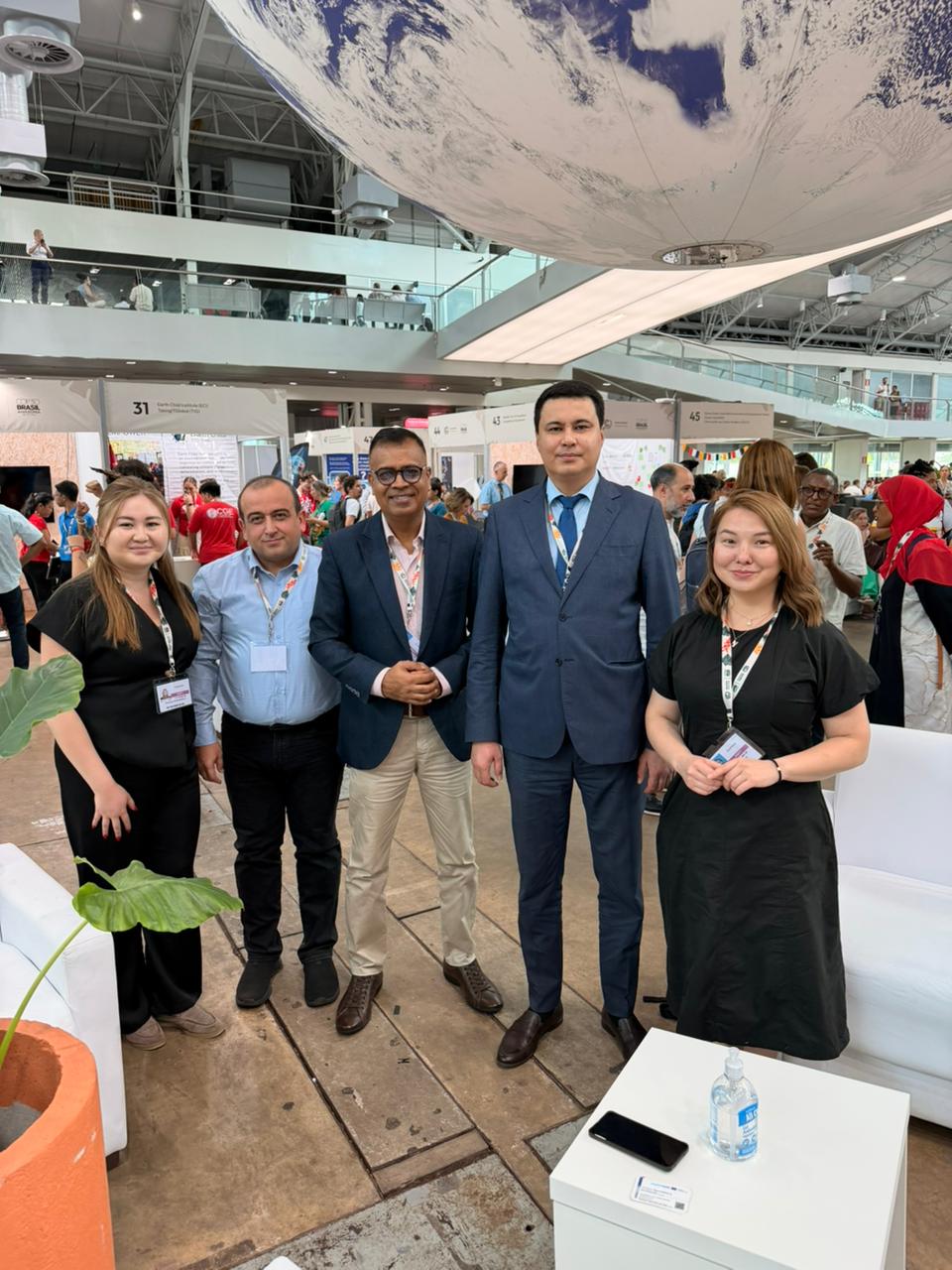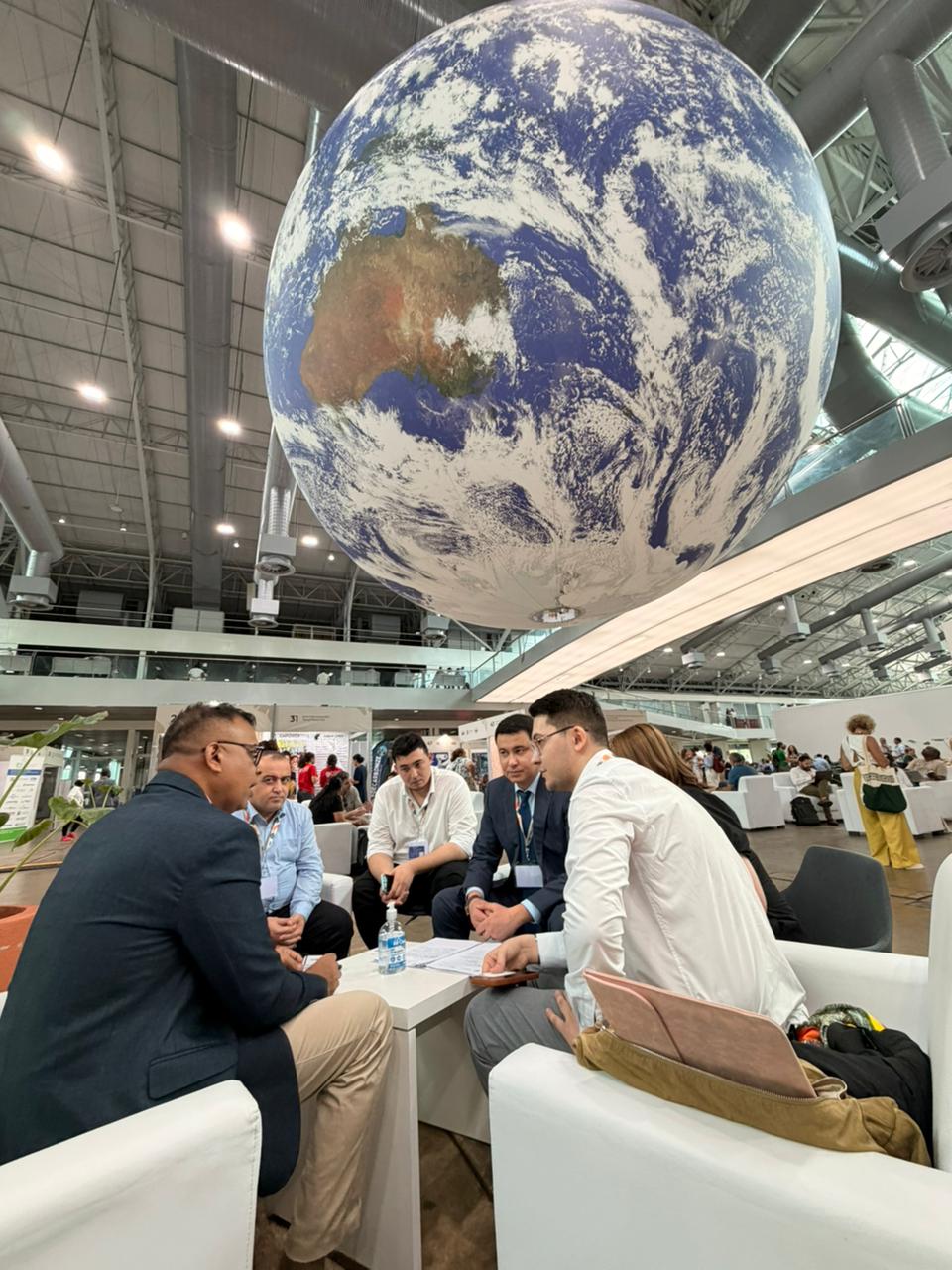

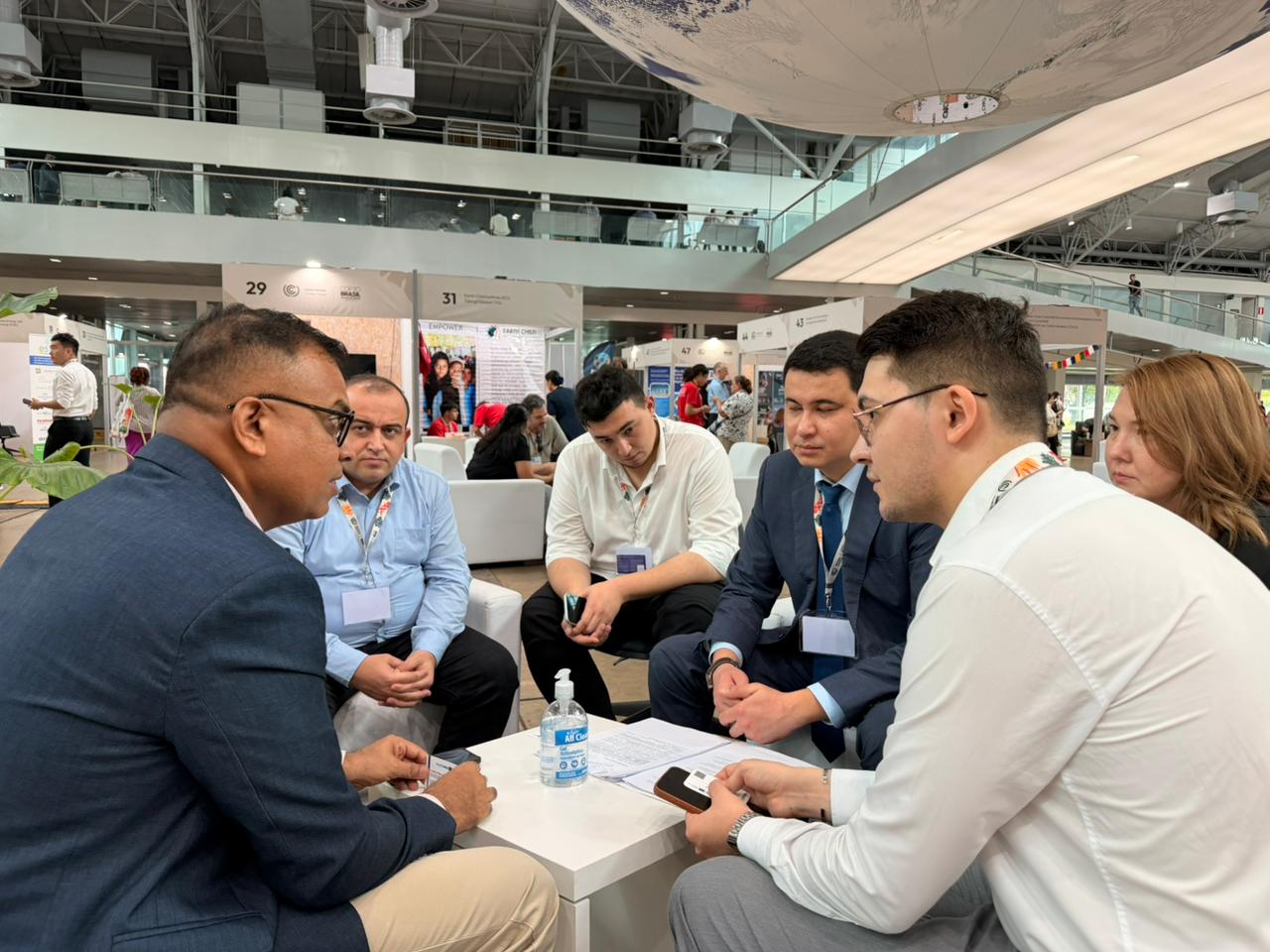
On the sidelines of the COP30 Brasil negotiations, a trilateral meeting was held between Mr. Mansur Oshurbaev, Vice-Minister of the Ministry of Ecology and Natural Resources of the Republic of Kazakhstan, Mr. Ranga Pallawala, Key Expert of SWITCH-Asia on Circular Economy Integration issues, and Mr. Dilovarsho Dustzoda, Advisor to the Executive Director / Head of Programmes of the Regional Environmental Centre for Central Asia.
The consultation focused on the growing regional momentum to integrate Sustainable Consumption and Production (SCP) and Circular Economy (CE) principles into Kazakhstan’s national strategic climate frameworks, including its Nationally Determined Contribution (NDC), Long-Term Low Emission Development Strategy (LT-LEDS), and National Adaptation Plan (NAP).
Dilovarsho Dustzoda noted that Ministry of Ecology and Natural Resources of the Republic of Kazakhstan, EU SWITCH-Asia, and CAREC Advance Dialogue on Integrating Circular Economy into National Climate Policy.
Participants emphasized that SCP and CE approaches can significantly enhance Kazakhstan’s climate ambition, particularly by reducing the carbon footprint of material use, improving resource efficiency, and supporting the country’s green growth agenda. SWITCH-Asia reaffirmed its commitment to providing technical advisory support under its ongoing regional initiative. At the same time, Kazakhstan expressed interest in deepening cooperation to ensure that SCP/CE considerations are reflected in upcoming national climate planning cycles.
As a key next step, the meeting partners agreed to convene a national roundtable in January 2026 to facilitate structured dialogue among government institutions, experts, development partners, and industry stakeholders. This event will serve as a platform to discuss sector-specific opportunities for integrating SCP and CE into climate strategies and to prepare targeted inputs for Kazakhstan’s future submissions under the UNFCCC.
Further collaboration is also planned under the framework of the Regional Environmental Summit (RES-2026) and the Central Asia Climate Change Conference (CACCC-2026), scheduled for April 22–24, 2025, in Astana, Kazakhstan. These events will provide opportunities to showcase Kazakhstan’s leadership, share best practices across Central Asia, and advance regional partnerships on SCP/CE-linked climate action.
The partners emphasized that continued cooperation will contribute to a stronger, more resource-efficient, and climate-resilient development pathway for Kazakhstan, aligned with the objectives of the Paris Agreement and the region’s long-term green transition agenda.