

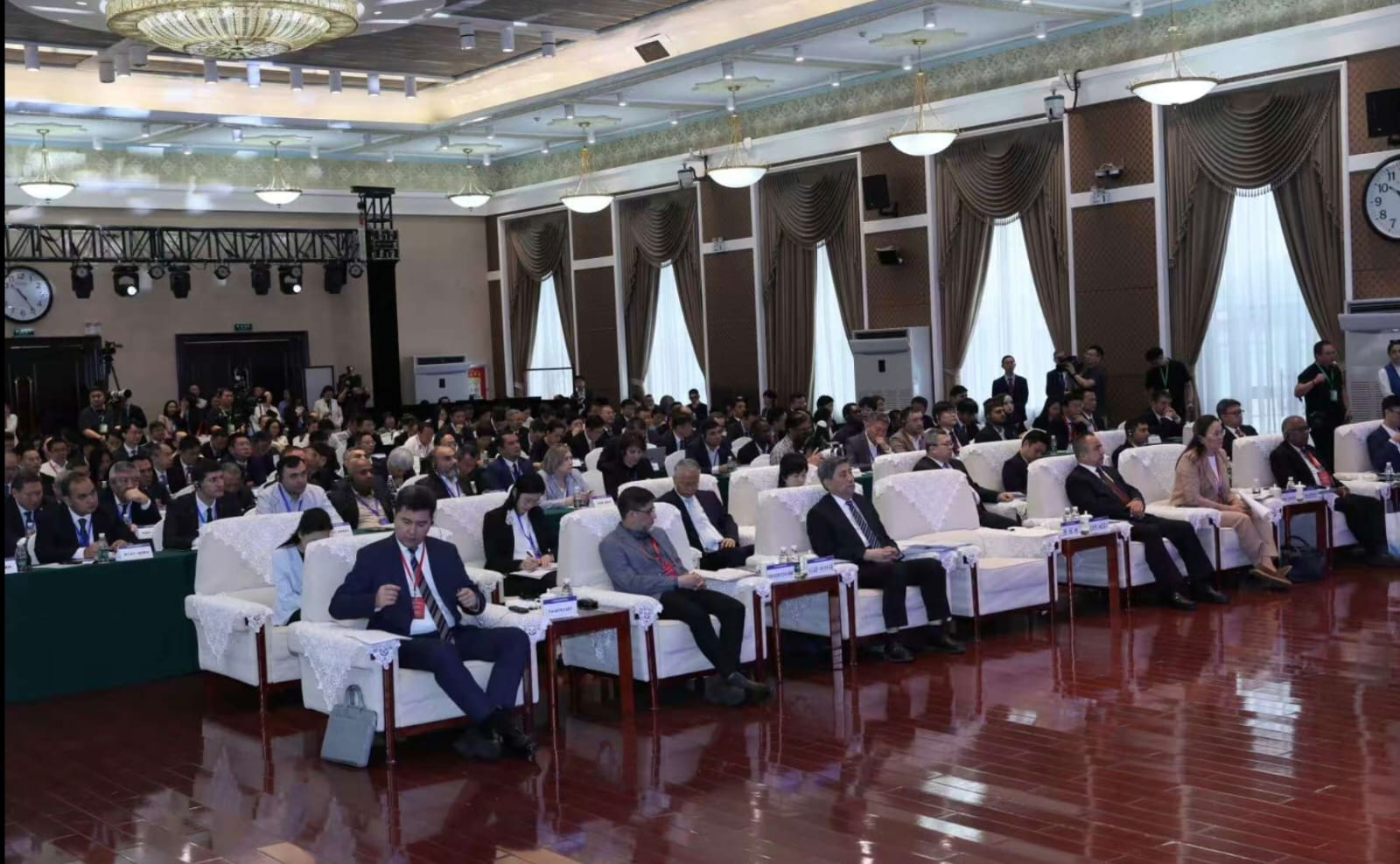
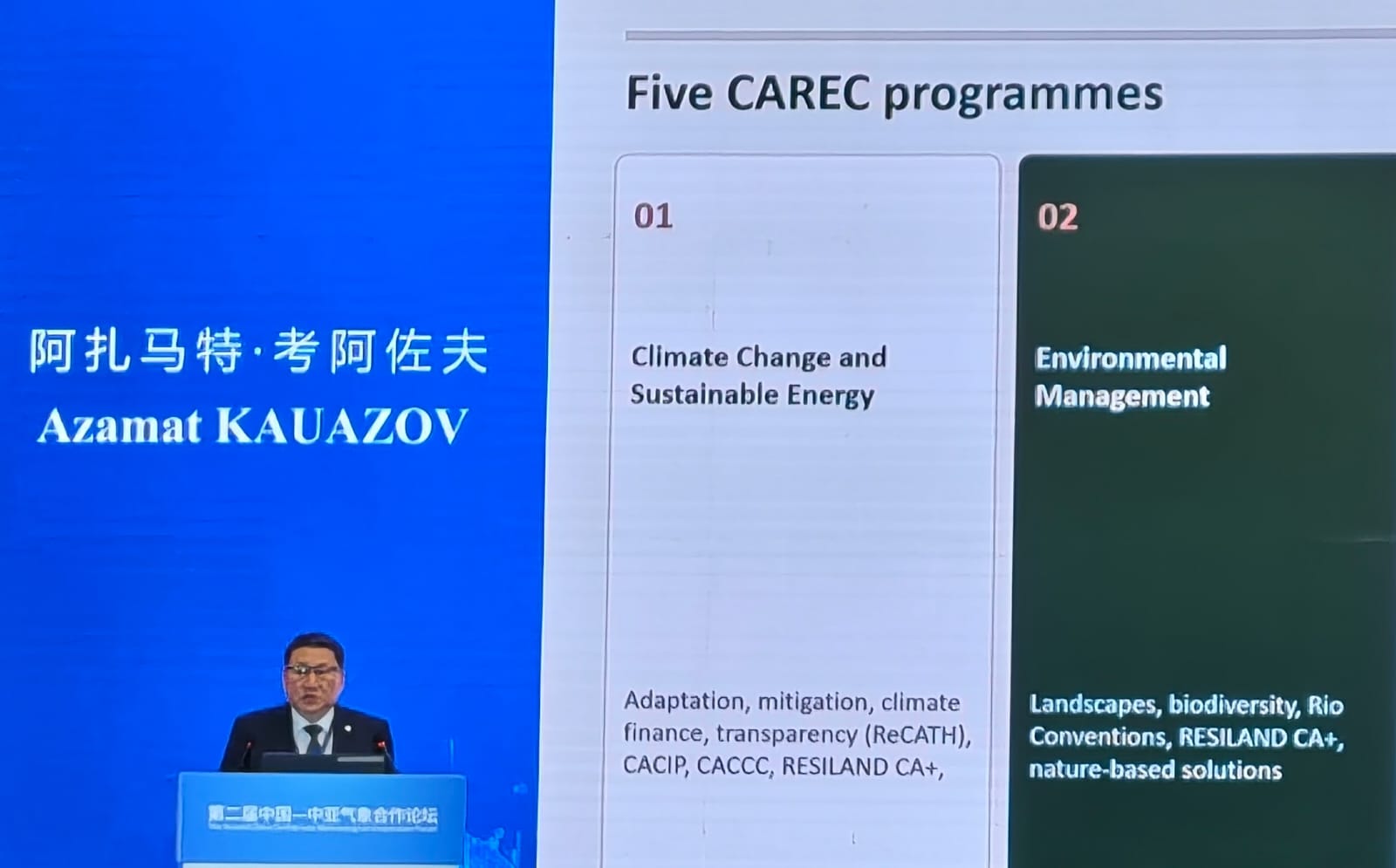
Urumqi, Xinjiang, 23 September 2026 — The Regional Environmental Centre for Central Asia (CAREC) took part in the Second China–Central Asia Meteorological Cooperation Forum, held on 22–23 September in Urumqi (PRC). The CAREC delegation was represented by Executive Director Batyr Mamedov and Climate Change and Sustainable Energy Programme Manager Azamat Kauazov.
The forum, organised by the China Meteorological Administration, the Meteorological Service of the Xinjiang Uygur Autonomous Region and the Training Centre of the China Meteorological Administration, was dedicated to the theme “Advancing People’s Early Warning Systems for the Protection of Regional Development and Security.” The focus of participants was on transboundary cooperation, climate security and the deployment of advanced early warning systems for severe weather events.
During the symposium, the CAREC delegation presented the organization’s activities aimed at strengthening regional cooperation in environmental protection, climate change adaptation and sustainable development. Participants were familiarised with CAREC’s key projects and initiatives being implemented in Central Asian countries, as well as with the Centre’s experience in building dialogue between government bodies, academia and international partners.
 Particular attention during the event was given to the presentation of China’s intelligent early warning system MAZU. The China Meteorological Administration presented an Action Plan for the implementation of this system in Central Asian countries for 2026–2027. MAZU is a cloud platform that combines satellite monitoring, radar networks and artificial intelligence models to issue multi-hazard warnings. The acronym stands for “multi-hazard, alert, zero-gap and universal” — that is, multi-hazard, alert, zero gap and universality.
Since its initial launch in 2025, the MAZU system has been deployed in seven countries and supports cloud-based use in more than 40 countries. It is expected that, under the new plan, it will be adapted for Central Asian countries, including Kazakhstan and other countries in the region interested in the practical application of the system for short-term forecasting.