

“Methane is not merely one of the components of greenhouse gas emissions. It is also an indicator of how modern, accurate, and effective our environmental monitoring, accounting, and natural resource management systems are,” said Professor Bakhtiyor Pulatov, Rector of the Central Asian University of Environmental and Climate Change Studies (Green University), highlighting the relevance of National Workshop on Strengthening Methane Emissions Monitoring and Assessment in Uzbekistan: National Workshop on Project Results, Lessons Learned, and Future Opportunities held in Tashkent.
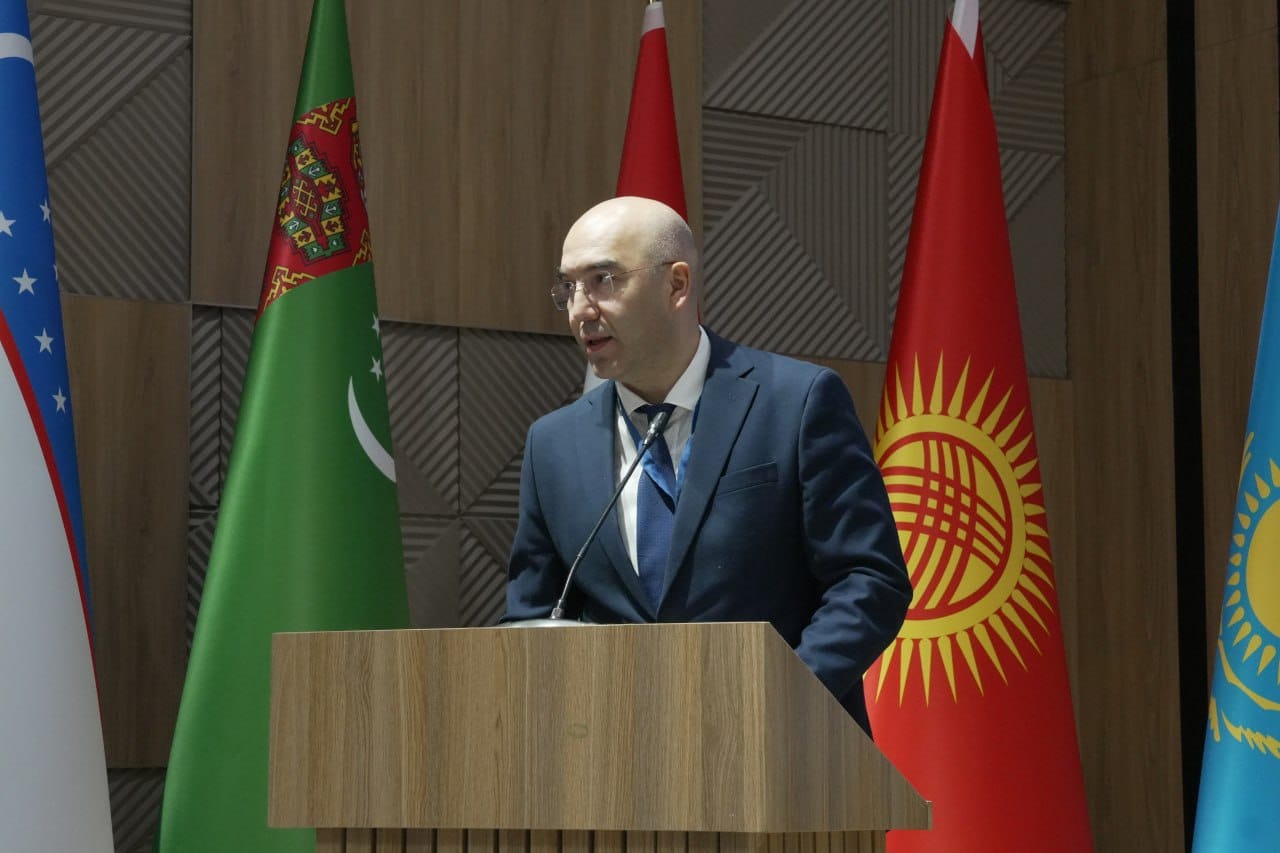
He emphasized that improving methane emissions monitoring is simultaneously a matter of science, technology, public policy, interagency cooperation, and practical solutions.
“It is particularly important that the UzEMI project has undertaken substantial work to deepen our understanding of the scale of methane emissions in Uzbekistan and improve the methods used to assess them,” said Professor Bakhtiyor Pulatov.
The seminar presented identified and mapped significant methane emission sources in priority oil and gas production areas. Participants were also presented with the results of comparing satellite and national data, as well as practical recommendations for introducing modern approaches to methane emissions monitoring.
“For us, it is crucial that this is not simply about obtaining new data. The main task is to turn data into solutions. This is precisely where we see one of the key roles of Green University,” emphasized Professor Bakhtiyor Pulatov.
Bakhtiyor Pulatov noted that the development of new technologies, together with artificial intelligence and modern methods for analyzing large volumes of environmental data, is opening up entirely new opportunities.
“If just a few years ago environmental monitoring was largely based on a limited number of ground-based observations, today we can combine satellite data, aerial and space-based imagery, ground measurements, and national information systems. This integrated approach not only enables more accurate assessment of the scale of emissions, but also helps identify problem areas in a timely manner, determine emission sources, and develop better-informed management decisions,” said Professor Bakhtiyor Pulatov.
He highlighted the important role of universities in this process. “Of particular importance to us is the development of joint research, professional training and capacity building, the preparation of young researchers, and creating opportunities for the practical application of the results of scientific projects. I am convinced that universities should not be observers of environmental transformation, but active participants in it,” said Professor Bakhtiyor Pulatov.
“Our common goal should be not only to accurately measure how much methane is released into the atmosphere. Our goal is to use this knowledge to make the economy more efficient, environmental policy more evidence-based, and the country’s development more sustainable,” concluded Professor Bakhtiyor Pulatov.
In his remarks, he expressed appreciation to the National Committee on Ecology and Climate Change of the Republic of Uzbekistan, the Regional Environmental Centre for Central Asia (CAREC), and all international partners for initiating the event and for their continued efforts to strengthen climate policy and environmental sustainability in Uzbekistan.
“We are interested in further developing cooperation with the Regional Environmental Centre for Central Asia, the Environmental Defense Fund, government authorities, academic institutions, and international partners,” said Professor Bakhtiyor Pulatov.
For further information:
Dilovarsho Dustzoda — Project Manager (recath_manager@carececo.org)
Arailym Shulgauova — Project Specialist (ashulgauova@carececo.org)