

The history of antibiotics marks one of the most significant milestones in the development of modern medicine. In 1928, Alexander Fleming discovered penicillin. Its production began in 1941, and in 1945, Fleming, Ernst Chain, and Howard Florey received the Nobel Prize in Physiology or Medicine for their work on the discovery and development of penicillin.
The period from 1941 to 1970 is considered the golden age of antibiotics, during which approximately 7,000 antibiotics were discovered. In the following decades, research focused primarily on modifying existing antibiotics. While seven new antibiotics were introduced in 1998, by 2002, despite the development of around 90 new pharmaceutical products, none represented a new antibiotic.
This trend highlighted one of the key challenges facing modern medicine: the ability to treat bacterial infections is increasingly threatened by the growing resistance of microorganisms to antimicrobial agents.
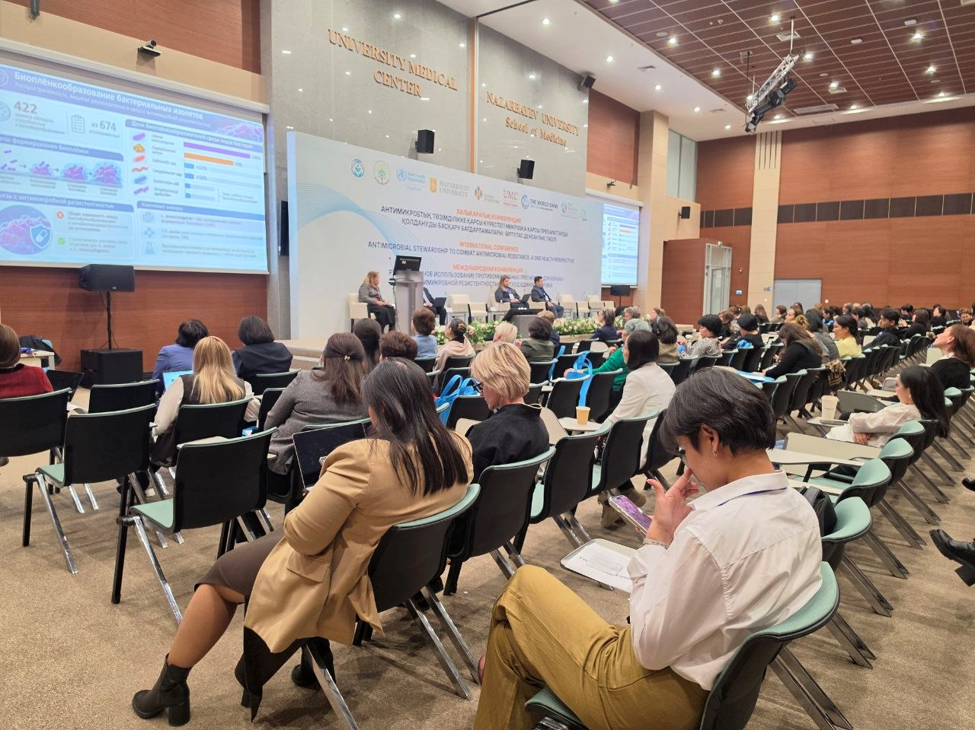
Antimicrobial resistance (AMR) is not solely a medical issue. Its spread is also influenced by antibiotic use in animal husbandry, food safety, and environmental conditions. Resistant microorganisms can move between these sectors, posing risks to both human and animal health. The interconnection of these factors was the focus of the fourth session of the international conference “Rational Use of Antimicrobial Agents to Combat Antimicrobial Resistance: One Health Approach,” held in Astana.
According to global research projections, without systemic action, bacterial resistance could claim up to 39.1 million lives by 2050. Addressing this challenge requires a comprehensive approach that brings together human health, veterinary medicine, agriculture, and the environmental sector.
One of the key presentations during the session was delivered by Oksana Kravtsova, Project Coordinator at the Regional Secretariat of One Health in Central Asia (CAREC). Her presentation focused on the impact of climate change on the spread of antimicrobial-resistant bacteria.
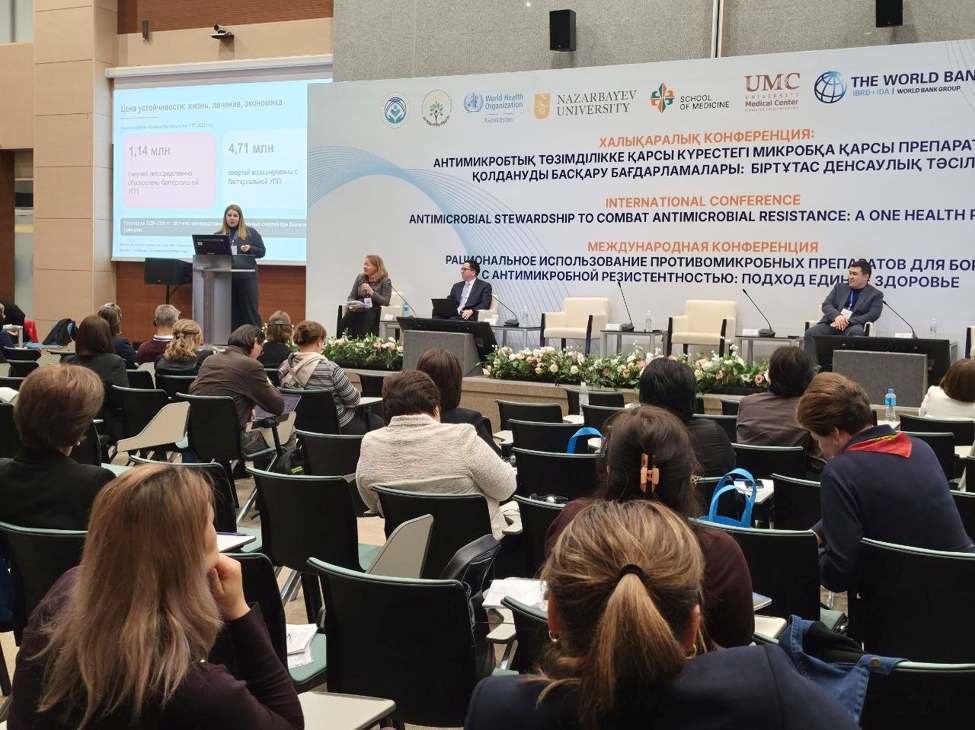
While the misuse and uncontrolled use of medicines remain major drivers of antimicrobial resistance, climate change acts as a powerful catalyst. Laboratory experiments show that rising water temperatures and sudden temperature fluctuations can significantly accelerate the horizontal transfer of resistance genes between bacteria. Under experimental conditions, increasing water temperature from 5°C to 30°C resulted in an approximately 30-fold increase in the frequency of such gene transfer.
This factor is particularly critical for Central Asia due to the region’s geographical and environmental characteristics:
- Transboundary rivers. The Syr Darya, Amu Darya, and Ili river basins connect countries across the region through shared water systems. Resistant microorganisms entering wastewater, agricultural fields, or glacier meltwater can travel downstream and cross national borders.
- Weather anomalies. Heavy rainfall and floods wash pharmaceutical residues and bacteria from agricultural land and livestock facilities into open water bodies. Droughts, in turn, increase the need for water reuse in irrigation, which, in the absence of adequate wastewater treatment, raises the risk of spreading resistant microorganisms.
Environmental risks are directly linked to practices in agriculture. Speakers at the session, including WHO experts, representatives of the national Codex Alimentarius contact point, and university specialists, highlighted a concerning trend. Following the golden age of antibiotics (1941–1970), when approximately 7,000 antibiotics were discovered, the development of fundamentally new drugs has largely stagnated. Meanwhile, antibiotics continue to be widely used in livestock and poultry farming not only to treat diseases but also for disease prevention and, historically, to promote animal growth.

The scale of the problem was illustrated by the findings of a study conducted by Asfendiyarov Kazakh National Medical University in 2023–2025. Having analyzed more than 1,000 meat samples and 150 feed samples from 14 regions of Kazakhstan, researchers detected antibiotic residues, including streptomycin and quinolones. In some cases, concentrations exceeded permissible limits. The highest levels of contamination were detected in succulent feeds.
To break the chain of transmission of resistant bacteria from farms to humans, specialists recommend action in several key areas:
- Eliminating antibiotics as growth promoters. Antibiotic use on farms should be strictly limited to treatment and guided by laboratory susceptibility testing of the causative pathogen.
- Prioritizing prevention and sanitation. Proper animal nutrition, compliance with sanitary standards at slaughtering and processing facilities, and improved staff awareness can help minimize the need for antibiotics.
- Implementing international standards. Adapting Codex Alimentarius guidelines will help establish consistent monitoring of antimicrobial residues in food products and reduce the risks associated with uncontrolled antimicrobial use.
Antimicrobial resistance is not confined to healthcare facilities or national borders. Resistant microorganisms can circulate among humans, animals, food products, and the environment, while climate and environmental factors can influence their spread.
An effective response to AMR therefore requires not only the rational use of antibiotics but also stronger laboratory monitoring, data exchange across sectors, food safety control, and research into environmental pathways of resistance. For Central Asian countries, coordinating these efforts is particularly important, as shared water resources, environmental processes, and associated risks extend beyond national borders.
A comprehensive approach under the One Health framework makes it possible to address antimicrobial resistance not as an isolated medical issue, but as a challenge requiring coordinated action across human health, veterinary medicine, agriculture, and the environmental sector.
Shoira Toirova — Communications Specialist, One Health Program shoira.tajikistan@gmail.com
For further information:
Oksana Kravtsova — Regional Manager of the One Health Program, CARECokravtsova@carececo.org